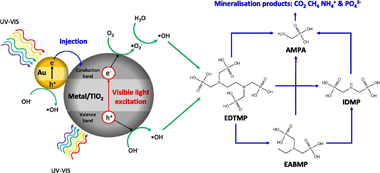
Improving the photocatalytic degradation of EDTMP: Effect of doped NPs (Na, Y, and K) into the lattice of modified Au/TiO2 nano-catalysts

This study presents the photocatalytic degradation of the aminophosphonate ethylenediaminetetra(methylenephosphonic acid) (EDTMP) with a range of different doped nanoparticles (NP). The photocatalysts were based on TiO2 benchmark P25 and gold (Au) doped either with sodium (Na), potassium (K) or yttrium (Y). The synthesized photocatalysts were characterized via TEM, XRF, XRD, UV-DRS (band gap estimation) and…

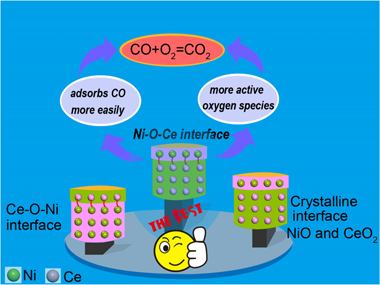
Direct observation of interface-dependent activity in NiO/CeO2 for effective low-temperature CO oxidation

In contemporary catalytic interface exploration, experimental studies often take a backseat to theoretical simulations, hindering the development of pristine catalytic interfaces. This research leverages monolayer dispersion theory to design an efficient CO oxidation catalyst through precise manipulation of non-precious metal NiO-CeO2 interfaces. Employing the pioneering XRD extrapolation method, we fabricated monolayer dispersed Ni-O-Ce and Ce-O-Ni…

Exploring the synergistic effect of NaOH/NaClO absorbent in a novel wet FGD scrubber to control SOx/NOx emissions

Escalating SOx and NOx emissions from industrial plants necessitates customized scrubbing solutions to improve removal efficiency and tackle cost limitations in existing wet FGD units. This work investigates the real-time intensified removal pathways via an innovative two-stage countercurrent spray tower configuration strategically integrating NaOH (Ma) and NaOH/NaClO (Ma/Mb) to remove SOx and NOx emissions simultaneously…

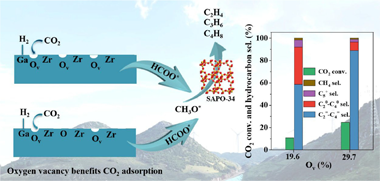
CO2 Conversion via Low-Temperature RWGS Enabled by Multicomponent Catalysts: Could Transition Metals Outperform Pt?

In the context of CO2 valorisation, the reverse water-gas shift reaction (RWGS) is gathering momentum since it represents a direct route for CO2 reduction to CO. The endothermic nature of the reaction posses a challenge when it comes to process energy demand making necessary the design of effective low-temperature RWGS catalysts. Herein, multicomponent Cs-promoted Cu,…

Carbonylation Reactions Using Single-Atom Catalysts

The development of highly efficient and selective catalysts for carbonylation reactions represents a significant challenge in catalysis. Single-atom catalysts (SACs) have postulated as promising candidates able to combine the strengths of both homogeneous and heterogeneous catalysts. In this paper, we review recent advances in tailoring solid supports for SACs to enhance their catalytic performance in…

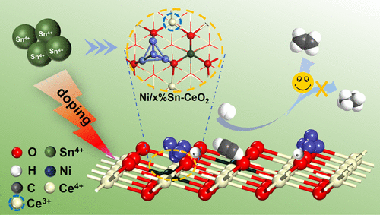
Investigation of Sn Promoter on Ni/CeO2 Catalysts for Enhanced Acetylene Semihydrogenation to Ethylene

Ethylene, as an important chemical raw material, could be produced through the coal-based acetylene hydrogenation route. Nickel-based catalysts demonstrate significant activity in the semihydrogenation reaction of acetylene, but they encounter challenges related to catalyst deactivation and overhydrogenation. Herein, the effect of Sn promoter on Ni/CeO2 catalysts has been comprehensively explored for acetylene semihydrogenation. The optimized…

Textile microfibers valorization by catalytic hydrothermal carbonization toward high-tech carbonaceous materials

Microplastics fibers shed from washing synthetic textiles are released directly into the waters and make up 35% of primary microplastics discharged to the aquatic environment. While filtration devices and regulations are in development, safe disposal methods remain absent. Herein, we investigate catalytic hydrothermal carbonization (HTC) as a means of integrating this waste (0.28 million tons…

CO2 Valorisation NETwork – C-NET

C-NET, un proyecto de intercambio de personal del programa MSCA financiado por la UE, tiene como objetivo crear una red de expertos que trabajan en áreas científicas complementarias para impulsar avances en el amplio campo de las «cero emisiones netas de carbono». C-NET se concibe como un entorno propicio donde los investigadores pueden aprovechar las…