Avanzando hacia la economía circular: Biocombustibles para el transporte pesado, a partir del reciclado de residuos (NICER BIOFUELS)

Financiado por el programa RETOS-COLABORACION PUBLICO-PRIVADA del Ministerio de Ciencia e Innovacion con fondos EU bajo el marco Next Generation Europe, NICER BIOFUELS es fruto de la colaboracion entre las Universidades de Zaragoza y Sevilla y la multinacional URBASER. En el contexto de la economia circular y el desarollo de combustibles sostenibles que permitan descarbonizar el transporte y…

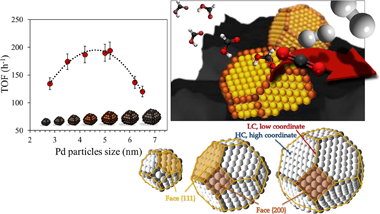
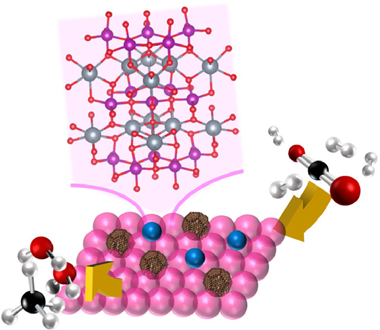
Structure-sensitivity of formic acid dehydrogenation reaction over additive-free Pd NPs supported on activated carbon

In this study the size-activity dependence of palladium based catalysts in formic acid dehydrogenation reaction was investigated and evaluated. A wide range of particle sizes was considered and the catalyst series were prepared upon variation of some synthetic parameters, precursor and solvent nature in particular. Synthesis method variations affect significantly Pd particle size and results…

Current scenario and prospects in manufacture strategies for glass, quartz, polymers and metallic microreactors: A comprehensive review

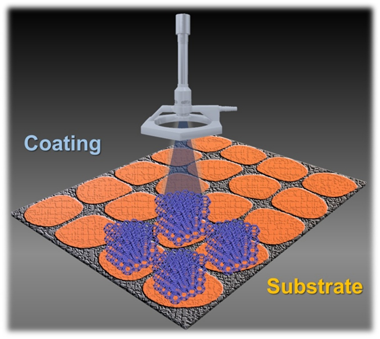
One of the most remarkable benefits of the microreactors is the achievement of more efficient processes by enhancing the heat and mass transfer phenomena, which is the key factor for processes intensification in chemical reactions, resulting in higher conversion, selectivity and yield towards desired products. Currently, the entire scenario of microreaction approach is an emergent…

Bimetallic Ni-Ru and Ni-Re Catalysts for Dry Reforming of Methane: Understanding the Synergies of the Selected Promoters

Designing an economically viable catalyst that maintains high catalytic activity and stability is the key to unlock dry reforming of methane (DRM) as a primary strategy for biogas valorization. Ni/Al2O3 catalysts have been widely used for this purpose; however, several modifications have been reported in the last years in order to prevent coke deposition and deactivation…

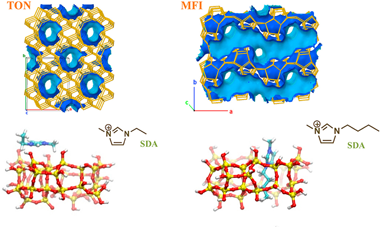
How a small modification in the imidazolium-based SDA can determine the zeolite structure? MFI vs. TON

The present study proposes an important contribution to the understanding of ionic liquid role as structure directing agent for zeolite synthesis. A series of imidazolium based ionic liquids are used for this purpose. While the anionic counterpart influences the micellar organization during the synthesis, the imidazolium cation clearly directs the structure to one or another…

Ni/YMnO3 perovskite catalyst for CO2 methanation

This work proposes an innovative Ni catalyst supported over YMnO3 perovskite as a promising catalytic system for CO2 methanation reaction. Under reductive conditions, the attendance of Mn redox couples within the layered perovskite structure promotes the constitution of sub-stoichiometric YMnO3-x units which, by means of the flexible YMnO3-x reorganization capacity, results in boosted anionic mobility’s.…

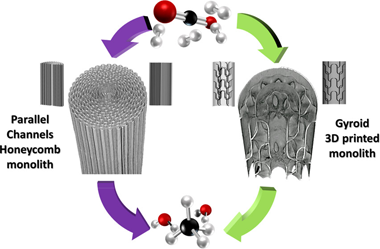
Stepping toward Efficient Microreactors for CO2 Methanation: 3D-Printed Gyroid Geometry

This work presents a comparative study toward the development of efficient microreactors based on three-dimensional (3D)-printed structures. Thus, the study evaluates the influence of the metal substrate geometry on the performance of structured catalysts for the CO2 methanation reaction. For this purpose, the 0.5%Ru-15%Ni/MgAl2O4 catalyst is washcoated over two different micromonolithic metal substrates: a conventional…