Materials challenges and opportunities to address growing micro/ nanoplastics pollution: a review of thermochemical upcycling

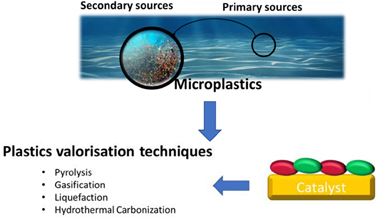
Micro/nanoplastics have sparked attention in recent years due to their widespread presence in the environment. Currently, several waste valorization approaches are under development in order to upcycle micro/nanoplastics. Thermal conversion technologies such as pyrolysis, gasification, liquefaction, or hydrothermal carbonization can yield high-value solid products, oil, and gases from plastics waste. The common thermal conversion technologies…

Development of Power-to-X Catalytic Processes for CO2 Valorisation: From the Molecular Level to the Reactor Architecture

Nowadays, global climate change is likely the most compelling problem mankind is facing. In this scenario, decarbonisation of the chemical industry is one of the global challenges that the scientific community needs to address in the immediate future. Catalysis and catalytic processes are called to play a decisive role in the transition to a more…

CO2 methanation on Ni/YMn1-xAlxO3 perovskite catalysts

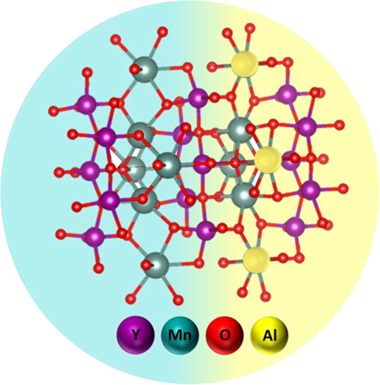
Seeking for advanced catalytic systems for the CO2 methanation reaction, the use of Ni supported catalysts over redox materials is often proposed. Profiting the superior redox properties described for layered perovskite systems, this work has investigated a series Ni supported YMn1-xAlxO3 (x = 0, 0.2, 0.5, 0.8, 1) perovskite catalysts. The obtained results evidenced the…

DiSeño de catalizadores Multifuncionales para la conversión de gAs de síntesis Rico en CO2 en combusTibles líquidos sostenibles, en una única etapa, vía síntesis de FTS y HCR: SMART-FTS

Siguiendo las indicaciones de los Objetivos de Desarrollo Sostenible de las Naciones Unidas (UNSDG), es obligatorio tomar acción al respecto buscando alternativas de energía limpia y asequible (objetivo 7) para favorecer ciudades y comunidades sostenibles (objetivo 11) mientras se mitiga el cambio climático. cambio (objetivo 13). De hecho, Horizon Europe da prioridad a las tecnologías…

Reactores estructurados no convencionales para el craqueo catalítico de metano libre de CO2

STORMING desarrollará reactores estructurados innovadores calentados con electricidad renovable, para convertir CH4 fósil en H2 libre de CO2 y en nanomateriales de carbono de alto valor para aplicaciones de baterías. Más específicamente, se desarrollarán catalizadores innovadores basados en Fe, altamente activos y fácilmente regenerables mediante procesos que no generen residuos, a través de un protocolo…

Ni-Phosphide catalysts as versatile systems for gas-phase CO2 conversion: Impact of the support and evidences of structure-sensitivity

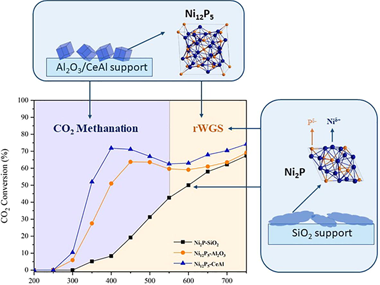
We report for the first time the support dependent activity and selectivity of Ni-rich nickel phosphide catalysts for CO2 hydrogenation. New catalysts for CO2 hydrogenation are needed to commercialise the reverse water-gas shift reaction (RWGS) which can feed captured carbon as feedstock for traditionally fossil fuel-based processes, as well as to develop flexible power-to-gas schemes…

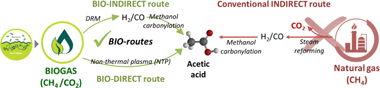
Sustainable routes for acetic acid production: Traditional processes vs a low-carbon, biogas-based strategy

The conversion of biogas, mainly formed of CO2 and CH4, into high-value platform chemicals is increasing attention in a context of low-carbon societies. In this new paradigm, acetic acid (AA) is deemed as an interesting product for the chemical industry. Herein we present a fresh overview of the current manufacturing approaches, compared to potential low-carbon…

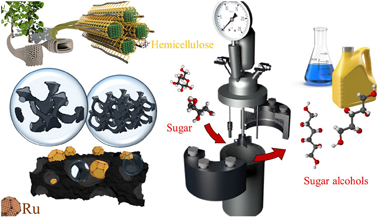
Structure effect of modified biochar in Ru/C catalysts for sugar mixture hydrogenation

This study deals with the production and activation of biochars and their use as supports for a series of ruthenium catalysts for hydrogenation of L-arabinose/D-galactose sugar mixture. The synthesized biochars differ in physicochemical properties and surface chemistry influencing ruthenium metal uptake and dispersion and as a consequence its catalytic behaviour. Selectivity exceeding 95% was observed for both hexitols. The catalytic performance of the prepared Ru supported catalysts is also compared to the already known Ru/activated carbon commercial catalyst.

Emerging natural and tailored perovskite-type mixed oxides-based catalysts for CO2 conversions

The rapid economic and societal development have led to unprecedented energy demand and consumption resulting in the harmful emission of pollutants. Hence, the conversion of greenhouse gases into valuable chemicals and fuels has become an urgent challenge for the scientific community. In recent decades, perovskite-type mixed oxide-based catalysts have attracted significant attention as efficient CO2…