Photocatalytic Degradation of 2,4-Dichlorophenoxyacetic Acid Over ZrO2, Cu/ZrO2 and Fe/ZrO2 Photocatalysts Synthesized by Sol Gel Method

Photocatalytic oxidation of 2,4-dichlorophenoxyacetic acid was performed over ZrO2, Cu/ZrO2 and Fe/ZrO2 catalysts prepared by the sol-gel method. The samples were annealed at 400 degrees C. Textural and electronic characterization was carried out using BET and UV-Vis in order to establish the relationship between surface, pore volume and E. with the photoactivity of the materials. The degradation of the acid was followed by UV-Vis spectroscopy. The disappearance of the herbicide in solution follows approximately pseudo-first order kinetics. The apparent rate constants…

Pt/TiO2 brain biocompatible nanoparticles: GBM treatment using the C6 model in Wistar rats

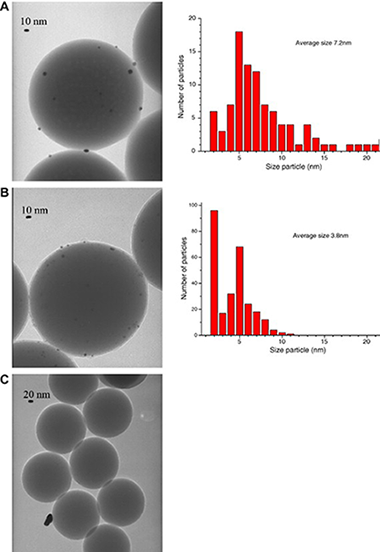
In the present work we synthesized inorganic oxide nanoparticle carriers of platinum compounds and tested their therapeutic effect on animal models in which C6 glioma cells have been inoculated. TiO2-containing Pt(NH3)(4)Cl-2 complexes were synthesized using sol-gel methods. The platinum species are chemically bonded to the TiO2 carrier, as shown by Fourier transform infrared spectroscopy of…

Test of validity of the V-type approach for electron trajectories in reflection electron energy loss spectroscopy

An electron reaching the detector after being backscattered from a solid surface in a reflection electron energy loss spectroscopy (REELS) experiment follows a so-called V-type trajectory if it is reasonable to consider that it has only one large elastic scattering event along its total path length traveled inside the solid. V-type trajectories are explicitly assumed…

Preparation of Au-CeO2 and Au-Al2O3/AISI 304 austenitic stainless steel monoliths and their performance in the catalytic oxidation of CO

The use of austenitic stainless steel (AISI 304) as metallic substrate for monolithic catalytic devices is explored in this work as well as an alternative procedure to the washcoating of Al2O3 and CeO2 supported Au catalysts. Thermal treatment of the metallic surface ensured a good adherence of the catalysts. Some preparation parameters, like the number…

Preparation of Au-CeO2 and Au-Al2O3/AISI 304 austenitic stainless steel monoliths and their performance in the catalytic oxidation of CO

The use of austenitic stainless steel (AISI 304) as metallic substrate for monolithic catalytic devices is explored in this work as well as an alternative procedure to the washcoating of Al2O3 and CeO2 supported Au catalysts. Thermal treatment of the metallic surface ensured a good adherence of the catalysts. Some preparation parameters, like the number…

Apatite and Portland/apatite composite cements obtained using a hydrothermal method for retaining heavy metals

Apatite and Portland/apatite composite cements containing steelwork dusts have been prepared using a low temperature hydrothermal method (200° C, 48 h). The produced solids were characterized by means of XRD, IR, and SEM-EDX, and the remaining liquid was analyzed by ICP. The results clearly show the capability of these cements to inertise the heavy metals contained…