Towards efficient strain engineering of 2D materials: A four-points bending approach for compressive strain

Strain engineering, as a powerful strategy to tune the optical and electrical properties of two-dimensional (2D) materials by deforming their crystal lattice, has attracted significant interest in recent years. 2D materials can sustain ultra-high strains, even up to 10%, due to the lack of dangling bonds on their surface, making them ideal brittle solids. This…

Optimized electrocatalytic degradation of ciprofloxacin using Co3O4 coated stainless steel electrodes

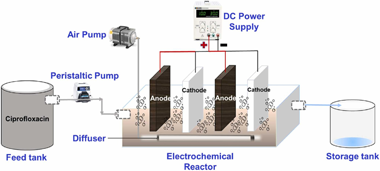
Ciprofloxacin (CIP) is a fluoroquinolone antibiotic that is widely used across the globe and its release is a serious concern due to its persistent nature, partial degradation, and simple transport through different environmental matrices. Pharmaceuticals have been degraded effectively by electrochemical oxidation. Exploring ways to in-crease the mineralization of these compounds while maintaining low power consumption is important. In…

Effect of Connectivity on the Carrier Transport and Recombination Dynamics of Perovskite Quantum-Dot Networks

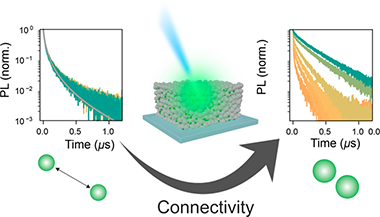
Quantum-dot (QD) solids are being widely exploited as a solution-processable technology to develop photovoltaic, light-emission, and photodetection devices. Charge transport in these materials is the result of a compromise between confinement at the individual QD level and electronic coupling among the different nanocrystals in the ensemble. While this is commonly achieved by ligand engineering in…

Subnanometric Pt clusters dispersed over Cs-doped TiO2 for CO2 upgrading via low-temperature RWGS: operando mechanistic insights to guide an optimal catalyst design

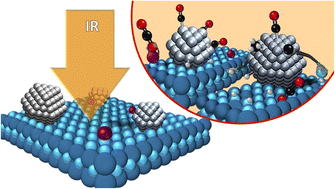
The RWGS reaction is gathering momentum as an effective route for CO2 valorisation and given its endothermic nature the challenge lies in the design of active low-temperature catalysts. Herein we have designed two catalysts based on subnanometric Pt clusters providing effective CO2 conversion and, more importantly, high CO selectivity in the low-temperature range. The impact of Cs…

Scattering Spheres Boost Afterglow: A Mie Glass Approach to Go Beyond the Limits Set by Persistent Phosphor Composition

Persistent luminescence phosphor nanoparticles (PersLNPs) offer exciting opportunities for anticounterfeiting, data storage, imaging displays, or AC-driven lighting applications owing to the possibility to process them as shapable thin coatings. However, despite unique delayed and long-lasting luminescence, the relatively low storage capacity of persistent phosphor nanoparticles combined with the difficulty of harvesting photons from transparent thin…

Mechanistic insights into methanol carbonylation to methyl acetate over an efficient organic template-free Cu-exchanged mordenite

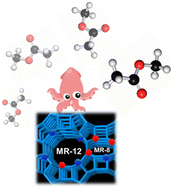
Currently, acetic acid is produced via the carbonylation reaction of methanol with the main route entailing the use of homogeneous noble metal-based catalysts, which has certain limitations, including the use of polluting alkyl halide promoters and difficulty in catalyst recovery. To overcome these challenges, the exploration of alternative methods utilizing heterogeneous catalysts, particularly zeolites with copper as…

Investigating the room- and cryo-milling impact in lignocellulosic biomass and its consequence over pyrolysis and oxidative treatments

The lignocellulosic biomass recalcitrance is the uppermost factor for the utilization of this renewable resource. The development of new pre -treatments, addressed to enhance performance in lignocellulosic biomass conversion into biofuels, fine chemicals, and as potential sources of building blocks for materials, must be focus in two main areas: effectiveness (cost-effective and chemical effective) and…

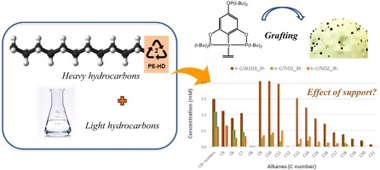
Alkane metathesis over immobilized pincer-ligated iridium complexes: Effect of support nature

In this work, catalytic alkane metathesis has been evaluated as a suitable approach to upcycle hydrocarbons (polyolefins) at moderate temperatures. To this end, a pincer-ligated iridium complex (dehydrogenation catalyst) has been combined with a rhenium-based (metathesis) catalyst, being the effect of immobilizing the Ir complex over different supports deeply investigated. FTIR spectroscopy has been used to confirm the complex grafting and to elucidate the anchoring site…

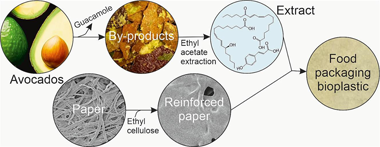
Incorporation of bioactive compounds from avocado by-products to ethyl cellulose-reinforced paper for food packaging applications

Reinforced films were fabricated by impregnating paper in ethyl cellulose solutions. After solvent evaporation, the infused ethyl cellulose acted as binder of the paper microfibres and occupied the pores and cavities, thus improving the mechanical and barrier properties. To prepare active films, avocado by-products from guacamole industrial production were extracted in ethyl acetate. Then, the…

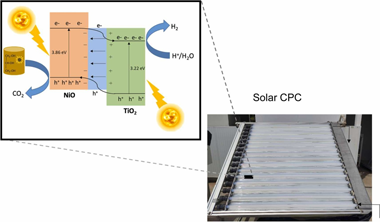
Photoreforming of glycerol to produce hydrogen from natural water in a compound parabolic collector solar photoreactor

To improve TiO2 for H2 generation, one strategy for the separation of photogenerated charges is the formation of heterostructures with other materials. In particular, NiO is a photocatalyst known for its good stability and low cost. However, no studies at pilot scale using solar energy have been described. Consequently, an evaluation of a physical NiO:TiO2 mixture at pilot scale (25 L) with natural irradiation (2.10 m2 of sun-exposed surface) and with simultaneous glycerol photoreforming was explored.…