The Role of Protective Surface Coatings on the Thermal Stability of Delithiated Ni-Rich Layered Oxide Cathode Materials

To achieve a broader public acceptance for electric vehicles based on lithium-ion battery (LIB) technology, long driving ranges, low cost, and high safety are needed. A promising pathway to address these key parameters lies in the further improvement of Ni-rich cathode materials for LIB cells. Despite the higher achieved capacities and thus energy densities, there…

Oxidation and coordination states assumed by transition metal dopants in an invert ultrabasic silicate glass

An ultrabasic invert silicate glass (46SiO2.11Na2O.21CaO.22BaO, optical basicity index equal to 0.71) was synthesized (O2 atmosphere) and used as host for various transition metal dopants. Optical absorption, emission and electron paramagnetic spectroscopies were used to characterize oxidation and coordination states. Some of the dopants displayed only their maximal oxidation state (Ti4+, V5+, Cr6+, Mo6+ and…

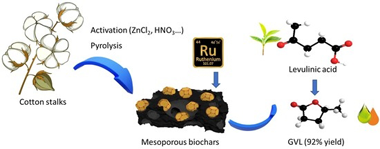
Functionalized Biochars as Supports for Ru/C Catalysts: Tunable and Efficient Materials for γ-Valerolactone Production

Cotton stalks-based biochars were prepared and used to synthetize Ru-supported catalysts for selective production of gamma-valerolactone from levulinic acid in aqueous media. Different biochars’ pre-treatments (HNO3, ZnCl2, CO2 or a combination of them) were carried out to activate the final carbonaceous support. Nitric acid treatment resulted in microporous biochars with high surface area, whereas the…

Microstructural Characterization and Self-Propagation Properties of Reactive Al/Ni Multilayers Deposited onto Wavelike Surface Morphologies: Influence on the Propagation Front Velocity

Reactive multilayer systems are nanostructures of great interest for various technological applications because of their high energy release rate during the self-propagating reaction of their components. Therefore, many efforts are aimed at controlling the propagation velocity of these reactions. Herein, reactive multilayer systems of Al/Ni in the shape of free-standing foils with a wavelike surface…

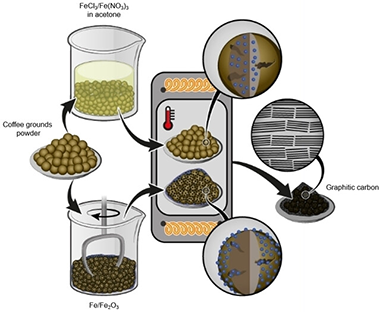
Revealing the Impact of Different Iron-Based Precursors on the ‘Catalytic’ Graphitization for Synthesis of Anode Materials for Lithium Ion Batteries

Low cost and environmentally friendly production of graphite anodes from naturally available biomass resources is of great importance to satisfy the increasing material demand for lithium ion batteries. Herein, graphitization of coffee ground was performed using four different iron-based activating additives, including iron (III) chloride, iron (III) nitrate, iron (III) oxide and pure iron, following…

Improved strain engineering of 2D materials by adamantane plasma polymer encapsulation

Two-dimensional materials present exceptional crystal elasticity and provide an ideal platform to tune electrical and optical properties through the application of strain. Here we extend recent research on strain engineering in monolayer molybdenum disulfide using an adamantane plasma polymer pinning layer to achieve unprecedented crystal strains of 2.8%. Using micro-reflectance spectroscopy, we report maximum strain…

Engineering exsolved catalysts for CO2 conversion

Introduction: Innovating technologies to efficiently reduce carbon dioxide (CO2) emission or covert it into useful products has never been more crucial in light of the urgent need to transition to a net-zero economy by 2050. The design of efficient catalysts that can make the above a viable solution is of essence. Many noble metal catalysts…

Boosting the photocatalytic properties of NaTaO3 by coupling with AgBr

AgBr/NaTaO3 composites, with different molar % of NaTaO3 (Br/NTO(X%)), have been synthesized by simple precipitation methods; bare NaTaO3 was synthesized by hydrothermal procedure, while AgBr was synthesized by a precipitation procedure using cetyl-tri-methyl-ammonium bromide (CTAB) and AgNO3. Samples have been characterized by X-ray diffraction (XRD), N2 adsorption, UV–vis diffuse reflectance spectroscopy (DRS), Fourier-transform infrared spectroscopy (FT-IR), Transmission electron microscopy…

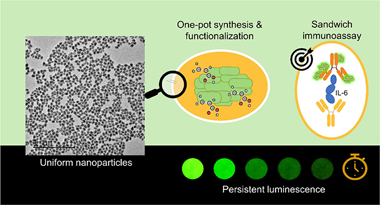
Persistent Luminescence Zn2GeO4:Mn2+Nanoparticles Functionalized with Polyacrylic Acid: One-Pot Synthesis and Biosensing Applications

Zinc germanate doped with Mn2+ (Zn2GeO4:Mn2+) is known to be a persistent luminescence green phosphor with potential applications in biosensing and bioimaging. Such applications demand nanoparticulated phosphors with a uniform shape and size, good dispersibility in aqueous media, high chemical stability, and surfacefunctionalization. These characteristics could be major bottlenecks and hence limit their practical applications.…