


ZnO/TiO2 and ZnO/Nb2O5 as effective systems for the treatment of enteric bacteria and commercial dyes

In this study, ZnO/TiO2 and ZnO/Nb2O5 photocatalysts were evaluated in the river pollution remediation and wastewater treatment from textile factories, thus, the target pollutants selected for this study were enteropathogenic bacteria and commercial dyes. The mixed oxide systems were extensively analyzed in order to explore their physicochemical properties. From this analysis, it was found that the coupling of two oxides did not modify the crystallinity of the pristine semiconductors. As a result, XRD Wurtzite phase, hexagonal phase, and anatase phases were identified for ZnO, Nb2O5, and TiO2 photocatalyst, respectively. Using UV-Vis…
Dielectric multilayers for broadband optical rotation enhancement

We design a simple dielectric multilayer capable of sustaining broadband superchiral surface waves. We show that the platform can produce large optical chirality enhancements in a wavelength range of hundreds of nanometers. We finally demonstrate that these properties result in the enhancement of the optical rotation signal well above two orders of magnitude, thus extending surface-enhanced chiral spectroscopies beyond the traditionally addressed circular dichroism signals.

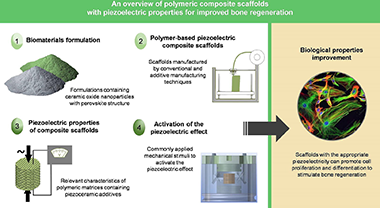
An overview of polymeric composite scaffolds with piezoelectric properties for improved bone regeneration

  Despite the dramatic change that Tissue Engineering or stem cell therapies have brought to current therapeutic strategies, there is a lack of functionalities in the available biomaterials for manufacturing scaffolds to treat several highly prevalent osseous diseases (osteochondral defects, osteoporosis, etc.). One promising approach to fill this gap involves the development of innovative piezoelectric scaffolds for improved bone regeneration. Scaffolds with the appropriate piezoelectricity can positively influence the proliferation and differentiation of mesenchymal…

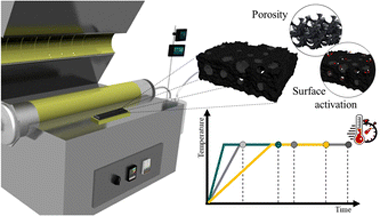
Influence of firing temperature on the ceramic properties of illite-chlorite-calcitic clays

The influence of firing temperature on the ceramic properties of illite-chlorite-calcitic clays has been investigated. Three samples of the same clay deposit have been selected. Weight loss, dimensional changes, water absorption, bulk density, open porosity, flexural and compressive strengths, initial capillary water absorption rate and thermal conductivity have been determined as a function of firing…

Partial oxycombustion-calcium looping hybridisation for CO2 capture in waste-to-energy power plants

Integrating bioenergy and carbon capture and storage (BECCS) presents a great opportunity for power produc-tion with negative global CO2 emissions. This work explores a novel synergetic system that integrates mem-branes, partial biomass oxycombustion and the calcium looping (CaL) process. Polymeric membranes generate oxygen-enriched air (OEA) with an O2 concentration of 39%v/v, which is used for…

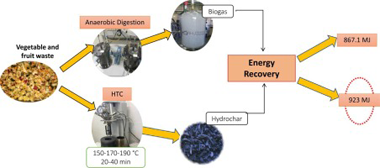
Hydrothermal carbonization vs. anaerobic digestion to valorize fruit and vegetable waste: A comparative technical and energy assessment

Herein, the valorization of vegetable and fruit waste was assessed via hydrothermal carbonization (HTC) and anaerobic digestion (AD) in terms of product characterization and energy requirements. HTC was conducted at reaction temperatures between 150 & DEG;C and 190 & DEG;C, and residence times between 20 min and 40 min. The increase in the process severity…

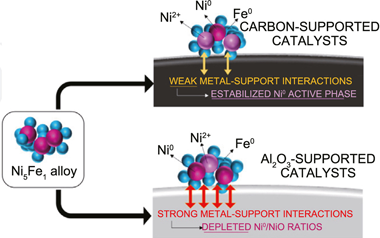
Are Ni/ and Ni5Fe1/biochar catalysts suitable for synthetic natural gas production? A comparison with g-Al2O3 supported catalysts

Among challenges implicit in the transition to the post-fossil fuel energetic model, the finite amount of resources available for the technological implementation of CO2 revalorizing processes arises as a central issue. The development of fully renewable catalytic systems with easier metal recovery strategies would promote the viability and sustainability of synthetic natural gas production circular…

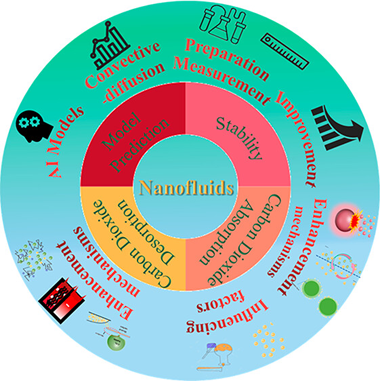
Review and Perspectives of CO2 Absorption by Water- and Amine-Based Nanofluids

The emission of greenhouse gases, especially CO2, hasbecome a major cause of environmental degradation, and carbon capture,utilization, and storage (CCUS) is a proposed solution to mitigateits impact. Nanofluids, a relatively new method for CO2 absorption, have gained attention in recent years. This review focuseson conventional methods for preparing nanofluids along with techniquesto improve their stability and enhance the CO2 absorptionand desorption mechanisms. Additionally, the influences of factors,i.e., nanoparticle and base solution…