Mechanistic aspects of the reduction of rutile titanium dioxide and its Re-oxidation. Development and destruction of crystallographic shear structures

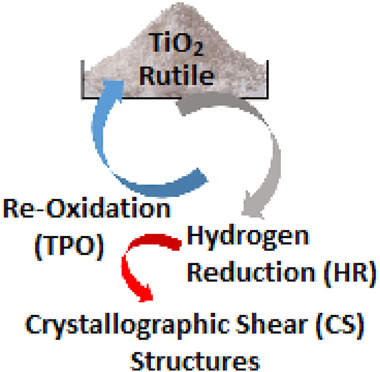
A model is presented giving the mean dimensions of acicular octadecahedral microcrystallites of a rutile titanium dioxide powder. Reduction at 823 K, in conjunction with ESR, electrical conductivity and controlled re-oxidation has enabled the model to be applied to reduced microcrystallites. At 300 K they contain <0.1% of paramagnetic [Ti3+↑ VO: ↑Ti3+] reduced edge sites and >99.9% of reduced spin-paired [Ti3+↑↓ Ti3+ VO:] sites. These sites are situated…

Understanding the Problem of Hydrogen Storage Using a Demonstration: Coupling a Hydrogen Generator Based on the Hydrolysis of Sodium Borohydride to a Fuel-Cell Kit

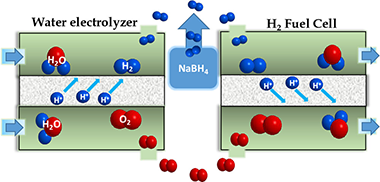
In the context of a green global energy paradigm, hydrogen (H-2) is a very promising energy carrier. In fuel cells, hydrogen can be used to generate electricity to drive an electric motor, producing water as its only byproduct. However, to implement hydrogen as an energy vector, developing methods for its production, storage, distribution, and use…

Sustainable Integration of Zinc Oxide Nanoparticles: Enhancing Properties of Poly(ε-Caprolactone) Electrospun Nanofibers and Cast Films

This study investigated the impact of adding zinc oxide nanoparticles (ZnO-NPs) to electrospun membranes and cast films made of poly(epsilon-caprolactone) (PCL). The physicochemical, mechanical, and morphological properties of the samples were analyzed. Physicochemical parameters included water contact angle (WCA), water vapor transmission rate (WVTR), permeance, water vapor permeability (WVP), light transmission (T-600), and transparency (T). Mechanical properties, such as maximum stress (6(max)), elongation (epsilon(max)), and Young’s modulus (MPa), were also evaluated. Morphological properties were…

Metal- based eggshell particles prepared via successive incipient wetness impregnation method as a promoted sorbent for CO2 capturing in the calcium looping process

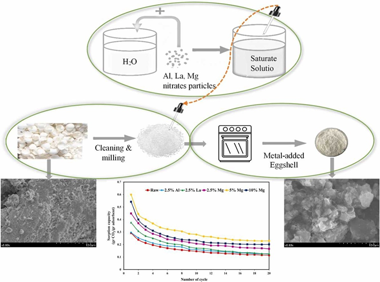
  Cyclic adsorption by using of bio-waste eggshell particles as a cheap, accessible and environmentally friendly CaCO3 source has been considered as one of the important methods to decrease or remove CO2 from the flue gas. However, deactivation of eggshell particles and CO2 capture capacity decaying with increasing the cycle’s number remained as an important…

Biodegradability Assessment of Prickly Pear Waste-Polymer Fibers under Soil Composting

Nowadays, solving the problems associated with environmental pollution is of special interest. Therefore, in this work, the morphology and thermal and mechanical properties of extruded fibers based on polylactic acid (PLA) and poly(butylene adipate-co-terephthalate) (PBAT) added to prickly pear flour (PPF) under composting for 3 and 6 months were evaluated. The highest weight loss percentage (92 +/- 7%) was obtained after 6-month degradation of the PLA/PBAT/PPF/CO/AA blend, in which…

Impact of topology framework of microporous solids on methanol carbonylation: An operando DRIFTS-MS study

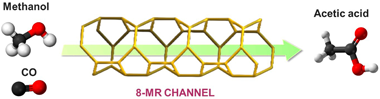
Methanol carbonylation was evaluated over heterogeneous catalysts based on Cu-exchanged zeolitic materials with different topology: Cu@MOR, Cu@FER, and Cu@ZSM-5. Despite the similar Si/Al ratios, it is crucial to acknowledge that the acid strength is influenced by the framework topology, as supported by the NH3-TPD results. This, along with other characterization techniques allowed us to estimate…

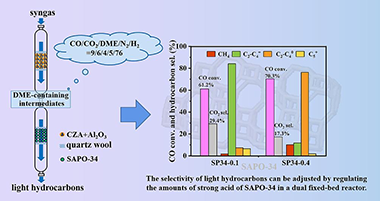
Catalytic conversion of syngas to light hydrocarbons via simulated intermediates CO/CO2/DME/N2/H2 over the regulated acidity of SAPO-34

  Direct conversion of syngas to light hydrocarbons has been intensively studied in recent years; however, the high selectivity of light hydrocarbons is still a challenging task to achieve a high CO conversion. Here, a bifunctional catalyst consisting of a methanol synthesis catalyst (CZA) and a methanol to dimethyl ether (DME) catalyst (Al2O3) was employed…

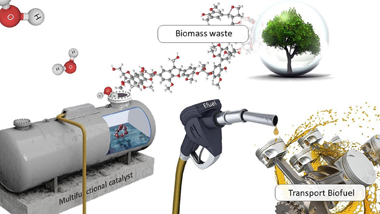
Water-assisted HDO of biomass model compounds enabled by Ru-based catalysts

Biofuels upgrading gathering momentum in view of the gradual depletion of fossil fuels and the pursuit of renewable energy sources to mitigate global warming. Hydrodeoxygenation (HDO) is a key reaction in the upgrading of bio-oil to produce hydrocarbon fuels or high-value chemicals. Oxygen removal in bio-oil increases its calorific value, improve thermal and chemical stability, reduce corrosiveness, etc., making the upgraded biooil suitable…