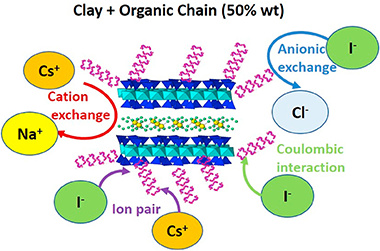
A technological approach based on engineered nanoclay composites for cesium and iodine retention

  The development of effective and environmentally friendly methods for separating hazardous radionuclides from waste poses a significant technological challenge. 137Cs and 131I are among the most important radionuclides discharged into the environment by nuclear power plants. One of the best ways to eliminate them involves adsorption on clay minerals. In this regard, studies have…

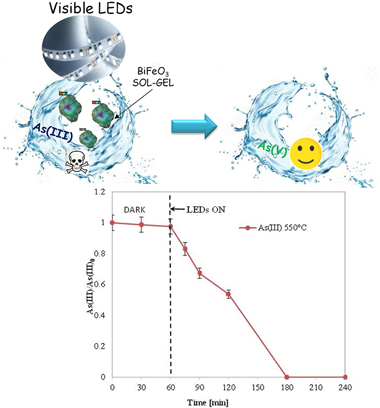
Bismuth ferrite as innovative and efficient photocatalyst for the oxidation of As(III) to As(V) under visible light

The presence of As in drinking water is a problem felt all over the world. In particular, arsenic is present in +3 (As(III)) and +5 (As(V)) oxidation states. However, As(III) is the most toxic and difficult to remove with conventional adsorption processes. A pre-oxidation process is therefore necessary. In this work, we report, for the first time, the…

Experimental optimization of Ni/P atomic ratio for nickel phosphide catalysts in reverse water-gas shift

Nickel phosphide catalysts show a high level of selectivity for the reverse water-gas shift (RWGS) reaction, inhibiting the competing methanation reaction. This work investigates the extent to which suppression of methanation can be controlled by phosphidation and tests the stability of phosphide phases over 24-hour time on stream. Herein the synthesis of different phosphide crystal structures by varying Ni/P atomic…

Integration of calcium looping and calcium hydroxide thermochemical systems for energy storage and power production in concentrating solar power plants

Energy storage is a key factor in the development of renewables-based electrical power systems. In recent years, the thermochemical energy storage system based on calcium-looping has emerged as an alternative to molten salts for energy storage in high-temperature concentrated solar power plants. This technology still presents some challenges that could be solved by integrating the…

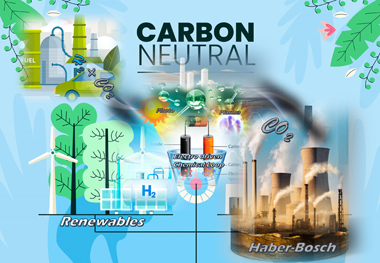
Enroute to the Carbon-Neutrality Goals via the Targeted Development of Ammonia as a Potential Nitrogen-Based Energy Carrier

The reliance of a future carbon-free horizon is strongly aligned with the long-term energy storage avenues which are completely derived from renewable energy resources. Ammonia with its high energy content and density can perform as a decent candidate for buffering the short-term storage options. However, the current NH3 production majorly feeding the current huge desire for…

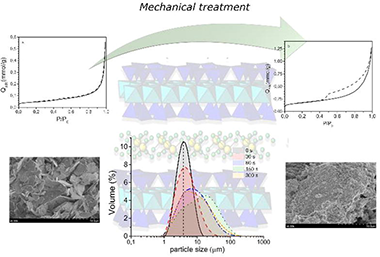
Mechanical treatments on design powder ceramic materials: Insight into the textural and structural changes

Mechanical treatment of porous ceramics, such as porous clay minerals, is a crucial step in ceramic processing. Among clay minerals, design swelling brittle micas have shown exceptional properties for further applications, although they exhibit low surface area and porosity. But, their mechanical activation could improve their textural properties and deserves to be investigated. Thus, the aim of this work…

Negative emissions power plant based on flexible calcium-looping process integrated with renewables and methane production

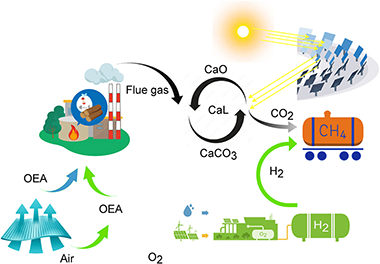
This paper provides a review of negative carbon capture technologies. Based on these technologies, here it is proposed an innovative negative emissions power plant combining the generation and storage of energy from biomass, photovoltaic, and concentrated solar power, capturing and recovering CO2 by producing H2 or CH4 as green energy carriers. The main features of the system are i) large-scale energy…

Low-temperature reverse water gas-shift reaction over highly efficient Cu-hydrotalcites: Mechanistic insights on the role of malachite phase

Carbon dioxide (CO2) transformation into valuable fuels and chemicals is in most cases a challenge far from readiness nowadays. One possible route for its conversion is the reverse water gas shift reaction (rWGS), crucial for syngas generation and required for the chemical conversion of CO2 to fuels and platform chemicals. In this paper, well organized Cu/Zn/Al structures were proposed as efficient catalysts for rWGS reaction at low tem-peratures. The results of in situ…

Guaiacol hydrotreatment in an integrated APR-HDO process: Exploring the promoting effect of platinum on Ni-Pt catalysts and assessing methanol and glycerol as hydrogen sources

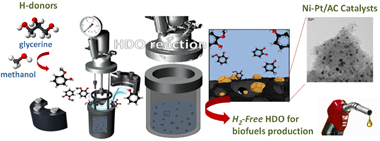
This study presents an integrated approach combining aqueous phase reforming (APR) and hydrodeoxygenation (HDO) for the hydrotreatment of guaiacol, a model compound representing lignin-derived phenols in pyrolysis bio-oils. The APR process enables in-situ H2 generation, eliminating the need for an external hydrogen source. We examine the interplay between metal species, the Pt-promoting effect on Ni-Pt catalyst supported on activated carbon (AC), and the choice of hydrogen source (methanol or glycerol). Amongst the monometallic catalysts, a 1% Pt/AC catalyst notably achieved over 96% guaiacol conversion at 300 degrees C with either hydrogen source. Interestingly, when 0.5-1% of the Ni loading is replaced with…

Influence of Long-Term CaO Storage Conditions on the Calcium Looping Thermochemical Reactivity

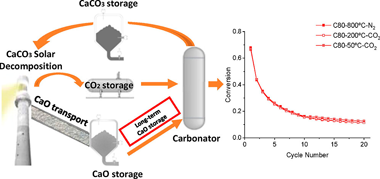
Long-term storage capability is often claimed as one of the distinct advantages of the calcium looping process as a potential thermochemical energy storage system for integration into solar power plants. However, the influence of storage conditions on the looping performance has seldom been evaluated experimentally. The storage conditions must be carefully considered as any potential…