Scaling-up the Calcium-Looping Process for CO2 Capture and Energy Storage

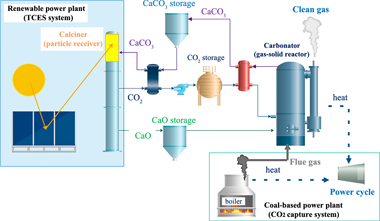
The Calcium-Looping (CaL) process has emerged in the last years as a promising technology to face two key challenges within the future energy scenario: energy storage in renewable energy-based plants and CO2 capture from fossil fuel combustion. Based on the multicycle calcination-carbonation reaction of CaCO3 for both thermochemical energy storage and post-combustion CO2 capture applications,…

Pure perovskite BiFeO3-BaTiO3 ceramics prepared by reaction flash sintering of Bi2O3-Fe2O3-BaTiO3 mixed powders

In this work, the 0.67BiFeO(3)-0.33BaTiO(3) ferroelectric ceramic was prepared by Reaction Flash Sintering (RFS). This preparation technique combines synthesis and sintering in a single Flash experiment. The starting oxides reacted during the flash to produce a stoichiometric well-sintered solid solution at a temperature of 858 degrees C by applying a modest field of 35 V…

Photonic sensor systems for the identification of hydrocarbons and crude oils in static and flow conditions

Identification of hydrocarbons and crude oils is typically carried out with samples that, taken from natural sources or refineries, must be brought to the laboratory for their analysis with rather sophisticated instruments. Alternatively, «in situ» procedures have been also developed for this purpose. In this work, we propose the use of a series of several…

Plasma-Assisted Deposition of TiO2 3D Nanomembranes: Selective Wetting, Superomniphobicity, and Self-Cleaning

Fabrication of tunable wetting surfaces is sought for the last years given its importance on energy, biomaterials and antimicrobials, water purification, microfluidics, and smart surfaces. Liquid management on surfaces mainly depends on the control at the micro- and nanoscale of both roughness and chemical composition. Herein, the combination of a soft-template method and plasma-enhanced chemical…

Photocatalytic Treatment of Stained Wastewater Coming from Handicraft Factories. A Case Study at the Pilot Plant Level

UV/H2O2 process and TiO2-based photocatalysis were studied in the present work. The effectiveness of these methods was tested in the treatment of effluents taken from handicraft factories. Microorganisms, dyes, and different organic pollutants were detected in the industrial effluents. The experimental procedure for the wastewater treatment was carried out in a patented sunlight reactor on a…

Structure-sensitivity of formic acid dehydrogenation reaction over additive-free Pd NPs supported on activated carbon

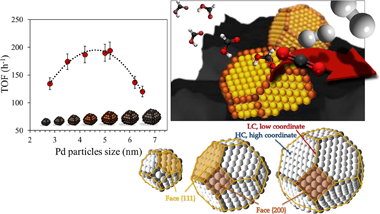
In this study the size-activity dependence of palladium based catalysts in formic acid dehydrogenation reaction was investigated and evaluated. A wide range of particle sizes was considered and the catalyst series were prepared upon variation of some synthetic parameters, precursor and solvent nature in particular. Synthesis method variations affect significantly Pd particle size and results…

Photocatalytic production of hydrogen and methane from glycerol reforming over Pt/TiO2–Nb2O5

In this study, platinized mixed oxides (TiO2–Nb2O5) were tested on photocatalytic hydrogen production from a glycerol solution under UV light. Different samples with different Ti:Nb ratios were prepared by using a simple method that simultaneously combined a physical mixture and a platinum photochemical reduction. This method led to improved physicochemical properties such as low band gap, better Pt nanoparticle distribution on the surface, and…

Nb-C thin films prepared by DC-MS and HiPIMS: Synthesis, structure, and tribomechanical properties

Nanostructured Nb-C thin films were prepared by direct current magnetron sputtering (DC-MS) and high-power impulse magnetron sputtering (HiPIMS). The films were characterized in depth by X-ray diffraction (XRD), grazing incidence X-ray diffraction, scanning electron microscopy, atomic force microscopy, electron probe microanalysis, and Raman spectroscopy. The mechanical properties were measured by nanoindentation, and the tribological properties…