Impact of flame confinement with inert ceramic foams on the particulate emissions of domestic heating systems

Small solid biomass combustion systems are among the main contributors to the global particulate emissions share, and cheap, efficient abatement systems are not yet available for them. The placement of inert porous material to confine the combustion region is being recently explored as a possible mitigation system for this kind of pollution. However, given the…

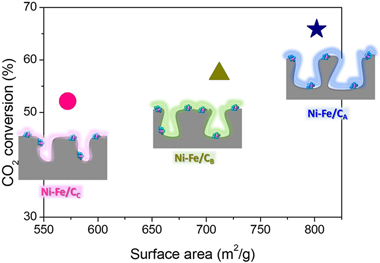
Assessing the impact of textural properties in Ni-Fe catalysts for CO2 methanation performance

In heterogeneous catalysis, the benefits of employing adequate textural properties on the catalytic performances are usually stated. Nevertheless, the quantification of the extent of improvement is not an easy task since variations on the catalysts’ specific areas and pore structures might involve modifications on a number of other surface catalytic features. This study establishes the impact of the…

Nanophotonics for current and future white light-emitting devices

Photonic nanostructures have proven useful to enhance the performance of a wide variety of materials and devices for sensing, catalysis, light harvesting, or light conversion. Herein, we discuss the role of nanophotonics in current and next-generation designs of white light-emitting diodes (LEDs). We discuss recent developments on luminescent materials designed as alternatives to rare earth-doped…

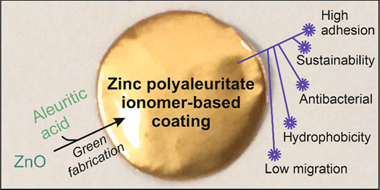
Zinc Polyaleuritate Ionomer Coatings as a Sustainable, Alternative Technology for Bisphenol A-Free Metal Packaging

Sustainable coatings for metal food packaging were prepared from ZnO nanoparticles (obtained by the thermal decomposition of zinc acetate) and a naturally occurring polyhydroxylated fatty acid named aleuritic (or 9,10,16-trihydroxy-hexadecanoic) acid. Both components reacted, originating under specific conditions zinc polyaleuritate ionomers. The polymerization of aleuritic acid into polyaleuritate by a solvent-free, melt polycondensation reaction was…

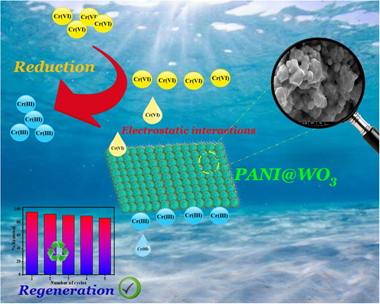
Development of a novel PANI@WO3 hybrid composite and its application as a promising adsorbent for Cr(VI) ions removal

In the current study, an in-situ oxidative polymerization method was used to synthesize polyaniline-coated tungsten trioxide biphasic composite (PANI@WO3). The as-developed composite material properties were elucidated using different characterization tools such as X-ray diffraction (XRD), scanning electron microscopy (SEM), energy dispersive X-ray spectroscopy (EDX), transmission electron microscopy (TEM), Fourier transform infrared spectroscopy (FTIR), N2 sorption-desorption isotherm, and X-ray photoelectron spectroscopy (XPS). The PANI@WO3 was further…

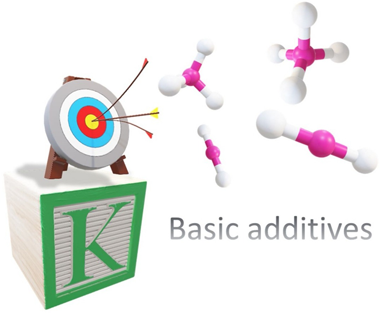
Effect of potassium loading on basic properties of Ni/MgAl2O4 catalyst for CO2 reforming of methane

Coke deposition is one of the key issues in the dry reforming of methane on Ni catalysts. In the present work, we investigate the effect of potassium addition for suppressing carbon deposition in the Dry Reforming of Methane. The results obtained demonstrated that potassium contents above 3 wt% promote carbon gasification, favouring both Reverse Water Gas Shift and Boudouard reaction.…

Mechanically Switchable Wetting Petal Effect in Self-Patterned Nanocolumnar Films on Poly(dimethylsiloxane)

Switchable mechanically induced changes in the wetting behavior of surfaces are of paramount importance for advanced microfluidic, self-cleaning and biomedical applications. In this work we show that the well-known polydimethylsiloxane (PDMS) elastomer develops self-patterning when it is coated with nanostructured TiO2 films prepared by physical vapor deposition at glancing angles and subsequently subjected to a…