Molecular Interface Engineering via Triazatruxene-Based Moieties/NiOx as Hole-Selective Bilayers in Perovskite Solar Cells for Reliability

Interface engineering is an effective approach to decrease nonradiative recombination and the energy barrier at the perovskite/hole transporting layer (HTL) interfaces. To overcome such limitations, an organic semiconductor (DTT-EHDI2) is proposed, which is, composed of dithienothiophene (DTT) as the core and a planar triazatruxene incorporating an alkyl chain as the side group. This is noted…

Effect of the Processing Parameters on the Porosity and Mechanical Behavior of Titanium Samples with Bimodal Microstructure Produced via Hot Pressing

Commercially pure (c.p.) titanium grade IV with a bimodal microstructure is a promising material for biomedical implants. The influence of the processing parameters on the physical, microstructural, and mechanical properties was investigated. The bimodal microstructure was achieved from the blends of powder particles with different sizes, while the porous structure was obtained using the space-holder…

Boosting water activation determining-step in WGS reaction on structured catalyst by Mo-doping

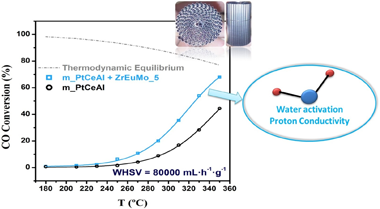
Proton conductors Mo-Eu-Zr mixed oxide systems were synthesized and further mixed with a conventional Pt/CeO2/Al2O3 catalyst to develop a highly efficient water-gas-shift (WGS) catalyst. The designed catalyst, once structured, allows reach the equilibrium conversion at medium temperatures (similar to 350 degrees C) at 80 L.g(-1) h(-1) space velocity. The ability of the proton conductor to…

Study of a Waste Kaolin as Raw Material for Mullite Ceramics and Mullite Refractories by Reaction Sintering

A deposit of raw kaolin, located in West Andalusia (Spain), was studied in this work using a representative sample. The methods of characterization were X-ray diffraction (XRD), X-ray fluorescence (XRF), particle size analysis by sieving and sedimentation, and thermal analysis. The ceramic properties were determined. A sample of commercial kaolin from Burela (Lugo, Spain), with…

Plasma engineering of microstructured piezo-Triboelectric hybrid nanogenerators for wide bandwidth vibration energy harvesting

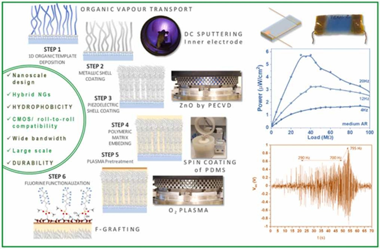
We introduce herein the advanced application of low-pressure plasma procedures for the development of piezo and triboelectric mode I hybrid nanogenerators. Thus, plasma assisted deposition and functionalization methods are presented as key enabling technologies for the nanoscale design of ZnO polycrystalline shells, the formation of conducting metallic cores in core@shell nanowires, and for the solventless…

Visible light photodegradation of blue basic 41 using cobalt doped ZnO: Box–Behnken optimization and DFT calculation

CoxZn1−xO system (0 ≤ x ≤ 0.2) was synthesized using the solution combustion method with urea as a fuel source. Photocatalytic tests were performed under visible light to assess the Basic Blue 41 (BB41) conversion. Various characterization techniques, including XRD, FT-IR analysis, SEM, EDS, XRF, BET-surface area, and DRS were used to investigate the composition, structure, and morphology of…

Performance of AISI 316L-stainless steel foams towards the formation of graphene related nanomaterials by catalytic decomposition of methane at high temperature

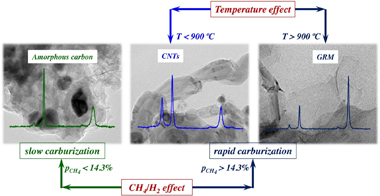
This work explores the preparation of graphene-related materials (GRMs) grown on stainless steel foams via catalytic decomposition of methane (CDM). The main active phases for the reaction are the Fe nanoparticles segregated from the stainless-steel after the activation stage of the foam. The effect of the feed composition and reaction temperature has been studied in…

Compositional gradients at the nanoscale in substoichiometric thin films deposited by magnetron sputtering at oblique angles: A case study on SiOx thin films

We demonstrate the existence of stoichiometric variations at the nanoscale when growing nanocolumnar SiOx thin films by reactive magnetron sputtering deposition at oblique angles. Results show stoichiometric variations in the range 0.3 < x < 1.3 when growing a SiO0.5 thin film. This agrees with results from a numerical growth model that obtains a shift…

Flash Sintering Research Perspective: A Bibliometric Analysis

Flash Sintering (FS), a relatively new Field-Assisted Sintering Technique (FAST) for ceramic processing, was proposed for the first time in 2010 by Prof. Rishi Raj’s group from the University of Colorado at Boulder. It quickly grabbed the attention of the scientific community and since then, the field has rapidly evolved, constituting a true milestone in…