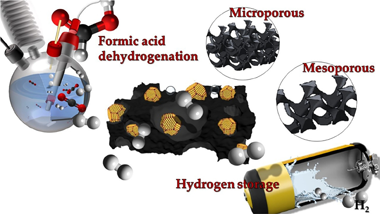
Functionalized biochars as supports for Pd/C catalysts for efficient hydrogen production from formic acid

Biomass waste product was used to generate biochars as catalytic supports for selective hydrogen production from formic acid. The supports were obtained after pyrolysis in CO2 atmosphere of non-pretreated and che-mically ZnCl2 activated raw materials (vine shoot and crystalline cellulose). The support series includes materials with different textural properties and surface chemistry. The support nature…

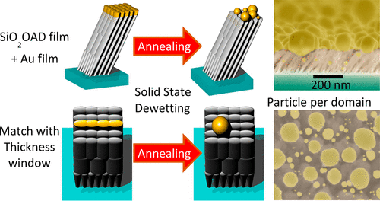
Solid-State Dewetting of Gold on Stochastically Periodic SiO2 Nanocolumns Prepared by Oblique Angle Deposition

Solid-state dewetting (SSD) on patterned substrates is a straightforward method for fabricating ordered arrays of metallic nanoparticles on surfaces. However, a drawback of this procedure is that the patterning of substrates usually requires time-consuming and expensive two-dimensional (2D) fabrication methods. Nanostructured thin films deposited by oblique angle deposition (OAD) present at the surface a form…

A first insight into the microstructure and crack propagation in novel boron nitride nanosheet/3YTZP composites

In this work, novel 3 mol% yttria tetragonal zirconia polycristalline (3YTZP) ceramic composites with boron nitride nanosheets (BNNS) are investigated for the first time. Highly densified composites with 1 and 4 vol% BNNS were obtained by spark plasma sintering (SPS) after BNNS synthesis using a solution exfoliation method and BNNS dispersion into the ceramic powder…

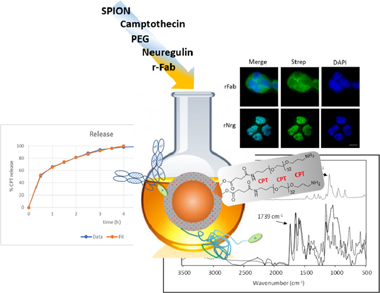
EGFR-targeting antitumor therapy: Neuregulins or antibodies?

Malignancies such as lung, breast and pancreatic carcinomas are associated with increased expression of the epidermal growth factor receptor, EGFR, and its role in the pathogenesis and progression of tumors has made this receptor a prime target in the development of antitumor therapies. In therapies targeting EGFR, the development of resistance owing to mutations and…

Impact of Tb4+ and morphology on the thermal evolution of Tb-doped TiO2 nanostructured hollow spheres and nanoparticles

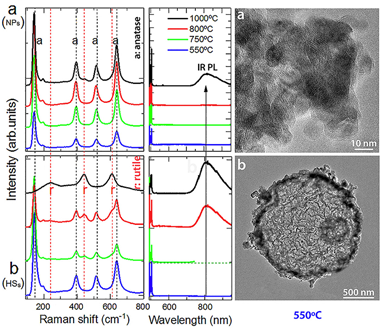
Tb-doped TiO2 hollow spheres (HSs) in the range 0.0-2.0 at.% have been synthesized by the first time to the best of our knowledge. The HSs are compared with nanoparticles (NPs) to evaluate the impact of morphology on their physicochemical and photoluminescence (PL) behavior upon increasing calcination temperature. After calcination at 550 degrees C, the particles…

Insights into the role of the layer architecture of Cr-Ti-N based coatings in long-term high temperature oxidation experiments in steam atmosphere

Knowledge on hard coatings has been applied in the energy field extending their use as protecting coatings of steam power generation plants components. The role of the layer architecture of Cr-Ti-N based coatings deposited by reactive cathodic arc evaporation on P92 steel substrates was studied with the focus on their oxidation resistance at 650 degrees…

Active sites and optimization of mixed copper-cobalt oxide anodes for anion exchange membrane water electrolysis

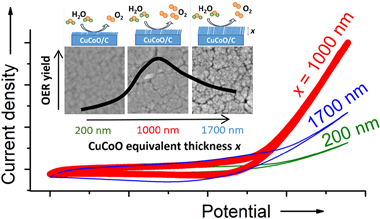
The optimization of the catalysts incorporated to the electrodes for anion exchange membrane water electmlysers is a key issue to maximize their performance through the improvement of the oxygen evolution reaction (OER) yield. In this work, we show that the modification of the microstructure and the chemical properties of a mixed copper-cobalt oxide anode may…

The Possible Detriment of Oxygen in Creep of Alumina and Zirconia Ceramic Composites Reinforced with Graphene

This paper aims to give an answer to the following question: is the oxidation of graphene a critical issue for high-temperature plasticity in graphene-reinforced ceramics? To give a convincing reply, we will focus on two very different graphene-based ceramic composites: reduced graphene oxide (rGO)-reinforced alumina (alpha-Al2O3) and reduced graphene oxide (rGO)-reinforced yttria tetragonal zirconia (t-ZrO2).…