Charge collection properties of dye-sensitized solar cells based on 1-dimensional TiO2 porous nanostructures and ionic-liquid electrolytes

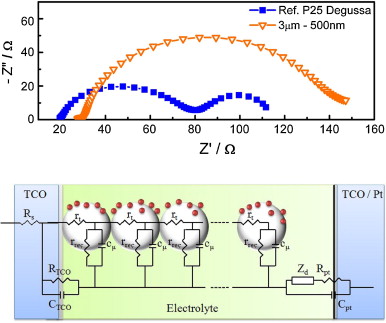
Dye solar cells consisting of mesoporous TiO 2 nanocolumnar films sensitized with a highly absorptive indoline dye were studied to estimate the charge collection efficiency provided by porous 1-dimensional (1-D) nanostructures in combination with viscous, fast-recombining electrolytes. The TiO 2 mesoporous nanostructured films were prepared by physical vapor deposition at glancing incidence (GLAD-PVD). Electrochemical Impedance…

The effect of nickel on alloy microstructure and electrochemical behaviour of AA1050 aluminium alloy in acid and alkaline solutions

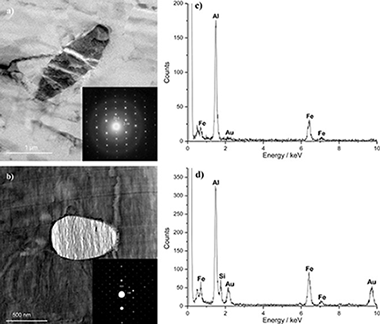
The study investigates the influence of nickel and magnesium additions to AA1050 aluminium alloy on the alloy electrochemical behaviour in sodium hydroxide and hydrochloric solutions under conditions relevant to industries that use alkaline etching as a standard surface treatment procedure and to the lithographic and electronic industries where surface convolution is assisted by pitting in…

Vertical and tilted Ag-NPs@ZnO nanorods by plasma-enhanced chemical vapour deposition

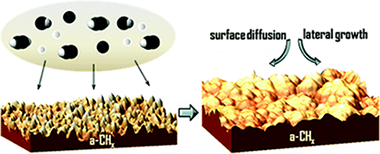
Supported ZnO nanorods have been prepared at 405 K by plasma-enhanced chemical vapour deposition (PECVD) using diethylzinc as precursor, oxygen plasma and silver as the promotion layer. The nanorods are characterized by a hollow and porous microstructure where partially percolated silver nanoparticles are located. By changing different deposition parameters like the thickness of the silver…

Microstructural and chemical characterization of nanostructured Tialsin coatings with nanoscale resolution

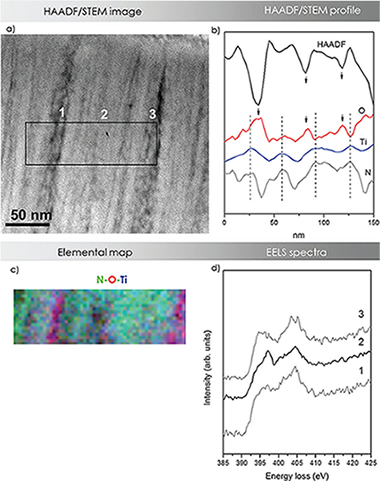
Nanoscale resolution electron microscopy analysis combined with ion beam assisted techniques are presented here, to give answers to full characterization of morphology, growth mode, phase formation, and compositional distribution in nanocomposite TiAlSiN coatings deposited under different energetic conditions. Samples were prepared by magnetron sputtering, and the effects of substrate temperature and bias were investigated. The…

Roughness assessment and wetting behavior of fluorocarbon surfaces

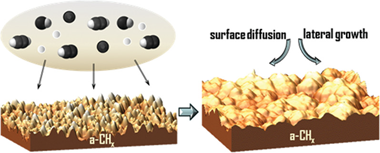
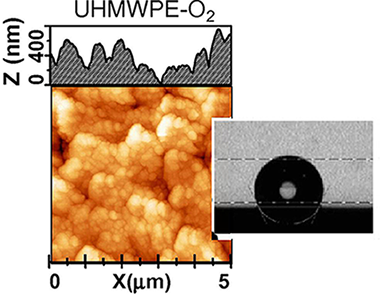
The wetting behavior of fluorocarbon materials has been studied with the aim of assessing the influence of the surface chemical composition and surface roughness on the water advancing and receding contact angles. Diamond like carbon and two fluorocarbon materials with different fluorine content have been prepared by plasma enhanced chemical vapor deposition and characterized by…

Correlation lengths, porosity and water adsorption in TiO2 thin films prepared by glancing angle deposition

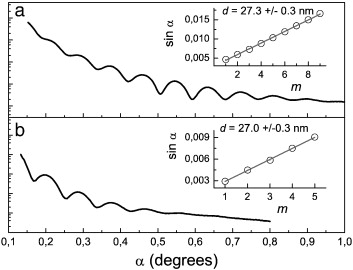
This paper reports a thorough microstructural characterization of glancing angle deposited (GLAD) TiO 2 thin films. Atomic force microscopy (afm), grazing-incidence small-angle x-ray scattering (GISAXS) and water adsorption isotherms have been used to determine the evolution of porosity and the existence of some correlation distances between the nanocolumns constituting the basic elements of the films…