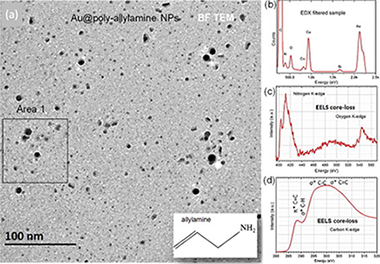
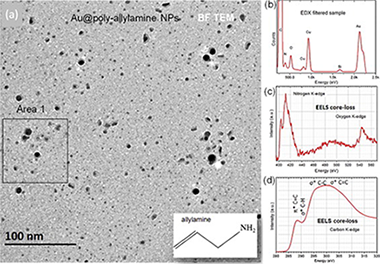
Transmission electron microscopy of unstained hybrid Au nanoparticles capped with PPAA (plasma-poly-allylamine): Structure and electron irradiation effects

Hybrid (organic shell–inorganic core) nanoparticles have important applications in nanomedicine. Although the inorganic components of hybrid nanoparticles can be characterized readily using conventional transmission electron microscopy (TEM) techniques, the structural and chemical arrangement of the organic molecular components remains largely unknown. Here, we apply TEM to the physico-chemical characterization of Au nanoparticles that are coated…

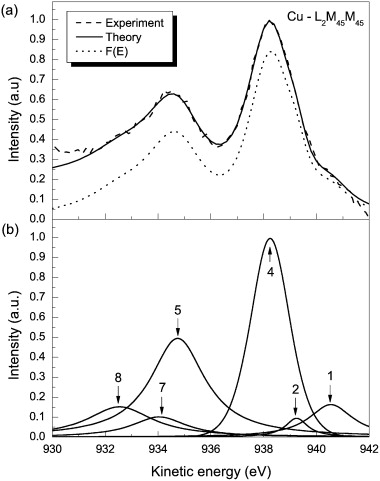
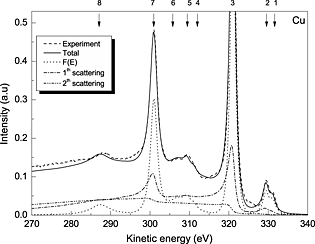
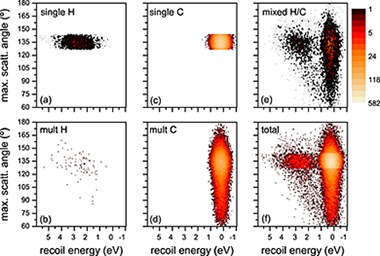
LMM Auger primary excitation spectra of copper

The shape and intensity of measured Auger peaks are strongly affected by extrinsic excitations due to electron transport out of the surface and to intrinsic excitations induced by the sudden creation of the two static core holes. Following a method developed for XPS in a previous work [N. Pauly, S. Tougaard, F. Yubero, Surf. Sci.…

Transmission electron microscopy of unstained hybrid Au nanoparticles capped with PPAA (plasma-poly-allylamine): Structure and electron irradiation effects

Hybrid (organic shell–inorganic core) nanoparticles have important applications in nanomedicine. Although the inorganic components of hybrid nanoparticles can be characterized readily using conventional transmission electron microscopy (TEM) techniques, the structural and chemical arrangement of the organic molecular components remains largely unknown. Here, we apply TEM to the physico-chemical characterization of Au nanoparticles that are coated…

The Use of Fluorocarbons to Mitigate the Oxygen Dependence of Glucose Microbiosensors for Neuroscience Applications

First-generation amperometric glucose biosensors are the most commonly used method for glucose monitoring in neuroscience. Nevertheless, biosensors of this genre suffer from the so-called «oxygen deficit». This problem is particularly acute when the oxygen concentration is low, as is the case in brain extracellular fluid. In the present work we use different fluorocarbons, such as…

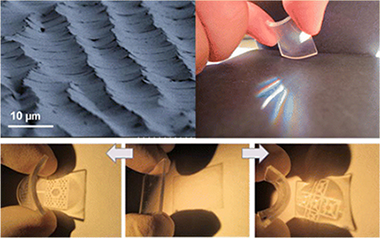
Bending Induced Self-Organized Switchable Gratings on Polymeric Substrates

We present a straightforward procedure of self-surface patterning with potential applications as large area gratings, invisible labeling, optomechanical transducers, or smart windows. The methodology is based in the formation of parallel micrometric crack patterns when polydimethylsiloxane foils coated with tilted nanocolumnar SiO2 thin films are manually bent. The SiO2 thin films are grown by glancing…

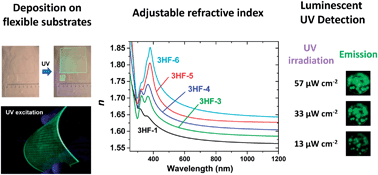
Luminescent 3-hydroxyflavone nanocomposites with a tuneable refractive index for photonics and UV detection by plasma assisted vacuum deposition

Luminescent organic-thin-films transparent in the visible region have been synthesized by a plasma assisted vacuum deposition method. The films have been developed for their implementation in photonic devices and for UV detection. They consist of a plasma polymeric matrix that incorporates 3-hydroxyflavone molecules characterized by absorption of UV radiation and emission of green light. The…

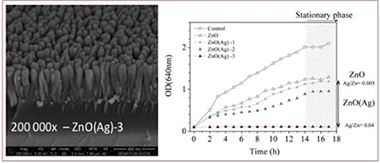
Influence of thickness and coatings morphology in the antimicrobial performance of zinc oxide coatings

In this research work, the production of undoped and silver (Ag) doped zinc oxide (ZnO) thin films for food-packaging applications were developed. The main goal was to determine the influence of coatings morphology and thickness on the antimicrobial performance of the produced samples. The ZnO based thin films were deposited on PET (Polyethylene terephthalate) substrates…