Recubrimientos termocrómicos inteligentes para la climatización eficiente y el control ambiental (TOLERANCE)

La Agencia Internacional de la Energía considera que el uso sistemático de procedimientos autónomos de control ambiental representa una de las mejores apuestas tecnológicas para reducir el consumo energético asociado a la climatización de edificios (más del 40% del consumo global en países desarrollados, muy superior al porcentaje debido al transporte), reduciendo el impacto ambiental…

Enhanced Stability of Perovskite Solar Cells Incorporating Dopant-Free Crystalline Spiro-OMeTAD Layers by Vacuum Sublimation

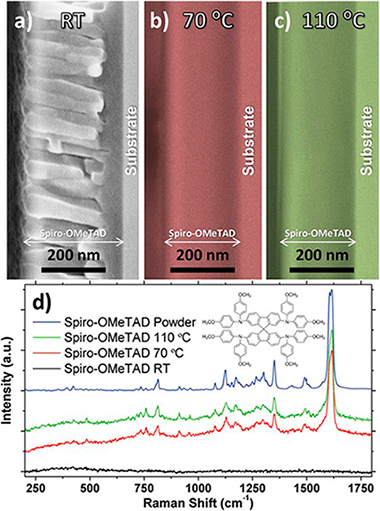
The main handicap still hindering the eventual exploitation of organometal halide perovskite-based solar cells is their poor stability under prolonged illumination, ambient conditions, and increased temperatures. This article shows for the first time the vacuum processing of the most widely used solid-state hole conductor (SSHC), i.e., the Spiro-OMeTAD [2,2 ‘,7,7 ‘-tetrakis (N,N-di-p-methoxyphenyl-amine) 9,9 ‘-spirobifluorene], and…

Graphene Formation Mechanism by the Electrochemical Promotion of a Ni Catalyst

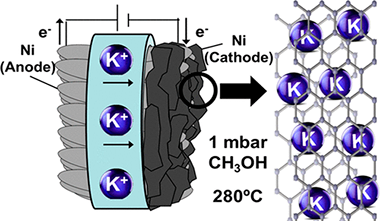
In this work, we show that multilayer graphene forms by methanol decomposition at 280 degrees C on an electrochemically promoted nickel catalyst film supported on a K-beta Al2O3 solid electrolyte. In operando near ambient pressure photoemission spectroscopy and electrochemical measurements have shown that polarizing negatively the Ni electrode induces the electrochemical reduction and migration of…

3D Organic Nanofabrics: Plasma-Assisted Synthesis and Antifreezing Behavior of Superhydrophobic and Lubricant-Infused Slippery Surfaces

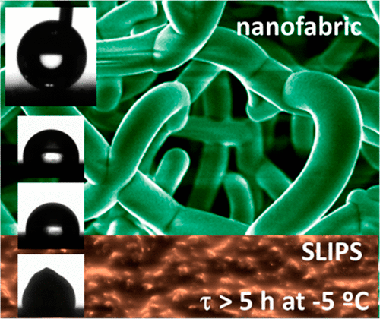
Herein, we present the development of supported organic nanofabrics formed by a conformal polymer-like interconnection of small-molecule organic nanowires and nanotrees. These organic nanostructures are fabricated by a combination of vacuum and plasma-assisted deposition techniques to generate step by step, single-crystalline organic nanowires forming one-dimensional building blocks, organic nanotrees applied as three-dimensional templates, and the…

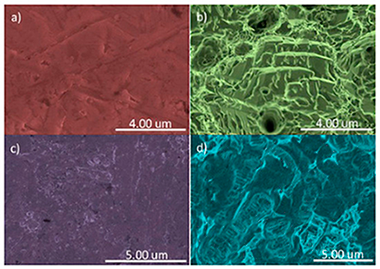
Hydrophobic and Icephobic Behaviour of Polyurethane-Based Nanocomposite Coatings

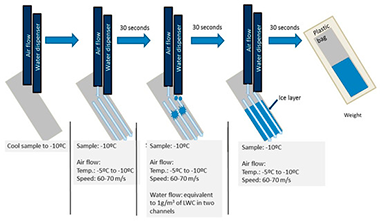
In this paper, hydrophobic nanocomposite coatings based on polyurethane (PUR) modified by nano-silica and silane-based compounds were manufactured by spraying. The main challenge was to assess and improve the hydrophobic as well as anti-icing properties of initially hydrophilic polymer coatings. The prepared nanocomposite coatings were characterized by means of scanning electron microscopy (SEM), optical profilometry…

Kinetic energy-induced growth regimes of nanocolumnar Ti thin films deposited by evaporation and magnetron sputtering

We experimentally analyze different growth regimes of Ti thin films associated to the existence of kinetic energy-induced relaxation mechanisms in the material’s network when operating at oblique geometries. For this purpose, we have deposited different films by evaporation and magnetron sputtering under similar geometrical arrangements and at low temperatures. With the help of a well-established…

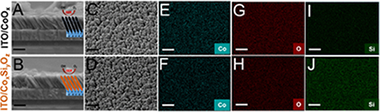
Ultrastable CoxSiyOz Nanowires by Glancing Angle Deposition with Magnetron Sputtering as Novel Electrocatalyst for Water Oxidation

Cobalt is one of the most promising non-noble metal as electrocatalyst for water oxidation. Herein, a highly stable silicon-cobalt mixed oxide thin film with a porous columnar nanostructure is proposed as electrocatalyst for oxygen evolution reaction (OER). CoOx and CoxSiyOz layers with similar thickness were fabricated at room temperature by magnetron sputtering in a glancing…

Influence of Titanium Oxide Pillar Array Nanometric Structures and Ultraviolet Irradiation on the Properties of the Surface of Dental Implants-A Pilot Study

Aim: Titanium implants are commonly used as replacement therapy for lost teeth and much current research is focusing on the improvement of the chemical and physical properties of their surfaces in order to improve the osseointegration process. TiO2, when it is deposited in the form of pillar array nanometric structures, has photocatalytic properties and wet…

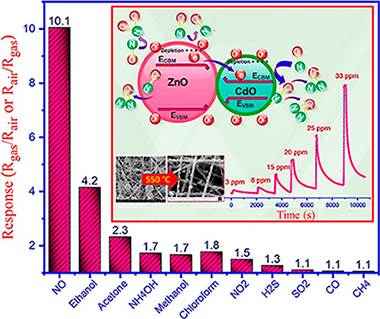
Highly selective few-ppm NO gas-sensing based on necklace-like nanofibers of ZnO/CdO n-n type I heterojunction

Electrospinning method followed by calcination is applied to synthesize ZnO/CdO nanofibers. Characterization is performed by X-ray diffraction (XRD), scanning electron microscopy (SEM), field emission scanning electron microscopy (FESEM), energy dispersive spectroscopy (EDS), diffuse reflectance spectroscopy (DRS), X-ray photoelectron spectroscopy (XPS), ultraviolet photoelectron spectroscopy (UPS) and reflection electron energy loss spectroscopy (REELS), which resulted in detailed…