The Flexible Surface Revisited: Adsorbate-Induced Reconstruction, Homocoupling, and Sonogashira Cross-Coupling on the Au(100) Surface

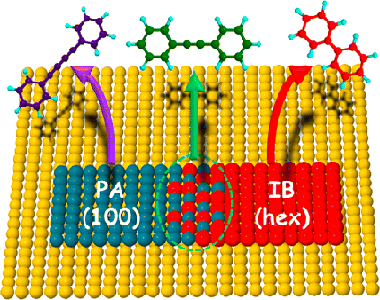
Phenylacetylene (PA) and iodobenzene (IB) are prototypical reactants in Sonogashira cross-coupling. Their adsorption behavior and reactivity on the Au(100) surface were studied by STM, temperature-programmed desorption and reaction, and DFT calculations that included the effect of dispersion forces. The two species exhibited very different behavior. Thus, even at 200 K, PA rearranged Au surface atoms…

Desarrollo de procesos de combustión catalítica de hidrógeno y estudio de su integración en dispositivos para aplicaciones portátiles

El hidrógeno como vector de transporte y almacenamiento de energía es un candidato muy atractivo en el contexto de un mayor uso de las energías renovables y limpias. La producción y el uso de la energía basada en la tecnología del hidrógeno es de especial relevancia en pequeña escala para aplicaciones portátiles (y potencialmente escalable…

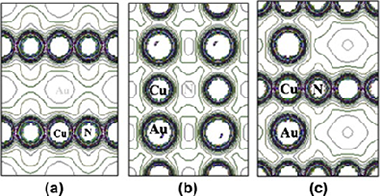
Structure determination and electronic structure of Cu3Au0.5N

This study investigated the formation of a Cu3Au-nitride alloy using both experimental and computational methods. The alloy was produced as thin film by sputtering a Cu3Au target in a nitrogen atmosphere. The films were characterized for structure and composition by spectroscopic and diffraction techniques. The structure was established by Rietveld and ab inito methods. The…

Osteoconductive Potential of Barrier NanoSiO(2) PLGA Membranes Functionalized by Plasma Enhanced Chemical Vapour Deposition

The possibility of tailoring membrane surfaces with osteoconductive potential, in particular in biodegradable devices, to create modified biomaterials that stimulate osteoblast response should make them more suitable for clinical use, hopefully enhancing bone regeneration. Bioactive inorganic materials, such as silica, have been suggested to improve the bioactivity of synthetic biopolymers. An in vitro study on…

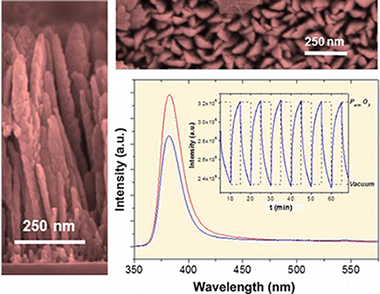
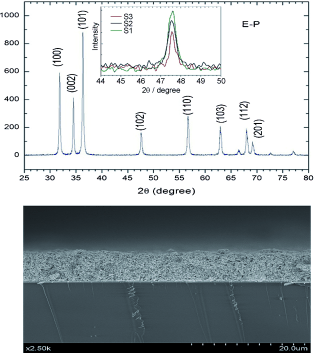
Oxygen Optical Sensing in Gas and Liquids with Nanostructured ZnO Thin Films Based on Exciton Emission Detection

Transparent nanocolumnar porous ZnO thin films have been prepared by plasma-enhanced chemical vapor deposition. By controlling the H-2/O-2 ratio in the plasma gas, the deposition conditions were optimized to obtain an intense exciton emission at around 381 nm and virtually no luminescence in the visible region associated with electronic states in the gap. The intensity…

Mechanisms of Electron Transport and Recombination in ZnO Nanostructures for Dye-Sensitized Solar Cells

ZnO is an attractive material for applications in dye-sensitized solar cells and related devices. This material has excellent electron-transport properties in the bulk but its electron diffusion coefficient is much smaller in mesoporous films. In this work the electron-transport properties of two different kinds of dye-sensitized ZnO nanostructures are investigated by small-perturbation electrochemical techniques. For…