On‐Surface Synthesis and Characterization of Acene‐Based Nanoribbons Incorporating Four‐Membered Rings

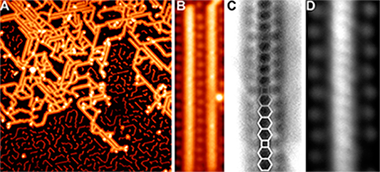
A bottom up method for the synthesis of unique tetracene-based nanoribbons, which incorporate cyclobutadiene moieties as linkers between the acene segments, is reported. These structures were achieved through the formal [2+2] cycloaddition reaction of ortho-functionalized tetracene precursor monomers. The formation mechanism and the electronic and magnetic properties of these nanoribbons were comprehensively studied by means…

2D compositional self-patterning in magnetron sputtered thin films

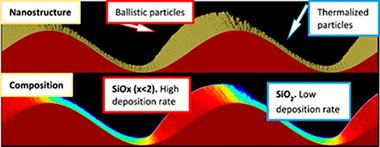
Unlike topography patterning, widely used for numerous applications and produced by means of different technologies, there are no simple procedures to achieve surface compositional patterning at nanometric scales. In this work we have developed a simple method for 2D patterning the composition of thin films. The method relies on the magnetron sputtering deposition at oblique…

Exchange bias and two steps magnetization reversal in porous Co/CoO layer

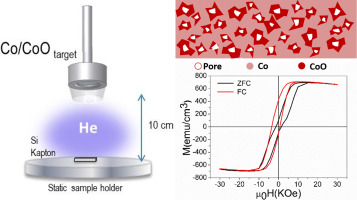
In this paper Co/CoO thick layers (hundreds of nanometers) of different porosity and oxidation degree were prepared in a magnetron sputtering deposition processby tailoring the DC sputtering power, as well as the process gas and target composition. The control of the synthesis parameters allowed the nanostructuration of the films with a singular distribution of closed pores and a controlled…

Preparation, characterization and photocatalytic degradation of Rhodamine B dye over a novel Zn3(PO4)2/BiPO4 catalyst

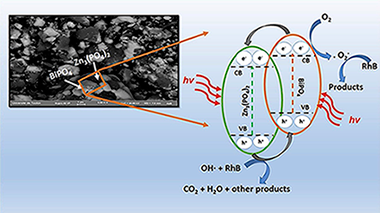
In this work, a facile method was used to synthesize the Zn3(PO4)2/BiPO4 composite photocatalysts with different Bi contents followed by heat treatment at 900 °C for 3 h. The as-prepared samples were studied by a variety of characterization techniques including X-ray diffraction (XRD), Scanning Electron Microscopy (SEM) combined with energy dispersive X-ray diffraction (EDX), Transmission electron microscopy…

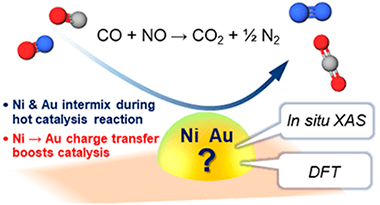
Comprehensive Experimental and Theoretical Study of the CO plus NO Reaction Catalyzed by Au/Ni Nanoparticles

The catalytic and structural properties of five different nanoparticle catalysts with varying Au/Ni composition were studied by six different methods, including in situ X-ray absorption spectroscopy and density functional theory (DFT) calculations. The as-prepared materials contained substantial amounts of residual capping agent arising from the commonly used synthetic procedure. Thorough removal of this material by…

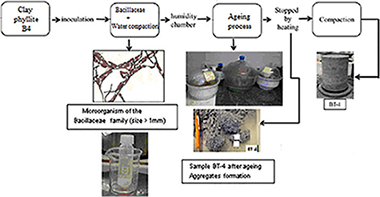
Microbiological induced carbonate (CaCO3) precipitation using clay phyllites to replace chemical stabilizers (cement or lime)

The objective of the present study is to develop a biotechnological tool for a new application of clay phyllites as stabilized materials in linear works replacing chemical stabilizer (e.g. cement or lime) by natural cement, formed by precipitated calcium carbonate generated by microorganisms of the Bacillaceae family (Bacilluspasteurii). Part of the development process conducting a chemical and mineralogical characterization and an examination of physical and hydromechanical properties. The…

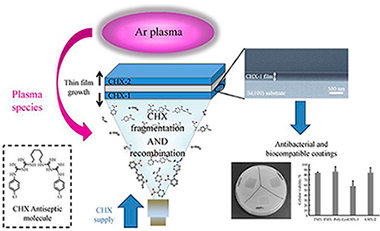
Multifunctional antimicrobial chlorhexidine polymers by remote plasma assisted vacuum deposition

Novel antibacterial materials for implants and medical instruments are essential to develop practical strategies to stop the spread of healthcare associated infections. This study presents the synthesis of multifunctional antibacterial nanocoatings on polydimethylsiloxane (PDMS) by remote plasma assisted deposition of sublimated chlorhexidine powders at low pressure and room temperature. The obtained materials present effective antibacterial…

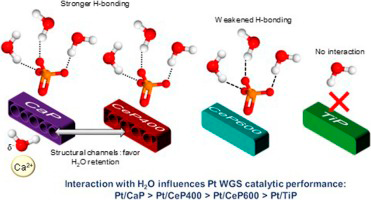
Phosphate-type supports for the design of WGS catalysts

The importance of water availability during the WGS reaction has been extensively reported. Thus, the search of new supports able to interact with the water molecule is of great importance. In this work, a series of phosphate type supports containing Ce, Ca and Ti have been studied, demonstrating that water interaction with the support is…

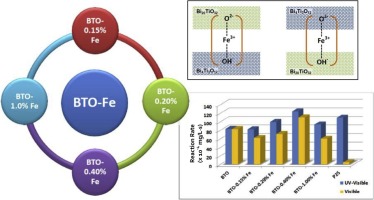
BixTiyOz-Fe multiphase systems with excellent photocatalytic performance in the visible

New photocatalysts based on bismuth titanates doped with iron with outstanding visible photocatalytic activity were prepared by a facile hydrothermal method followed by incipient wetness impregnation. The starting material was composed by three phases; majority of Bi20TiO32 closely interconnected to Bi4Ti3O12 and amorphous TiO2. Fe doping increased the already very high visible activity of the original material.…