Mechanochemical combustion synthesis of vanadium carbide (VC), niobium carbide (NbC) and tantalum carbide (TaC) nanoparticles

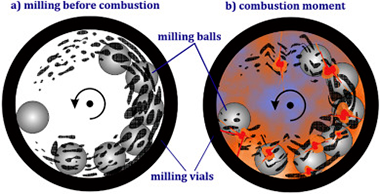
The nanoparticles of vanadium, niobium, and tantalum carbides were synthesized by a mechanically induced magnesiothermic combustion in the separate Mg/V2O5/C, Mg/Nb2O5/C, and Mg/Ta2O5/C systems. Initial materials in these systems ignited after short milling times of 10, 10, and 23 min, respectively. X-ray diffraction (XRD), X-ray photoelectron spectroscopy (XPS), energy-dispersive X-ray spectroscopy (EDS), high-resolution transmission electron…

Multicycle CO2 capture activity and fluidizability of Al-based synthesized CaO sorbents

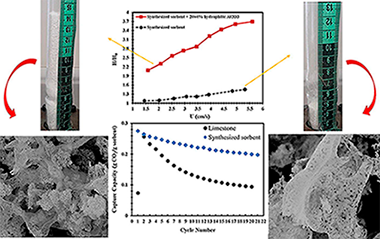
CaO-based materials have been identified as promising sorbents for highly efficient pre-combustion and post-combustion CO2 capture in fluidized beds operated at high temperatures by means of the Calcium Looping (CaL) process. However, Ca-based sorbents suffer from a decline of the capture capacity over multiple sorption/desorption cycles, mainly due to sintering, and from a markedly heterogeneous fluidization…

Immobilization of Stabilized Gold Nanoparticles on Various Ceria-Based Oxides: Influence of the Protecting Agent on the Glucose Oxidation Reaction

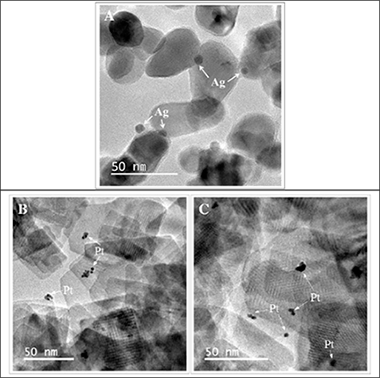
The influence of the protecting agent’s nature on gold particle size and dispersion was studied in this work over a series of gold-based catalysts. CO and glucose oxidation were chosen as catalytic reactions to determine the catalyst’s structure-activity relationship. The nature of the support appeared to be the predominant factor for the increase in activity,…

Catalytic Efficiency of Cu-Supported Pyrophyllite in Heterogeneous Catalytic Oxidation of Phenol

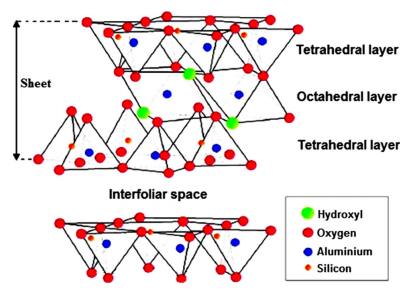
The copper-impregnated pyrophyllite (Cu/RC) was prepared and used as catalyst in catalytic wet peroxide oxidation (CWPO) of phenol. The catalyst was prepared by impregnation of copper (2.5 wt%) into pyrophyllite-type clay and characterized by X-ray diffraction, X-ray fluorescence, X-ray photoelectron spectroscopy, Fourier transform infrared spectroscopy, and transmission electron microscopy. The optimum operation conditions for CWPO of…

Environmentally Tight TiO2-SiO2 Porous 1D-Photonic Structures

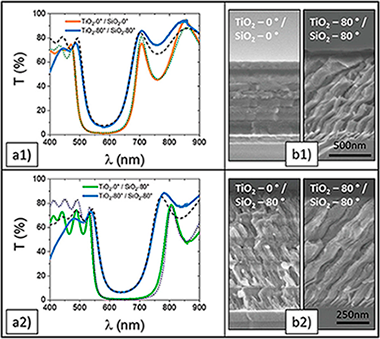
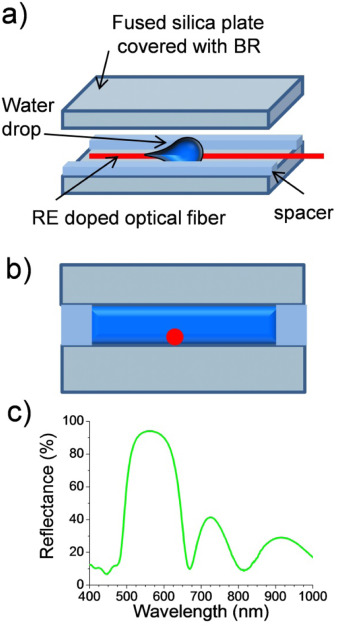
Although thin film porosity is the basis of many optical sensors, it can be deleterious for a stable optical behavior of passive optical elements due to the condensation of water and other vapors in their pores. This paper proposes a new strategy for the magnetron sputtering (MS) fabrication of environmentally tight SiO2-TiO2 porous multilayers. Thin…

Amber, beads and social interaction in the Late Prehistory of the Iberian Peninsula: an update

The identification of archaeological amber has been used in Iberian prehistory to evidence long-distance exchanges and engage Iberia in networks that connect western Europe with central and northern Europe, the emergence of social complexity, and the consolidation of trade networks. However, until now, no comprehensive analytical study of the Iberian amber has been produced to…

Insight into the BiFeO3 flash sintering process by in-situ energy dispersive X-ray diffraction (ED-XRD)

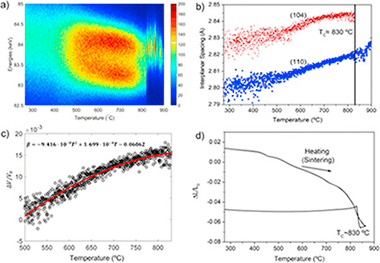
The sintering mechanism of BiFeO3 has been investigated in-situ by energy dispersive X-ray diffraction (ED-XRD) using a high-energy white collimated X-ray beam from the Advanced Photon Source (Argonne National Laboratories). Such radiation is very penetrating thereby allowing measurements of the sample even when placed inside the flash sintering set up. Additionally, the fast ED-XRD measurements permit monitoring the flash sintering process by…

Mechanism of Photoluminescence Intermittency in Organic-Inorganic Perovskite Nanocrystals

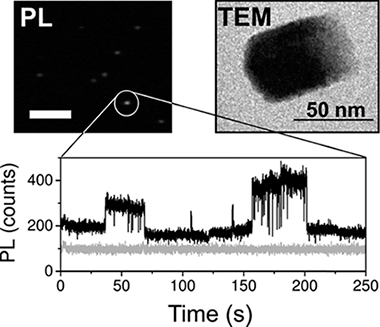
Lead halide perovskite nanocrystals have demonstrated their potential as active materials for optoelectronic applications over the past few years. Nevertheless, one issue that hampers their applicability has to do with the observation of photoluminescence intermittency, commonly referred to as «blinking», as in their inorganic counterparts. Such behavior, reported for structures well above the quantum confinement…