Morphological effects on the photocatalytic properties of SnO2 nanostructures

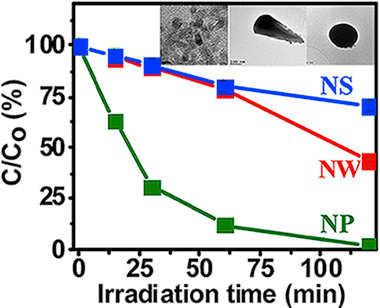
The photocatalytic properties of SnO2 nanocrystals are tuned by varying their morphology and microstructure. SnO2 nanoparticles and nanowedges have been synthesized using hydrothermal methods, while microwave irradiation techniques have given nanospheres. Detailed structural and chemical characterization of these different morphologies has been accomplished. The influence of SnO2 morphology on photocatalytic activity has been examined by…

Ultrastable CoxSiyOz Nanowires by Glancing Angle Deposition with Magnetron Sputtering as Novel Electrocatalyst for Water Oxidation

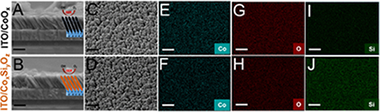
Cobalt is one of the most promising non-noble metal as electrocatalyst for water oxidation. Herein, a highly stable silicon-cobalt mixed oxide thin film with a porous columnar nanostructure is proposed as electrocatalyst for oxygen evolution reaction (OER). CoOx and CoxSiyOz layers with similar thickness were fabricated at room temperature by magnetron sputtering in a glancing…

Design of highly stabilized nanocomposite inks based on biodegradable polymer-matrix and gold nanoparticles for Inkjet Printing

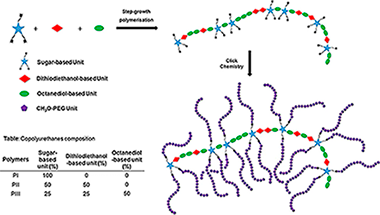
Nowadays there is a worldwide growing interest in the Inkjet Printing technology owing to its potentially high levels of geometrical complexity, personalization and resolution. There is also social concern about usage, disposal and accumulation of plastic materials. In this work, it is shown that sugar-based biodegradable polyurethane polymers exhibit outstanding properties as polymer-matrix for gold…

The Calcium-Looping (CaCO3/CaO) process for thermochemical energy storage in Concentrating Solar Power plants

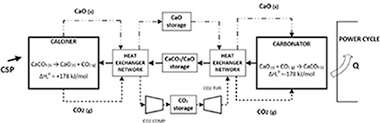
Energy storage based on thermochemical systems is gaining momentum as a potential alternative to molten salts in Concentrating Solar Power (CSP) plants. This work is a detailed review about the promising integration of a CaCO3/CaO based system, the so-called Calcium-Looping (CaL) process, in CSP plants with tower technology. The CaL process relies on low cost,…

Influence of Titanium Oxide Pillar Array Nanometric Structures and Ultraviolet Irradiation on the Properties of the Surface of Dental Implants-A Pilot Study

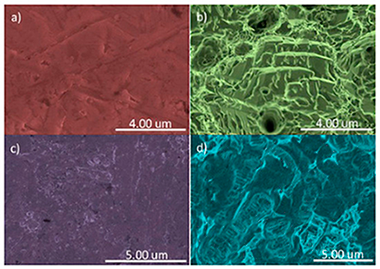
Aim: Titanium implants are commonly used as replacement therapy for lost teeth and much current research is focusing on the improvement of the chemical and physical properties of their surfaces in order to improve the osseointegration process. TiO2, when it is deposited in the form of pillar array nanometric structures, has photocatalytic properties and wet…

Highly selective few-ppm NO gas-sensing based on necklace-like nanofibers of ZnO/CdO n-n type I heterojunction

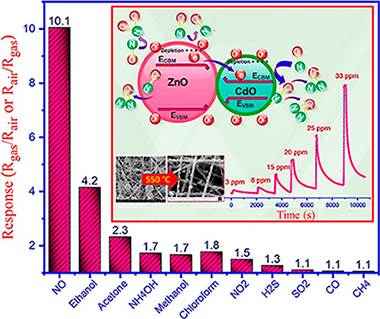
Electrospinning method followed by calcination is applied to synthesize ZnO/CdO nanofibers. Characterization is performed by X-ray diffraction (XRD), scanning electron microscopy (SEM), field emission scanning electron microscopy (FESEM), energy dispersive spectroscopy (EDS), diffuse reflectance spectroscopy (DRS), X-ray photoelectron spectroscopy (XPS), ultraviolet photoelectron spectroscopy (UPS) and reflection electron energy loss spectroscopy (REELS), which resulted in detailed…

Comparison of the effects generated by the dry-soft grinding and the photodeposition of Au and Pt processes on the visible light absorption and photoactivity of TiO2

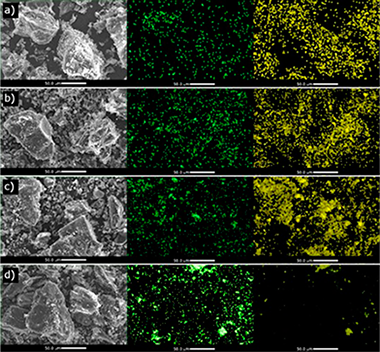
The influence of dry-soft grinding and photodeposition of gold (Au) or platinum (Pt) in the improvement of the photoactivity of TiO2 synthesized by an integrated sol-gel and solvothermal method was studied. TiO2 was modified by a dry-soft grinding process in a planetary ball mill (TiO2(G)). Subsequently, Au or Pt particles were photodeposited in both unmodified…

From structure to luminescence investigation of oxyfluoride transparent glasses and glass-ceramics doped with Eu3+/Dy3+ ions

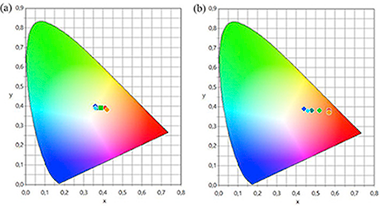
Glasses and glass-ceramics with nominal composition 73 TeO2- 4BaO-3Bi(2)O(3)-18SrF(2)-2RE(2)O(3) (where RE = Eu, Dy) have been synthesized by conventional melt-quenching technique and subsequent heat treatment at 370 degrees C for 24 h in air atmosphere. Various Eu3+ to Dy3+ molar ratio have been applied to investigate luminescence properties in both glass and glass-ceramic matrices. Especially,…