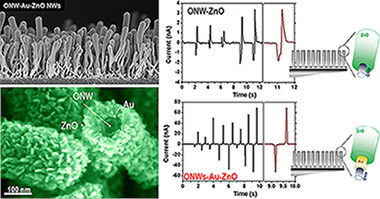
3D core-multishell piezoelectric nanogenerators

The thin film configuration presents obvious practical advantages over the 1D implementation in energy harvesting systems such as easily manufacturing and processing, and long-lasting and stable devices. However, ZnO-based piezoelectric nanogenerators (PENGs) generally rely on the exploitation of single-crystalline nanowires because of their self-orientation in the c-axis direction and ability to accommodate long deformations resulting in high piezoelectric performance. Herein, we show an innovative approach…

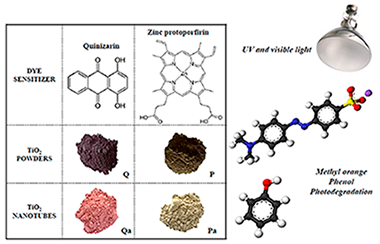
Powder and Nanotubes Titania Modified by Dye Sensitization as Photocatalysts for the Organic Pollutants Elimination

In this study, titanium dioxide powder obtained by the sol-gel method and TiO2 nanotubes, were prepared. In order to increase the TiO2 photoactivity, the powders and nanotubes obtained were modified by dye sensitization treatment during the oxide synthesis. The sensitizers applied were Quinizarin (Q) and Zinc protoporphyrin (P). The materials synthesized were extensively characterized and…

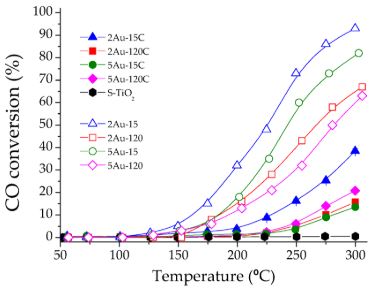
Differences in the Catalytic Behavior of Au-Metalized TiO2 Systems During Phenol Photo-Degradation and CO Oxidation

For this present work, a series of Au-metallized TiO2 catalysts were synthesized and characterized in order to compare their performance in two different catalytic environments: the phenol degradation that occurs during the liquid phase and in the CO oxidation phase, which proceeds the gas phase. The obtained materials were analyzed by different techniques such as XRF,…

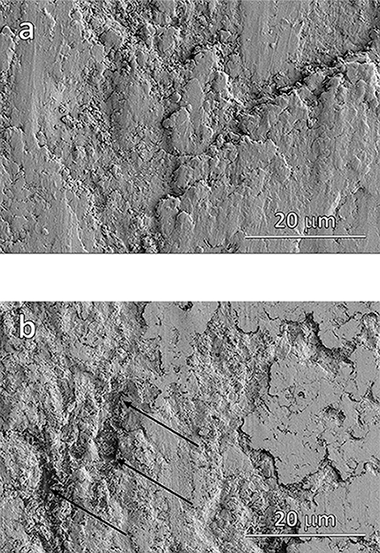
Effect of heat treatment on apatite coatings deposited on pre-calcified titanium substrates

Titanium and its alloys are considered interesting materials for endosseous implants. However, they still present drawbacks related to their in-vivo behavior that can be overcome by coatings, such as apatite. This work focuses on the deposition of apatite coatings on commercially pure titanium (grade II) substrates previously pre-calcified. The influence of the temperature used in…

Promoting effect of CeO2, ZrO2 and Ce/Zr mixed oxides on Co/gamma-Al2O3 catalyst for Fischer-Tropsch synthesis

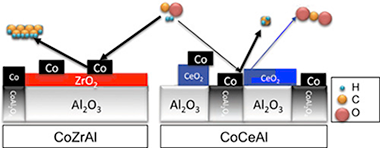
A series of cobalt-based catalysts have been synthesized using as support gamma-Al2O3 promoted by ceria/zirconia mixed oxides with a variable Ce/Zr molar ratio. The obtained catalysts demonstrated oxide promotion results in the protection of the major textural properties, especially for Zr-rich solids. Reducibility of cobalt species was enhanced by the presence of mixed oxides. The…

CuxCo3-xO4 ultra-thin film as efficient anodic catalysts for anion exchange membrane water electrolysers

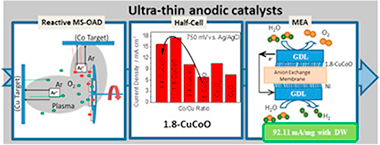
CuxCo3-xO4 ultra-thin films, deposited by magnetron sputtering at oblique angles have been used as anodic catalysts in anion exchange membrane water electrolysers. It has been demonstrated that the used deposition procedure provides porous and amorphous samples with a strict control of the total catalyst load and Co/Cu ratio. Electrocatalytic tests showed a maximum performance for…

Technological evolution of ceramic glazes in the renaissance: In situ analysis of tiles in the Alcazar (Seville, Spain)

The Alcazar Palace (Seville, Spain) is famous for its ceramic decorations; 16th century wall tiles of different typologies have been analyzed in order to relate the manufacturing process of their colored glazes to the evolving technologies of the Renaissance. Chemical and mineralogical compositions have been determined in situ by nondestructive X-ray fluorescence and X-ray diffraction…

A theoretical study of the bonding capabilities of the zinc-zinc double bond

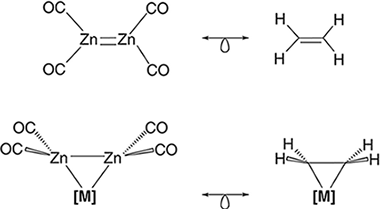
The theoretical knowledge about the zinc-zinc bond has been recently expanded after the proposal of a zinc-zinc double bond in several [Zn-2(L)(4)] compounds (Angew. Chem. Int. Ed.2017, 56, 10151-10155). Prompted by these results, we have selected the [Zn-2(CO)(4)] species, isolobally related to ethylene, and theoretically investigated the possible (2)-Zn-2-coordination to several first-row transition metal fragments.…