Porous Graphene-like Carbon from Fast Catalytic Decomposition of Biomass for Energy Storage Applications

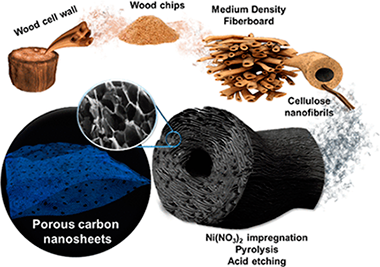
A novel carbon material made of porous graphene-like nanosheets was synthesized from biomass resources by a simple catalytic graphitization process using nickel as a catalyst for applications in electrodes for energy storage devices. A recycled fiberboard precursor was impregnated with saturated nickel nitrate followed by high-temperature pyrolysis. The highly exothermic combustion of in situ formed…

Dry Reforming of Ethanol and Glycerol: Mini-Review

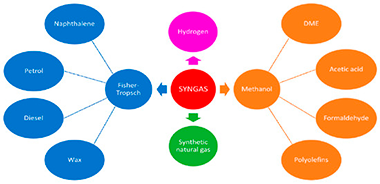
Dry reforming of ethanol and glycerol using CO2 are promising technologies for H-2 production while mitigating CO2 emission. Current studies mainly focused on steam reforming technology, while dry reforming has been typically less studied. Nevertheless, the urgent problem of CO2 emissions directly linked to global warming has sparked a renewed interest on the catalysis community…

Encapsulation of Upconversion Nanoparticles in Periodic Mesoporous Organosilicas

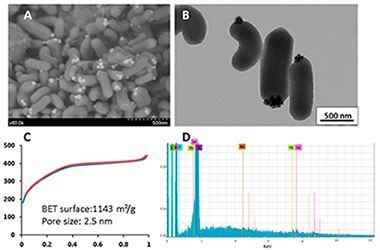
(1) Background: Nanomedicine has recently emerged as a promising field, particularly for cancer theranostics. In this context, nanoparticles designed for imaging and therapeutic applications are of interest. We, therefore, studied the encapsulation of upconverting nanoparticles in mesoporous organosilica nanoparticles. Indeed, mesoporous organosilica nanoparticles have been shown to be very efficient for drug delivery, and upconverting…

Graphene nanoplatelets for electrically conductive 3YTZP composites densified by pressureless sintering

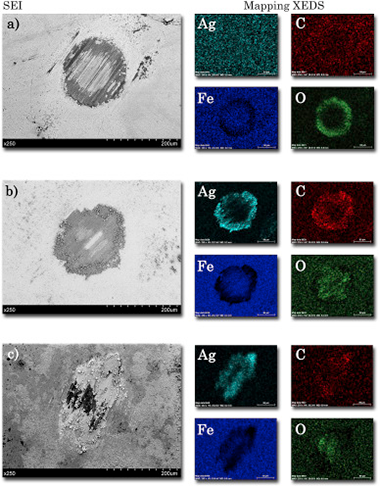
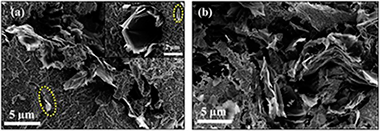
3 mol% yttria tetragonal zirconia polycrystalline (3YTZP) ceramic composites with 2.5, 5 and 10 vol% graphene nanoplatelets (GNP) were pressureless sintered in argon atmosphere between 1350 and 1450 degrees C. The effects of the GNP content and the sintering temperature on the densification, microstructure and electrical properties of the composites were investigated. An isotropic distribution…

Kinetic energy-induced growth regimes of nanocolumnar Ti thin films deposited by evaporation and magnetron sputtering

We experimentally analyze different growth regimes of Ti thin films associated to the existence of kinetic energy-induced relaxation mechanisms in the material’s network when operating at oblique geometries. For this purpose, we have deposited different films by evaporation and magnetron sputtering under similar geometrical arrangements and at low temperatures. With the help of a well-established…

Monodisperse Gold Cuboctahedral Nanocrystals Directly Synthesized in Reverse Micelles: Preparation, Colloidal Dispersion in Organic Solvents and Water, Reversible Self-Assembly and Plasmonic Properties

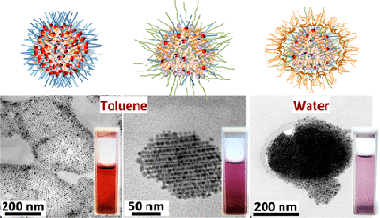
The synthesis of organic-solvent-dispersible gold nanoparticles in reverse micelles of didodecyldimethylammonium bromide (DDAB) is revisited in the present investigation. Some parameters of synthesis, specifically the reaction volume and the concentration of the reducing agent, were slightly modified obtaining directly monodisperse gold nanocrystals (AuNCs) without the need to use additional active surfactants or additional treatments such…