Antibacterial Nanostructured Ti Coatings by Magnetron Sputtering: From Laboratory Scales to Industrial Reactors

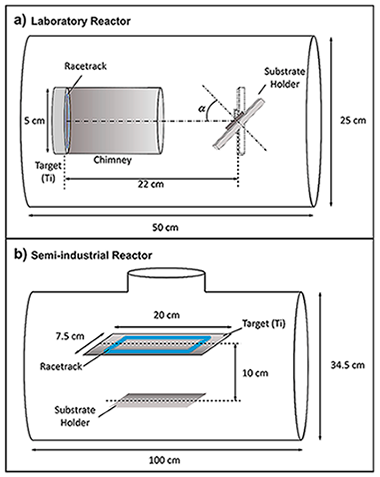
Based on an already tested laboratory procedure, a new magnetron sputtering methodology to simultaneously coat two-sides of large area implants (up to similar to 15 cm(2)) with Ti nanocolumns in industrial reactors has been developed. By analyzing the required growth conditions in a laboratory setup, a new geometry and methodology have been proposed and tested…

Montmorillonite-stabilized gold nanoparticles for nitrophenol reduction

Two gold-based catalysts were obtained by Au chemical reduction of the HAuCl(4 )precursor. The resulting nanoparticles were stabilized and immobilized on montmorillonite (Mt) and montmorillonite-ceria (Mt/CeO2). All prepared catalysts were active in 4-nitrophenol to aminophenol reduction at room temperature. Synergy between montmorillonite and ceria is postulated in such a way that the montmorillonite phase hinders…

Correlation of Structure and Performance of Hard Carbons as Anodes for Sodium Ion Batteries

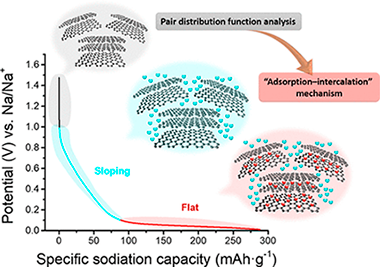
Hard carbons are the material of choice as negative electrode in sodium ion batteries. Despite being extensively studied, there is still debate regarding the mechanisms responsible for storage in low- and high-potential regions. This work presents a comprehensive approach to elucidate the involved storage mechanisms when Na ions insert into such disordered structures. Synchrotron X-ray…

Applications and potentialities of Atomic Force Microscopy in fossil and extant plant cuticle characterization

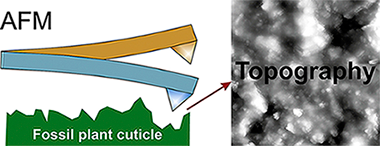
Atomic Force Microscopy (AFM) is a versatile technique of surface characterization, providing accurate information about the topography and other wide variety of magnitudes at submicron scale. It is extensively utilized in materials science, but its use in other disciplines such as paleobotany is infrequent. In this review, we introduce the main concepts of AFM to…

SiOx by magnetron sputtered revisited: Tailoring the photonic properties of multilayers

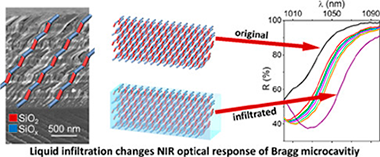
Traditionally porous silicon based photonic structures have been prepared by electrochemically etching of silicon. In this work, porous multilayers of nanocolumnar SiOx and SiO2 thin films acting as near infrared (NIR) 1D-photonic nanostructures are prepared by magnetron sputtering deposition at oblique angles (MS-OA). Simultaneous control of porosity and stoichiometry of the stacked films is achieved…

Extraordinary visible photocatalytic activity of a Co0.2Zn0.8O system studied in the Remazol BB oxidation

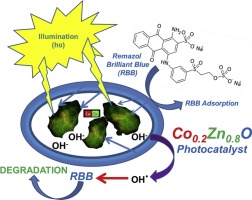
Nanoparticles of CoxZn1-xO system with a nominal composition of x=0.2 were synthesized by the Solution Combustion Method (SCM). Structural and morphological studies as well as the chemical composition of the material were widely investigated by different techniques. Photocatalytic activity under UV and Visible illumination was studied by means of the Remazol Brilliant Blue dye (RBB)…

Insoluble and Thermostable Polyhydroxyesters From a Renewable Natural Occurring Polyhydroxylated Fatty Acid

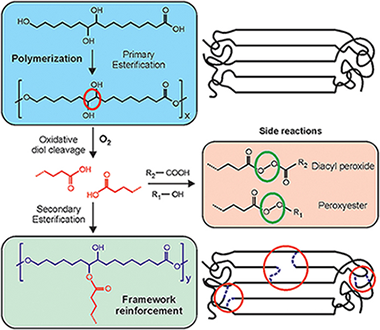
To explore the potential of long chain polyhydroxyalkanoates as non-toxic food packaging materials, the characterization of polyesters prepared from a natural occurring polyhydroxylated C16 carboxylic acid (9,10,16-trihydroxyhexadecanoic or aleuritic acid) has been addressed. Such monomer has been selected to elucidate the reactivity of primary and secondary hydroxyl groups and their contribution to the structure and…

Natural abundance O-17 MAS NMR and DFT simulations: New insights into the atomic structure of designed micas

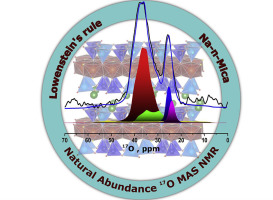
Combining O-17 Magic-Angle Spinning (MAS) NMR at natural abundance with DFT calculations is a promising methodology to shed light on the structure and disorder in tetrahedral sheets of designed micas with enhanced properties. Among brittle micas, synthetic mica is an important alternative to natural ones with a swelling sheet-like structure that results in many applications,…

Noble Metal Supported on Activated Carbon for «Hydrogen Free» HDO Reactions: Exploring Economically Advantageous Routes for Biomass Valorisation

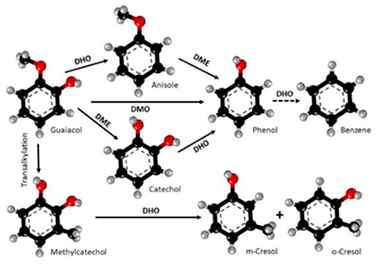
An innovative route for bio‐compounds upgrading via “hydrogen‐free” hydrodeoxygenation (HDO) is proposed and evaluated using guaiacol as a model compound in a high‐pressure batch reactor. Experimental results showed that noble metal supported on activated carbon catalysts are able to conduct tandem multiple steps including water splitting and subsequent HDO. The activity of Ru/C catalyst is…