Synthesis, characterization and performance of robust poison resistant ultrathin film yttria stabilized zirconia nickel anodes for application in solid electrolyte fuel cells

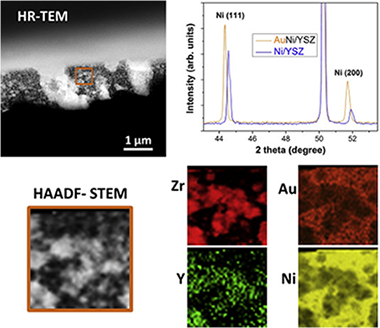
We report on the synthesis of undoped ∼5 μm YSZ-Ni porous thin films prepared by reactive pulsed DC magnetron sputtering at an oblique angle of incidence. Pre-calcination of the amorphous unmodified precursor layers followed by reduction produces a film consisting of uniformly distributed tilted columnar aggregates having extensive three-phase boundaries and favorable gas diffusion characteristics. Similarly…

Constant rate thermal analysis of a dehydrogenation reaction

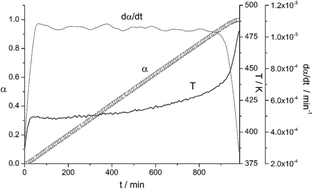
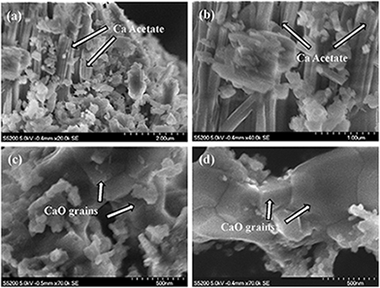
The Constant Rate Thermal Analysis (CRTA) procedure has been employed for the first time to study the kinetics of MgH2 dehydrogenation by thermogravimetry under high vacuum. CRTA implies controlling the temperature in such a way that the decomposition rate is maintained constant all over the process, employing the mass change as the experimental signal proportional to…

Unbroken Perovskite: Interplay of Morphology, Electro-optical Properties, and Ionic Movement

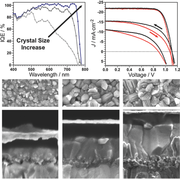
Hybrid organic-inorganic perovskite materials have risen up as leading components for light-harvesting applications. However, to date many questions are still open concerning the operation of perovskite solar cells (PSCs). A systematic analysis of the interplay among structural features, optoelectronic performance, and ionic movement behavior for FA(0.83)MA(0.17)Pb(I0.83Br0.17)(3) PSCs is presented, which yield high power conversion efficiencies…

In vitro stimulation of MC3T3-E1cells and sustained drug delivery by a hierarchical nanostructured SiO2-CaO-P2O5 scaffold

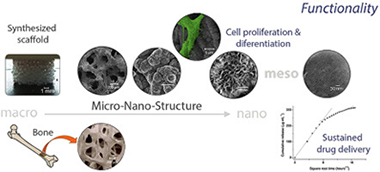
A hierarchical scaffold, SP1_h_HA, consisting of a biomimetic nano-hydroxyapatite surface coating growth onto a reticulated structure having a nano-organized porous texture was fabricated and functionally studied in vitro using osteoprogenitor cells. Three scaffold materials (designated as SP0_l, SP0_h and SP1_h) were also prepared through modifications of the processing variables as control materials. The scaffolds were characterized showing well-interconnected…

Photocatalytic hydrogen production from degradation of glucose over fluorinated and platinized TiO2 catalysts

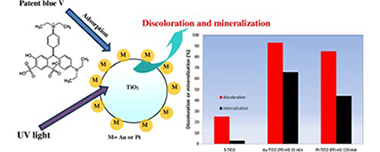
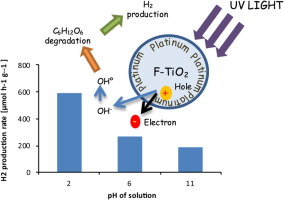
The present work reports the renewable hydrogen production by photocatalytic degradation of glucose over commercial and home prepared TiO2 modified by the simultaneous presence of fluorine and Pt (Pt-F-TiO2). The obtained materials were widely characterized by different techniques (XRD, SBF, UV-Vis DRS, XRF, SEM and TEM) and it was found that surface area, anatase/rutile ratio…

Dye-based photonic sensing systems

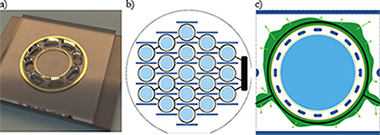
We report on dye-based photonic sensing systems which are fabricated and packaged at wafer scale. For the first time luminescent organic nanocomposite thin-films deposited by plasma technology are integrated in photonic sensing systems as active sensing elements. The realized dye-based photonic sensors include an environmental NO2 sensor and a sunlight ultraviolet light (UV) A+B sensor.…

Portable IR dye laser optofluidic microresonator as a temperature and chemical sensor

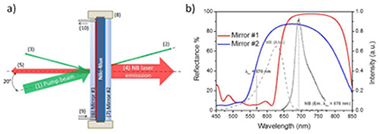
A compact and portable optofluidic microresonator has been fabricated and characterized. It is based on a Fabry-Perot microcavity consisting essentially of two tailored dichroic Bragg mirrors prepared by reactive magnetron sputtering deposition. The microresonator has been filled with an ethanol solution of Nile-Blue dye. Infrared laser emission has been measured with a pump threshold as…