Glutamate microbiosensors based on Prussian Blue modified carbon fiber electrodes for neuroscience applications: In-vitro characterization

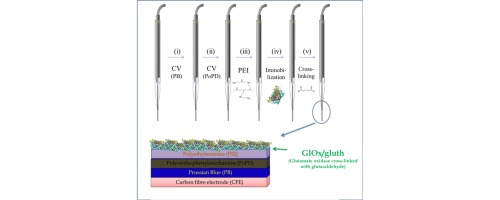
Herein we report a Prussian Blue modified carbon fiber electrode (CFE/PB) to be used in microbiosensors for glutamate monitoring in physiological applications as an alternative to the classical Pt and Pt-Ir transducers. Their low dimensions (∼250 μm CFE length and ∼10 μm diameter) are advantageous for measuring in living tissues. In addition, PB-modified microelectrodes allow the detection…

Quantitative uptake of colloidal particles by cell cultures

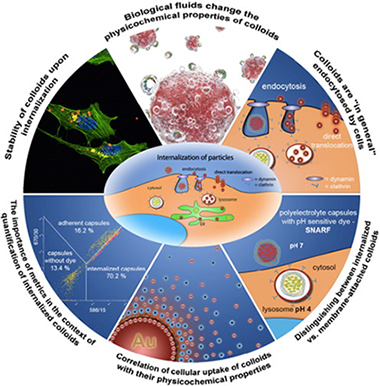
The use of nanotechnologies involving nano-and microparticles has increased tremendously in the recent past. There are various beneficial characteristics that make particles attractive for a wide range of technologies. However, colloidal particles on the other hand can potentially be harmful for humans and environment. Today, complete understanding of the interaction of colloidal particles with biological…

Liquid-phase oxidation with hydrogen peroxide of benzyl alcohol and xylenes on Ca-10(PO4)(6)(OH)(2) – CaWO4

A W-containing apatite (W/HAp) catalyst was prepared following a hydrothermal synthesis route and served as a model catalyst. Crystallographic analysis indicated that the resulting material contained hydroxyapatite, Ca10-3xWx(PO4)(6)(OH)(2), W-hydroxyapatite, calcium tungstate, CaWO4, and tricalcium phosphate, Ca-3(PO4)(2). The catalyst was investigated in liquid phase oxidation of benzyl alcohol and xylenes using hydrogen peroxide as an oxidant.…

Permeability and mechanical integrity of porous biomorphic SiC ceramics for application as hot-gas filters

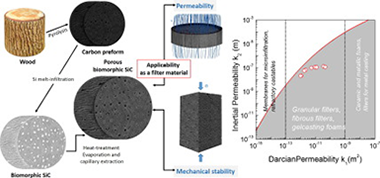
Biomorphic SiC is a biotemplated material fabricated by Si melt-infiltration of carbon preforms from wood pyrolysis. In this work, porous bioSiC ceramics from five different wood precursors, with porosities between 45 and 72% were studied for their feasibility in filtering applications. Gas permeability and mechanical stability were investigated as a function of the microstructure of…

High-Rate Deposition of Stoichiometric Compounds by Reactive Magnetron Sputtering at Oblique Angles

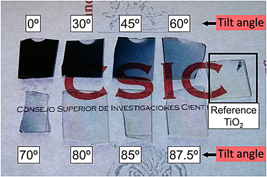
Target poisoning in reactive magnetron sputtering deposition of thin films is an undesired phenomenon, well known for causing a drastic fall of the process efficiency. We demonstrate that when this technique is operated at oblique angles, films with composition raging from pure metallic to stoichiometric compound can be grown in non-poisoned conditions, thus avoiding most…

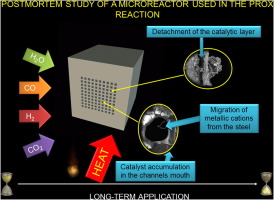
Forced deactivation and postmortem characterization of a metallic microchannel reactor employed for the preferential oxidation of CO (PROX)

This manuscript is one of the few works presenting evidences of the effect of prolonged use of a microreactor. Our reactor has been designed for the PROX reaction. Near to 550 h of operation under different feed-streams, including CO2 and H2O, in the 100-300 degrees C temperature range, and several regeneration cycles, and a final…

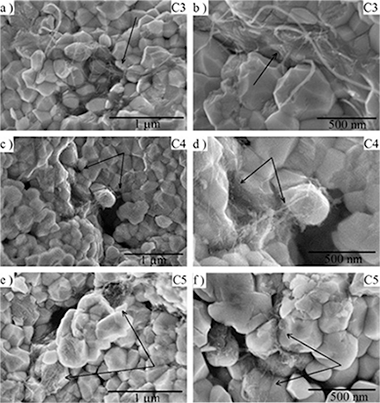
Enhanced carbon nanotube dispersion in 3YTZP/SWNTs composites and its effect on room temperature mechanical and electrical properties

In this work, several modifications of the colloidal processing technique and spark plasma sintering (SPS) to prepare yttria tetragonal zirconia composites (YTZP) with single walled carbon nanotubes (SWNT) have been tested with the aim of eliminating SWNT agglomerates. These modifications include high versus low energy ultrasonic agitation during colloidal processing, lyophilization of the 3YTZP/SWNT slurry…

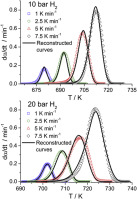
Magnesium hydride for energy storage applications: The kinetics of dehydrogenation under different working conditions

A new approach to the kinetics of magnesium hydride dehydrogenation is considered. A model able to predict the dehydrogenation under different experimental conditions has been proposed. A new combined kinetic analysis method, which considers the thermodynamic of the process according to the microreversibility principle, has been used for performing the kinetic analysis of data obtained…

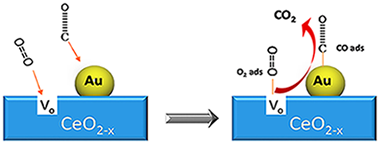
Au/CeO2 Catalysts: Structure and CO Oxidation Activity

In this comprehensive review, the main aspects of using Au/CeO2 catalysts in oxidation reactions are considered. The influence of the preparation methods and synthetic parameters, as well as the characteristics of the ceria support (presence of doping cations, oxygen vacancies concentration, surface area, redox properties, etc.) in the dispersion and chemical state of gold are revised.…

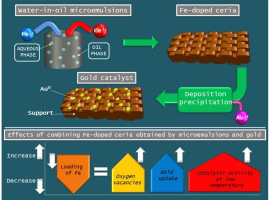
Au-supported on Fe-doped ceria solids prepared in water-in-oil microemulsions: Catalysts for CO oxidation

Gold catalysts were synthesized by deposition-precipitation employing Fe-doped ceria systems, previously obtained by means of the water-in-oil microemulsions methodology with different iron contents (10, 25 and 50 Fe at.%). The final catalysts were tested in the CO oxidation reaction in presence of H2. After gold deposition the crystalline structure of the supports was not altered.…