Selectivity control in oxidation of 1-tetradecanol on supported nano Au catalysts

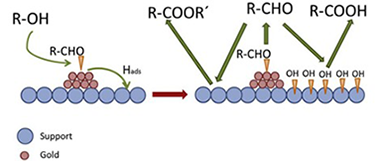
Selective oxidation of tetradecanol, a model higher fatty alcohol, on Au/CeO2-Al2O3 catalyst has been investigated to assess the factors that control selectivity. The analysis of the effect of operation conditions (temperature, run time and alcohol/metal (AIM) ratio) on catalytic performance revealed a quite complex reaction network, in which acid formation starts only after a certain…

Non-Enzymatic Glucose Sensors Based on Nickel Nanoporous Thin Films Prepared by Physical Vapor Deposition at Oblique Angles for Beverage Industry Applications

Nickel nanoporous thin films deposited on Indium tin oxide conductive plates have been prepared by physical vapor deposition in an oblique angle configuration. The scanning electron microscopy characterization of these films revealed a microstructure formed by tilted nanocolumns of ca. 40-60 nm of diameter inclined by ca. 26 degrees with respect to the normal. These…

Microstructure, elastic, and inelastic properties of biomorphic carbons carbonized using a Fe-containing catalyst

The microstructure and amplitude dependences of the Young’s modulus E and internal friction (logarithmic decrement δ), and microplastic properties of biocarbon matrices BE-C(Fe) obtained by beech tree carbonization at temperatures Tcarb = 850–1600°C in the presence of an iron-containing catalyst are studied. By X-ray diffraction analysis and transmission electron microscopy, it is shown that the use of Fe-catalyst during…

Influence of Ball Milling on CaO Crystal Growth During Limestone and Dolomite Calcination: Effect on CO2 Capture at Calcium Looping Conditions

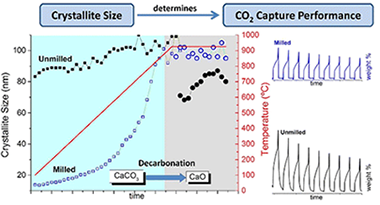
Under Calcium-Looping “realistic” operation conditions (high CO2 concentration and temperature), the multicycle CO2 capture capacity performance of CaO derived from limestone and dolomite is inversely related to its crystallite size. Ball-milling the raw sorbents results in the formation of larger nascent CaO nanocrystals during the calcination. Constraint sintering effect due to inert compounds such as dolomitic…

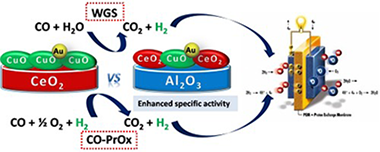
WGS and CO-PrOx reactions using gold promoted copper-ceria catalysts: «Bulk CuO-CeO2 vs. CuO-CeO2/Al2O3 with low mixed oxide content»

A copper-ceria bulk catalyst has been compared to a series of catalysts designed according to the as called «supported approach», corresponding to the dispersion of low content mixed copper-ceria oxide on alumina matrix. The principal characteristics of both types of catalysts are contemplated and the differences in their electronic and redox properties discussed in details.…

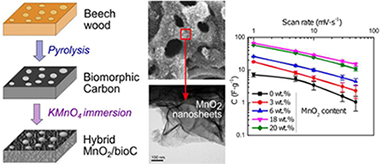
Manganese Dioxide Supported on Porous Biomorphic Carbons as Hybrid Materials for Energy Storage Devices

A facile and low-cost method has been employed to fabricate MnO2/C hybrid materials for use as binder-free electrodes for supercapacitor applications. Biocarbon monoliths were obtained through pyrolysis of beech wood, replicating the microstructure of the cellulosic precursor, and serve as 3D porous and conductive scaffolds for the direct growth of MnO, nanosheets by a solution…