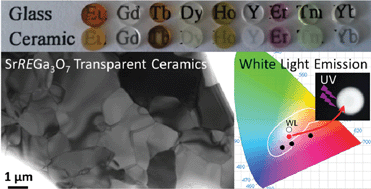
Transparent polycrystalline SrREGa3O7 melilite ceramics: potential phosphors for tuneable solid state lighting

Full and congruent crystallization from glass is applied to the SrREGa3O7 melilite family (RE = Eu, Gd, Tb, Dy, Ho, Er, Tm, Yb and Y). This innovative process enables the synthesis of polycrystalline ceramics exhibiting high transparency both in the visible and near infrared regions, despite tetragonal crystal structures and micrometer scale grain sizes. Moreover, glass crystallization…

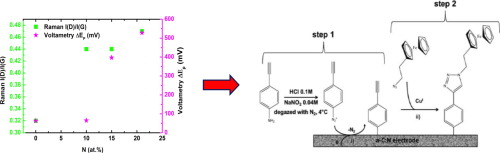
Structure, electrochemical properties and functionalization of amorphous CN films deposited by femtosecond pulsed laser ablation

Amorphous carbon nitride (a-C:N) material has attracted much attention in research and development Recently, it has become a more promising electrode material than conventional carbon based electrodes in electrochemical and biosensor applications. Nitrogen containing amorphous carbon (a-C:N) thin films have been synthesized by femtosecond pulsed laser deposition (fs-PLD) coupled with plasma assistance through Direct Current…

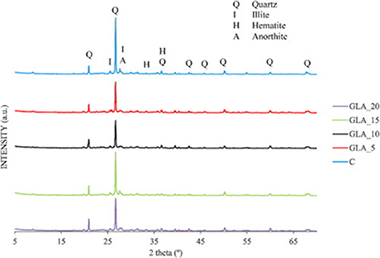
Ceramics from clays and by-product from biodiesel production: Processing, properties and microstructural characterization

The production of biodiesel generates a by-product called glycerine which contains glycerol that cannot be reintegrated into the same manufacturing process. The ceramic bricks are an interesting option to set in their structure a wide range of by-products and residues materials and composites, sometimes serving only as a reservoir for the inert residue, and other,…

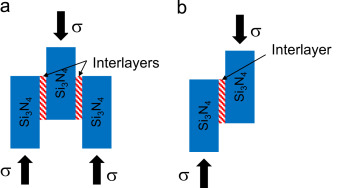
Active metal brazing of silicon nitride ceramics using a Cu-based alloy and refractory metal interlayers

Silicon nitride/silicon nitride joints with refractory metal (W and Mo) interlayers were vacuum brazed using an active braze, Cu-ABA (Cu-3Si-2Al-2.25Ti, wt%), and two interlayer arrangements in a double-lap offset configuration: Si3N4/Cu-ABA/W/Cu-ABA/Mo/Cu-ABA/Si3N4 and Si3N4/Cu-ABA /Si3N4. Titanium segregated at the Si3N4/Cu-ABA and Mo/Cu-ABA interfaces, but not at the W/Cu-ABA interface. The room-temperature compression-shear strength values of Si3N4/Cu-ABA/Si3N4…

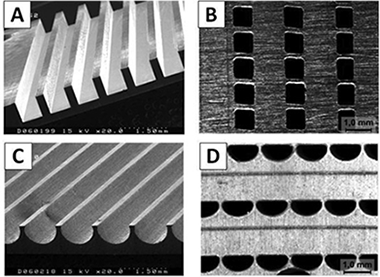
Intensification of hydrogen production by methanol steam reforming

This paper studies the methanol steam reforming intensification to enhance the hydrogen production in a multi-channel block type micro-reformer. The effects of operating parameters such as reforming temperature, space velocity and catalyst layer thickness on reforming performance are investigated. For optimized design and operating conditions, the 8 cm(3) reformer unit produced 170 LH2/h containing on…

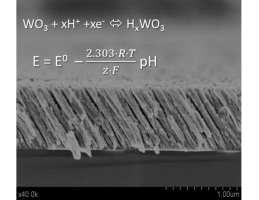
Characterization and application of a new pH sensor based on magnetron sputtered porous WO3 thin films deposited at oblique angles

In this communication we report about an outstanding solid-state pH sensor based on amorphous nanocolumnar porous thin film electrodes. Transparent WO3 thin films were deposited by reactive magnetron sputtering in an oblique angle configuration to enhance their porosity onto indium tin oxide (ITO) and screen printed electrodes (SPE). The potentiometric pH response of the nanoporous…

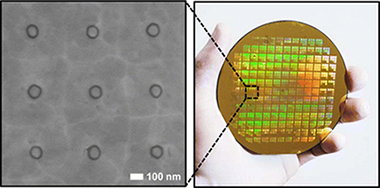
High-Throughput Fabrication of Resonant Metamaterials with Ultrasmall Coaxial Apertures via Atomic Layer Lithography

We combine atomic layer lithography and glancing angle ion polishing to create wafer-scale metamaterials composed of dense arrays of ultrasmall coaxial nanocavities in gold films. This new fabrication scheme makes it possible to shrink the diameter and increase the packing density of 2 nm-gap coaxial resonators, an extreme subwavelength structure first manufactured via atomic layer…

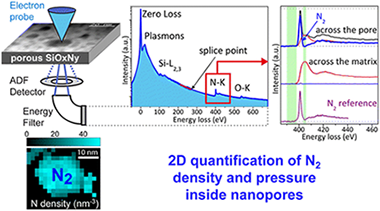
Nitrogen Nanobubbles in a-SiOxNy Coatings: Evaluation of Its Physical Properties and Chemical Bonding State by Spatially Resolved Electron Energy-Loss Spectroscopy

Nanoporous silicon-based materials with closed porosity filled with the sputtering gas have been recently developed by magnetron sputtering. In this work the physical properties (density and pressure) of molecular nitrogen inside closed pores in a SiOxNy coating are investigated for the first time using spatially resolved electron energy-loss spectroscopy (EELS) in a scanning transmission electron…

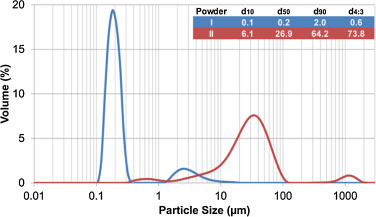
Fabrication and characterization of CeO2 pellets for simulation of nuclear fuel

Cerium Oxide, CeO2, has been shown as a surrogate material to understand irradiated Mixed Oxide (MOX) based matrix fuel for nuclear power plants due to its similar structure, chemical and mechanical properties. In this work, CeO2 pellets with controlled porosity have been developed through conventional powder-metallurgy process. Influence of the main processing parameters (binder content,…