Cathode and ion-luminescence of Eu:ZnO thin films prepared by reactive magnetron sputtering and plasma decomposition of non-volatile precursors

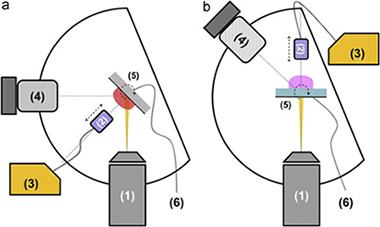
This paper reports the luminescent behavior of Eu:ZnO thin films prepared by an one-step procedure that combines reactive magnetron sputtering deposition of ZnO with the plasma activated decomposition of a non-volatile acetylacetonate precursor of Eu sublimated in an effusion cell. Chemical composition and microstructure of the Eu:ZnO thin films have been characterized by several methods…

Stabilization of catalyst particles against sintering on oxide supports with high oxygen ion lability exemplified by Ir-catalyzed decomposition of N2O

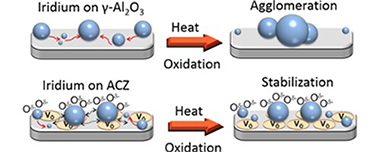
Iridium nanoparticles deposited on a variety of surfaces exhibited thermal sintering characteristics that were very strongly correlated with the lability of lattice oxygen in the supporting oxide materials. Specifically, the higher the lability of oxygen ions in the support, the greater the resistance of the nanoparticles to sintering in an oxidative environment. Thus with gamma-Al2O3…

Nanocolumnar association and domain formation in porous thin films grown by evaporation at oblique angles

Porous thin films grown at oblique angles by evaporation techniques are formed by tilted nanocolumnar structures which, depending on the material type and growth conditions, associate along certain preferential directions, giving rise to large domains. This arrangement, commonly denoted as bundling association, is investigated in the present work by performing fundamental experiments and growth simulations.…

Preparation of calcium carbonate as nanoparticles from inorganic precursors and sucrose as additive with potential application as biomaterial

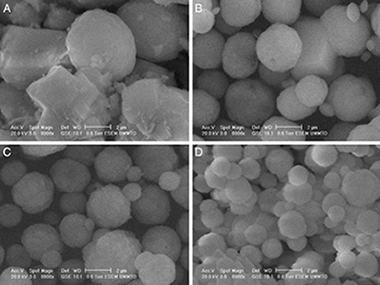
En esta comunicación se presentan unos primeros resultados de interés relevante sobre la obtención de carbonato de calcio precipitado como nanopartículas de los polimorfos vaterita y calcita. Se parte de precursores inorgánicos, nitrato de calcio tetrahidratado y bicarbonato de sodio, en presencia de sacarosa empleada como aditivo orgánico en disolución acuosa. Las fases cristalinas formadas…

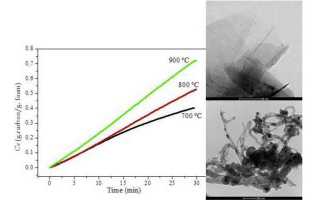
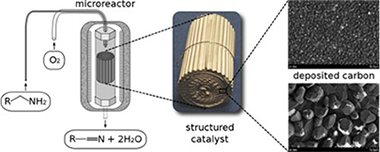
Growth of carbonaceous nanomaterials over stainless steel foams. Effect of activation temperature

Some of the problems that occur during the operation of chemical reactors based of structured catalytic substrates, as monoliths, foams, membranes, cloths, fibres and other systems, are related to the preparation of long term stable coatings. Frequently, the deposition of the catalytic layer is carried out by washcoating, requiring this step a cautious attention, especially…

Microstructural, spectroscopic, and antibacterial properties of silver-based hybrid nanostructures biosynthesized using extracts of coriander leaves and seeds

Coriander leaves and seeds have been highly appreciated since ancient times, not only due to their pleasant flavors but also due to their inhibitory activity on food degradation and their beneficial properties for health, both ascribed to their strong antioxidant activity. Recently, it has been shown that coriander leaf extracts can mediate the synthesis of…

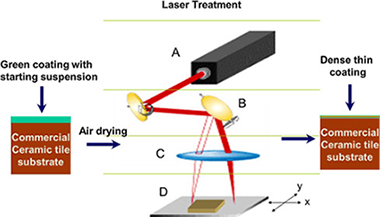
Metallization of ceramic substrates by laser induced decomposition of coordination complexes

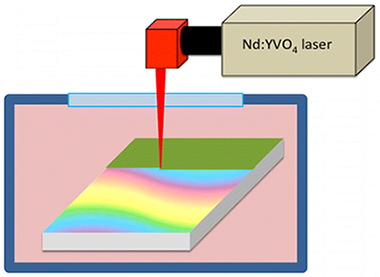
This work describes an in-situ Nd:YAG laser-assisted coating method to modify industrial glazed ceramic surfaces. The method makes use of a Cu polymer coordination complex, transformed via 1064 nm continuos wave (cw) laser irradiation, into a lustre-type glassy coating covering the ceramic substrate. The obtained coatings, with typical thicknesses ranging between 4 and 14 μm, become integrated…

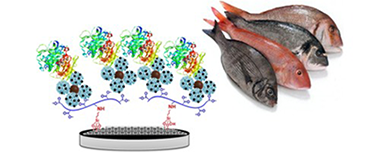
Reduced graphene oxide-carboxymethylcellulose layered with platinum nanoparticles/PAMAM dendrimer/magnetic nanoparticles hybrids. Application to the preparation of enzyme electrochemical biosensors

The assembly of a novel layer-by-layer biosensor architecture using hybrid nanomaterials is explored for the construction of an amperometric enzyme biosensors. The nanostructured sensing interface was prepared with poly(dopamine)-modified magnetic nanoparticles which were covalently coated with four-generation ethylenediamine core polyamidoamine G-4 dendrimers and further decorated with platinum nanoparticles. This nanohybrid was fully characterized and further…