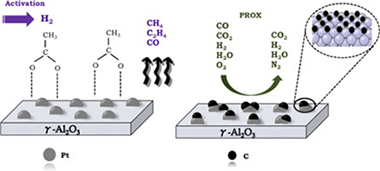
Nickel catalyst with outstanding activity in the DRM reaction prepared by high temperature calcination treatment

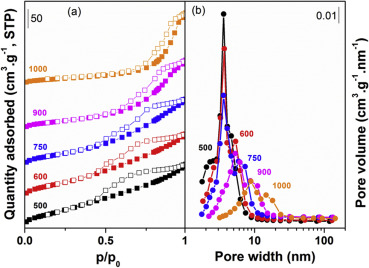
The catalytic performance of some Ni-Ce/Al2O3 catalytic systems (11 wt.% Ni and 3 wt.% Ce) were checked after being submitted to different calcination and reduction treatments. It was found that, the reduced Ni-Ce/Al2O3 catalysts were more active and stable in the dry reforming reaction of methane than thecorresponding not-reduced catalysts. This high activity was initially connected with the smaller size of pre-reduced Ni species, which at the same time leads on to the formation of filamentous…

Plasmonic Nanoparticles as Light-Harvesting Enhancers in Perovskite Solar Cells: A User’s Guide

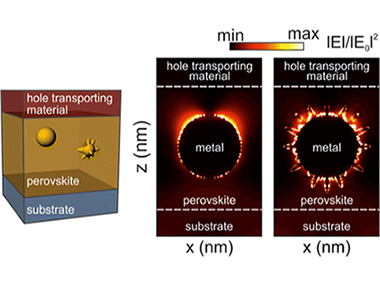
In this Perspective we discuss the implications of employing metal particles of different shape, size, and composition as absorption enhancers in methylammonium lead iodide perovskite solar cells, with the aim of establishing some guidelines for the future development of plasmonic resonance-based photovoltaic devices. Hybrid perovskites present an extraordinarily high absorption coefficient which, as we show…

Targeted multifunctional tannic acid nanoparticles

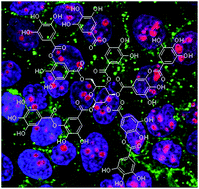
Tannic acid (TA) has multiple effects against cancer, being especially promising in those types that overexpress the epidermal growth factor receptor (EGFR), as TA modulates its activation and downstream signaling pathways, triggering apoptosis. Nonetheless, despite the important role of this receptor in the pathogenesis and progression of a wide variety of tumors, no TA systems…

Thermal conductivity of Fe graphitized wood derived carbon

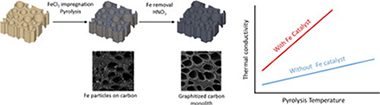
Graphitic porous carbon materials from pyrolysis of wood precursors were obtained by means of a nanosized Fe catalyst, and their microstructure and electrical and thermal transport properties investigated. Thermal and electrical conductivity of graphitized carbon materials increase with the pyrolysis temperature, indicating a relationship between the degree of graphitization and thus in crystallite size with…

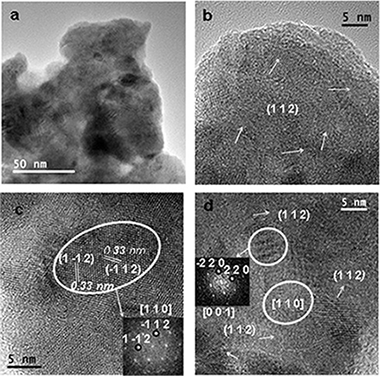
Mechanochemically synthesized nanocrystalline ternary CuInSe2 chalcogenide semiconductor

The synthesis of nanocrystalline ternary CuInSe2 particles prepared by high-energy milling in a planetary mill in an argon atmosphere from copper, indium and selenium was reported. CuInSe2 particles crystallize in the tetragonal structure with the crystallite size of about 30.5 nm. The Raman spectrum of CuInSe2 nanoparticles shows a strong peak at 176 cm−1 corresponds to the A1 phonon mode of tetragonal…

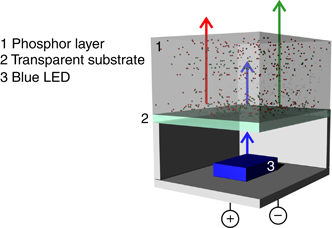
Metallic nanostructures for efficient LED lighting

Light-emitting diodes (LEDs) are driving a shift toward energy-efficient illumination. Nonetheless, modifying the emission intensities, colors and directionalities of LEDs in specific ways remains a challenge often tackled by incorporating secondary optical components. Metallic nanostructures supporting plasmonic resonances are an interesting alternative to this approach due to their strong light-matter interaction, which facilitates control over…

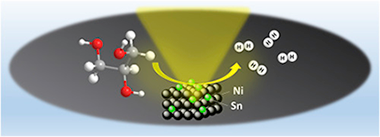
Promoting effect of Sn on supported Ni catalyst during steam reforming of glycerol

The promoting effect of Sn on the catalytic performance of supported Ni catalyst in the reaction of glycerol steam reforming was studied. The physico-chemical properties of the prepared samples were investigated by X-ray fluorescence (XRF), BET surface area, in situ X-ray diffraction (XRD), laser Raman spectroscopy, X-ray photoelectron spectroscopy (XPS), scanning electron microscopy (SEM) and temperature-programmed oxidation…

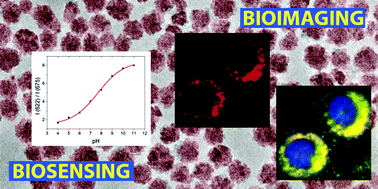
Synthesis and functionalization of monodisperse near-ultraviolet and visible excitable multifunctional Eu3+, Bi3+:REVO4 nanophosphors for bioimaging and biosensing applications

Near-ultraviolet and visible excitable Eu- and Bi-doped NPs based on rare earth vanadates (REVO4, RE = Y, Gd) have been synthesized by a facile route from appropriate RE precursors, europium and bismuth nitrate, and sodium orthovanadate, by homogeneous precipitation in an ethylene glycol/water mixture at 120 °C. The NPs can be functionalized either by a…