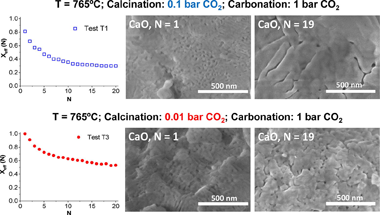
Calcination under low CO2 pressure enhances the calcium Looping performance of limestone for thermochemical energy storage

The Calcium Looping performance of limestone for thermochemical energy storage has been investigated under novel favorable conditions, which involve calcination at moderate temperatures under CO2 at low pressure (0.01 and 0.1 bar) and carbonation at high temperature under CO2 at atmospheric pressure. Calcining at low CO2 pressures allows to substantially reduce the temperature to achieve…

The Role of the Atmosphere on the Photophysics of Ligand-Free Lead-Halide Perovskite Nanocrystals

Lead halide perovskite (LHP) nanocrystals (NCs) have gained attention over the past decade due to their outstanding optoelectronic properties, making them a suitable material for efficient photovoltaic and light emitting devices. Due to its soft nature, these nanostructures undergo strong structural changes upon irradiation, where these light-induced processes are strongly influenced by the environment. Since…

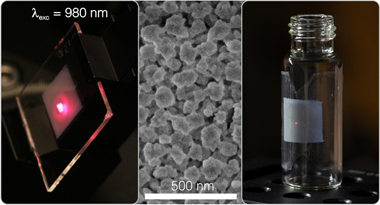
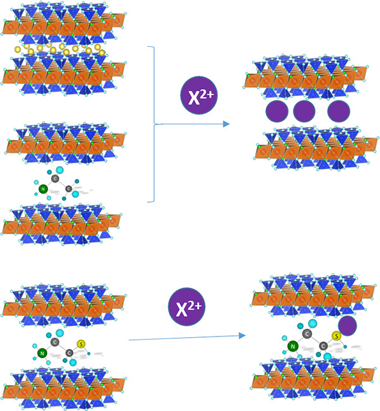
Highly Versatile Upconverting Oxyfluoride-Based Nanophosphor Films

Fluoride-based compounds doped with rare-earth cations are the preferred choice of materials to achieve efficient upconversion, of interest for a plethora of applications ranging from bioimaging to energy harvesting. Herein, we demonstrate a simple route to fabricate bright upconverting films that are transparent, self-standing, flexible, and emit different colors. Starting from the solvothermal synthesis of…

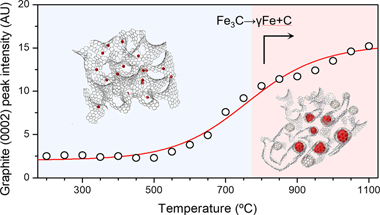
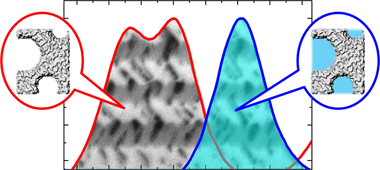
IR spectroscopic insights into the coking-resistance effect of potassium on nickel-based catalyst during dry reforming of methane

Dry reforming of methane (DRM) is an effective catalytic route for transforming CO2 and CH4 into valuable syngas and thus potentially attractive for mitigating the emission of environmental harmful gases. Therefore, it is crucial to develop rationally Ni-based catalysts highly resistant to coking and sintering. In this scenario, the addition of small amounts of potassium to nickel…

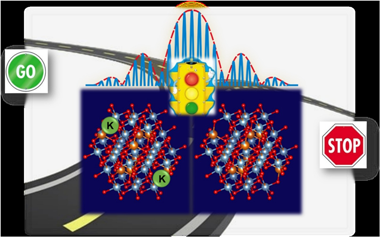
Form Birefringence in Resonant Transducers for the Selective Monitoring of VOCs under Ambient Conditions

In this work, we have developed a new kind of nanocolumnar birefringent Bragg microcavity (BBM) that, tailored by oblique angle deposition, behaves as a selective transducer of volatile organic compounds (VOCs). Unlike the atomic lattice origin of birefringence in anisotropic single crystals, in the BBM, it stems from an anisotropic self-organization at the nanoscale of…

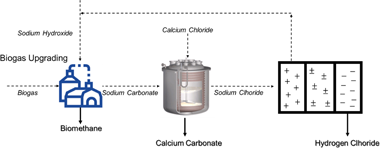
Synergizing carbon capture and utilization in a biogas upgrading plant based on calcium chloride: Scaling-up and profitability analysis

Herein we analyze the profitability of a novel regenerative process to synergize biogas upgrading and carbon dioxide utilization. Our proposal is a promising alternative which allows to obtain calcium carbonate as added value product while going beyond traditional biogas upgrading methods with high thermal energy consumption. Recently we have demonstrated the experimental viability of this…

The Complex Interplay of Lead Halide Perovskites with Their Surroundings

Photoexcitation of lead halide perovskites induces a restructuration of the material that simultaneously enhances its emission properties and triggers its degradation. These concomitant processes are strongly dependent on the surroundings of the perovskite, both while and after being processed, underlining the relevance the environment and the interfacial design have in the stability and performance of…