Synergistic Integration of Nanogenerators and Solar Cells: Advanced Hybrid Structures and Applications

The rapid growth of global energy consumption and the increasing demand for sustainable and renewable energy sources have urged vast research into harnessing energy from various sources. Among them, the most promising approaches are nanogenerators (NGs) and solar cells (SCs), which independently offer innovative solutions for energy harvesting. This review paper presents a comprehensive analysis…

Highly Stable Photoluminescence in Vacuum-Processed Halide Perovskite Core–Shell 1D Nanostructures

Hybrid organometal halide perovskites (HP) present exceptional optoelectronic properties, but their poor long-term stability is a major bottleneck for their commercialization. Herein, a solvent-free approach to growing single-crystal organic nanowires (ONW) is presented, along with nanoporous metal oxide scaffolds and HP, to form a core@multishell architecture. The synthesis is carried out under mild vacuum conditions…

B-site deficient hexagonal perovskites: Structural stability, ionic order-disorder and electrical properties

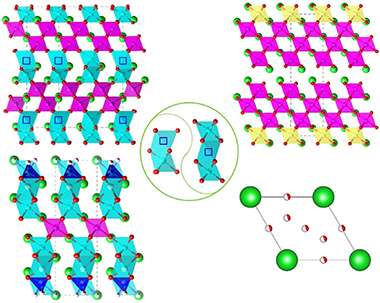
This review presents an overview on the structures and electrical properties of B-site deficient hexagonal perovskite oxides, which have been receiving increasing attention as key components as dielectric resonators in microwave telecommunications, as well as solid-state oxide ion and proton conductors in solid oxide fuel cells. The structural evolution and stability, order-disorder of cation and…

Multifold Enhanced Photon Upconversion in a Composite Annihilator System Sensitized by Perovskite Nanocrystals

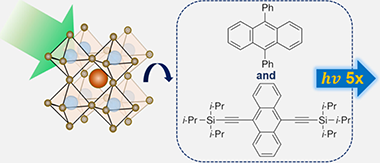
Photon upconversion via triplet-triplet annihilation (TTA-UC) provides a pathway to overcoming the thermodynamic efficiency limits in single-junction solar cells by allowing the harvesting of sub-bandgap photons. Here, we use mixed halide perovskite nanocrystals (CsPbX3, X = Br/I) as triplet sensitizers, with excitation transfer to 9,10-diphenylanthracene (DPA) and/or 9,10-bis[(triisopropylsilyl)ethynyl]anthracene (TIPS-An) which act as the triplet annihilators.…

Construction of cellulose nanofiber-Ti3C2Tx MXene/silver nanowire nanocomposite papers with gradient structure for efficient electromagnetic interference shielding

With the widespread application of communication equipment with electromagnetic signal transmission to cause electromagnetic radiation pollution, there is an urgent need for high-performance electromagnetic shielding materials. Here, an ultrathin, flexible, alternating multilayered, and conductive gradient-structured cellulose nanofiber-MXene/silver nanowire (CNF-MXene/AgNW) nanocomposite paper with high mechanical strength, strong electromagnetic interference (EMI) shielding, and outstanding thermal management was…

Direct Laser Writing: From Materials Synthesis and Conversion to Electronic Device Processing

Direct Laser Writing (DLW) has been increasingly selected as a microfabrication route for efficient, cost-effective, high-resolution material synthesis and conversion. Concurrently, lasers participate in the patterning and assembly of functional geometries in several fields of application, of which electronics stand out. In this review, recent advances and strategies based on DLW for electronics microfabrication are…

Strong Light-Matter Coupling in Lead Halide Perovskite Quantum Dot Solids

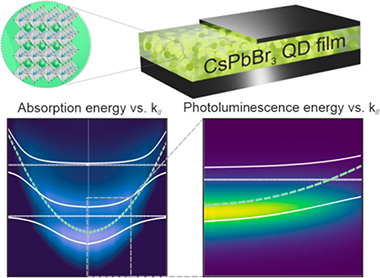
Strong coupling between lead halide perovskite materials and optical resonators enables both polaritonic control of the photophysical properties of these emerging semiconductors and the observation of fundamental physical phenomena. However, the difficulty in achieving optical-quality perovskite quantum dot (PQD) films showing well-defined excitonic transitions has prevented the study of strong light-matter coupling in these materials,…

Boosting Low-Temperature CO2 Hydrogenation over Ni-based Catalysts by Tuning Strong Metal-Support Interactions

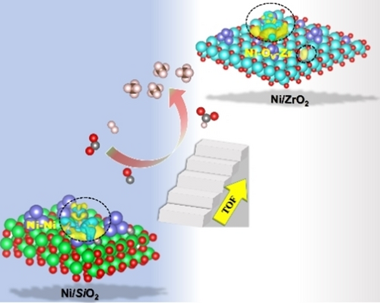
Rational design of low-cost and efficient transition-metal catalysts for low-temperature CO2 activation is significant and poses great challenges. Herein, a strategy via regulating the local electron density of active sites is developed to boost CO2 methanation that normally requires >350 °C for commercial Ni catalysts. An optimal Ni/ZrO2 catalyst affords an excellent low-temperature performance hitherto, with…

Natural hydrogen in the energy transition: Fundamentals, promise, and enigmas

Beyond its role as an energy vector, a growing number of natural hydrogen sources and reservoirs are being discovered all over the globe, which could represent a clean energy source. Although the hydrogen amounts in reservoirs are uncertain, they could be vast, and they could help decarbonize energy-intensive economic sectors and facilitate the energy transition. Natural hydrogen is mainly produced through a geochemical process known as serpentinization, which involves the reaction of water with low-silica, ferrous minerals. In favorable locations, the hydrogen produced…

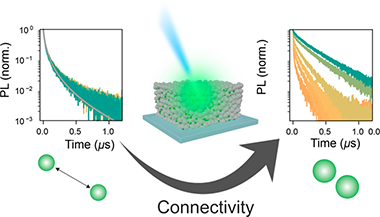
Effect of Connectivity on the Carrier Transport and Recombination Dynamics of Perovskite Quantum-Dot Networks

Quantum-dot (QD) solids are being widely exploited as a solution-processable technology to develop photovoltaic, light-emission, and photodetection devices. Charge transport in these materials is the result of a compromise between confinement at the individual QD level and electronic coupling among the different nanocrystals in the ensemble. While this is commonly achieved by ligand engineering in…