3D-printed mineral limestone structures for calcium looping thermochemical energy storage: reactivity and performance across cycles

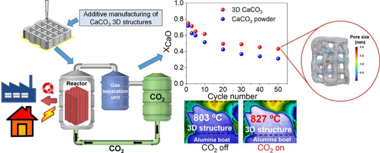
This work presents a proof of concept for the use of 3D-printed CaCO3 structures, prepared from low-cost and widely available mineral limestone, as an innovative approach for thermochemical energy storage (TCES) via the calcium looping (CaL) process in a fixed-bed reactor. These structures offer significant advantages in terms of reaction efficiency, gas flow control, structural…

Ethylene brassylate as a biobased plasticizer for poly(lactic acid): Evaluation of mechanical, thermal, and biodegradation properties

Poly(lactic acid) (PLA) is a bio-based polymer with high potential; however, its inherent brittleness restricts its practical applications. This work evaluates ethylene brassylate (EB), a macrocyclic diester of natural origin, as a plasticizer for PLA at 5–20 wt%. Thermal analysis confirmed a plasticizing effect, with the glass transition temperature decreasing from 59.9 °C in neat…

Boosting perovskite solar cell stability: Dual protection with ultrathin plasma polymer passivation layers

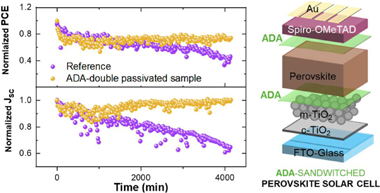
Metal halide perovskite solar cells (MHPSCs) hold great promise due to their high efficiency and low fabrication costs, but their long-term stability under environmental conditions remains the main challenge. However, their long-term operational stability under environmental stress remains a critical limitation for commercialization. In this work, we explore a dual passivation strategy using ultrathin adamantane-based…

A Strontium Aluminosilicate SrAl2SiO6 Offering a Scalable Route to Persistent Luminescent Materials

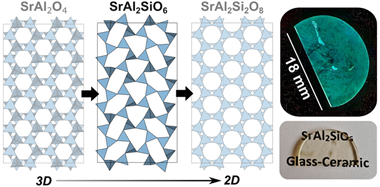
The substitution of silicon into SrAl2O4 is of interest for the development of new persistent luminescence phosphors with complementary excitation and emission wavelengths, especially in the form of transparent ceramics or glass-ceramics by the glass-crystallization approach. Application of this approach to the series Sr1-x/2Al2-xSixO4 (0 <= x <= 1) has previously produced two different solid…

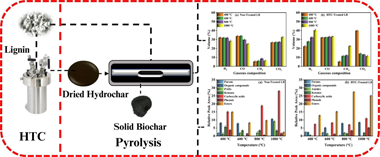
Controlled hydrothermal carbonization of wood-derived lignin-rich lignocellulose: Redefining pyrolytic pathways to tailored biochar and hydrogen-enriched syngas

This research illustrates the efficacy of hydrothermal carbonization (HTC) as a pretreatment method to improve the pyrolytic performance of wood-derived lignin-rich lignocellulosic biomass (LB), supported by thorough characterization of its derived products such as syngas, tar, and biochar. A systematic comparison of non-HTC-treated LB and HTC-treated LB through their respective pyrolytic-derived biochar (NLB, HLB) obtained…

Carbonation tests in a kW-scale entrained flow reactor for thermochemical energy storage using the calcium looping-based system

Deploying reliable and sustainable large-scale energy storage is a significant challenge for the widespread adoption of renewable energy sources. Thermal energy storage solutions can provide scalable solutions for renewable power and industrial processes. The calcium looping-based energy storage system stands out for its high energy density, low cost, non-toxicity, and wide availability of limestone as…

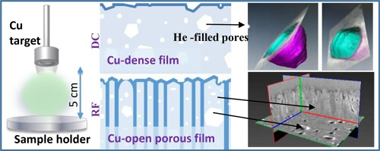
Low-Temperature Remote Plasma Synthesis of Highly Porous TiO2 as Electron Transport Layers in Perovskite Solar Cells

Halide perovskite solar cells (PSCs) offer high efficiency at low production costs, making them a promising solution for future photovoltaic technologies. Optimizing charge transport layers is crucial, with porous TiO2 widely used as electron transport layers (ETLs) due to their suitable energy band alignment, transparency, and abundance. However, their performance depends strongly on crystallinity, requiring…

Efficient Energy Transfer Between Ligand-Free FAPbBr3 Nanocrystals in a Mesoporous SiO2 Matrix

Lead halide perovskite nanocrystals (NCs) are promising materials for next-generation optoelectronic devices due to their exceptional optical properties. However, poor long-term stability remains a major challenge. In this study, formamidium lead bromide (FAPbBr3) NCs are embedded in a mesoporous silica matrix to enhance stability and explore exciton transport mechanisms. These NCs display a narrow photoluminescence…

Cu or Fe-Exchanged Natural Clinoptilolite as Sustainable Light-Assisted Catalyst for Water Disinfection at Near Neutral pH

Natural zeolites can be used to obtain effective catalysts for heterogeneous photocatalytic reactions due to their low cost and favorable physicochemical properties for water treatment. In this work, a natural clinoptilolite is modified by incorporating iron (NZ-Fe) and copper (NZ-Cu) as compensation cations through ion exchange processes. Metals incorporation and structural stability are demonstrated through…