Compositional Gradient of Mixed Halide 2D Perovskite Interface Boosts Outdoor Stability of Highly Efficient Perovskite Solar Cells

Interface engineering using self-assembled 2D perovskite interfaces is a consolidated route to efficient and durable perovskite solar cells. Whether the 2D perovskite forms a homogeneous conformal layer or is heterogeneously distributed on the surface, interface defects are passivated, leading to a general improvement in the device’s open circuit voltage (VOC) and stability. Here, an innovative…

Towards the effective removal of environmental strains of bacteria from real wastewater by heterostructured photocatalysts

Access to clean water is crucial for human health, yet microbial contamination poses significant challenges. This study investigates the effectiveness of novel photocatalytic catalysts: heterostructured TiO2/AgBr and faceted titanium dioxide, for microbial inactivation under ultraviolet and visible light. Both catalysts were synthesized and characterized. Performance was evaluated using real wastewater samples and saline solutions, targeting…

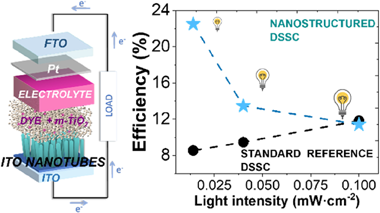
Multidimensional nanoarchitectures for improved indoor light harvesting in dye-sensitized solar cells

Dye Sensitized Solar Cells (DSSCs) have recently gained renewed interest for their potential in indoor light harvesting and powering wireless devices. However, to fully exploit their potential, crucial aspects require further attention, in particular, the improvement of spectral compatibility and low-light harvesting mechanisms, as well as the development of efficient photoanodes through high-yield scalable methods.…

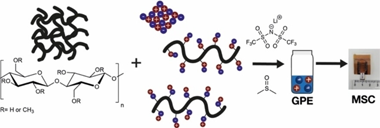
Poly(Ionic) Liquid-Enhanced Ion Dynamics in Cellulose-Derived Gel Polymer Electrolytes

Gel polymer electrolytes (GPEs) are regarded as a promising alternative to conventional electrolytes, combining the advantages of solid and liquid electrolytes. Leveraging the abundance and eco-friendliness of cellulose-based materials, GPEs were produced using methyl cellulose and incorporating various doping agents, either an ionic liquid (1-Butyl-1-methylpyrrolidinium bis(trifluoromethylsulfonyl)imide [Pyr14][TFSI]), its polymeric ionic liquid analogue (Poly(diallyldimethylammonium bis(trifluoromethylsulfonyl)imide) [PDADMA][TFSI]),…

A practical analysis to predict sample overheating in flash experiments using the current ramp methodology

This work presents a straightforward strategy for achieving specific overheating during flash experiments by adjusting the initial electrical parameters. To do that, an extensive experimental analysis was performed to evaluate the temperature evolution of dense ZnO specimens during controlled-current ramping at different furnace temperatures, which in turn modified the initial electrical resistance of the sample.…

Influence of features and firing temperature on the ceramic properties and phase evolution of raw kaolins

The influence of the characteristic features and firing temperature on the ceramic properties of raw kaolin samples were examined studying a wide range of firing temperatures (1000–1500 ºC). The techniques of investigation have been particle size analysis, Transmission Electron Microscopy (TEM), X-ray powder Diffraction (XRD), X-ray Fluorescence analysis (XRF), and Thermal Analysis using Termodilatometry (TD),…

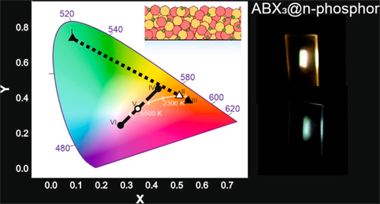
Tunable White Light Emission from Transparent Nanophosphor Films Embedding Perovskite Lead Halide Nanostructures

Exploring synergistic interactions between nanomaterials that can enhance their collective properties in ways that individual components cannot achieve represents an avenue for advancing beyond the current state of the art. This approach is particularly relevant in the context of ABX(3) nanocrystals, where pursuing cooperation could help to overcome current challenges associated with light generation. Transparent…

Revisiting Stability Criteria in Ball-Milled High-Entropy Alloys: Do Hume-Rothery and Thermodynamic Rules Equally Apply?

Stability descriptors for the formation of solid solutions can be divided into two categories: inspired by Hume–Rothery rules (HRR) and derived from thermodynamic approaches. Herein, HRRs are extended from binary to high-entropy alloys (HEAs) focusing on compositions prepared by ball milling. Parameters describing stability criteria are interrelated and implicitly account for the microstrains’ storage energy,…

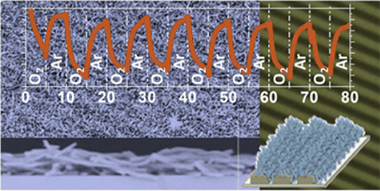
Facile integration of single-crystalline phthalocyanine nanowires and nanotrees as photo-enhanced conductometric sensors

This article presents a reproducible and affordable methodology for fabricating organic nanowires (ONWs) and nanotrees (ONTs) as light-enhanced conductometric O2 sensors. This protocol is based on a solventless procedure for the formation of high-density arrays of nanowires and nanotrees on interdigitated electrodes. The synthesis combines physical vapour deposition for the self-assembled growth of free-phthalocyanine nanowires and soft plasma etching to prompt the nucleation sites on the as-grown ONWs to allow for the formation of nanotrees. Electrical conductivity in…