Policies and Motivations for the CO2 Valorization through the Sabatier Reaction Using Structured Catalysts. A Review of the Most Recent Advances

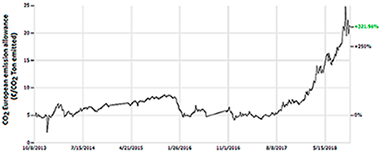
The current scenario where the effects of global warming are more and more evident, has motivated different initiatives for facing this, such as the creation of global policies with a clear environmental guideline. Within these policies, the control of Greenhouse Gase (GHG) emissions has been defined as mandatory, but for carrying out this, a smart…

Analysis of the variables that modify the robustness of Ti-SiO2 catalysts for alkene epoxidation: Role of silylation, deactivation and potential solutions

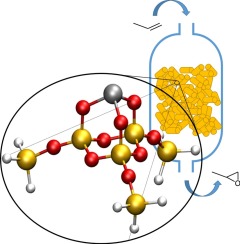
Catalytic epoxidation of alkenes plays an essential role in the transformation and synthesis of many organic chemicals. Ti atoms grafted on mesoporous silica, silylated on the surface, is considered the most active and selective catalyst for these reactions. However, the durability and robustness of the active centers remain as the main drawback in industry. In…

Environmentally friendly monolithic highly-porous biocarbons as binder-free supercapacitor electrodes

A simple, low-cost and environmentally friendly method has been used to obtain highly porous biomorphic carbon monoliths with a good combination of interconnected macro-, meso- and microporosity, and good electrical conductivity and mechanical strength, making these biocarbon materials interesting for electrochemical applications as binder-free electrodes. Highly porous monolithic biocarbons were obtained from beech wood precursors…

Sustainable Fabrication of Plant Cuticle-Like Packaging Films from Tomato Pomace Agro-Waste, Beeswax, and Alginate

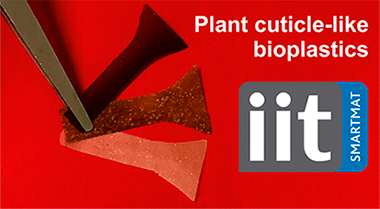
Plant cuticles have been used as models to produce hydrophobic films composed of sodium alginate, the fatty acid fraction of tomato pomace agrowaste, and beeswax. The fabrication process consisted of the blending of components in green solvents (water and ethanol) and a subsequent thermal treatment (150 degrees C, 8 h) to polymerize unsaturated and polyhydroxylated…

Selective CO methanation with structured RuO2/Al2O3 catalysts

Active and selective structured RuO2/Al2O3 catalysts for CO methanation using a flow simulating CO2-rich reformate gases from WGS and PROX units (H-2 excess, CO2 presence and 300 ppm CO concentration) were prepared. Both, the RuO2/Al2O3 powder and the slurry prepared from it for its structuration by washcoating of the metallic micromonolithic structure, were also active…

Valorization of Tomato Processing by-Products: Fatty Acid Extraction and Production of Bio-Based Materials

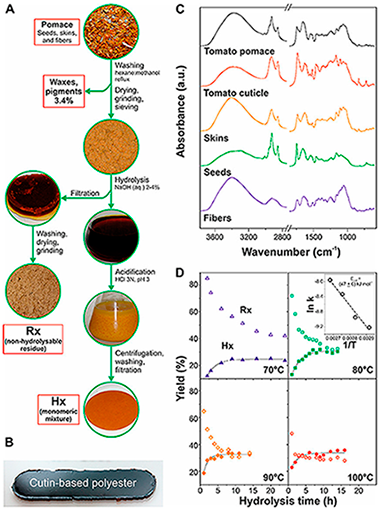
A method consisting of the alkaline hydrolysis of tomato pomace by-products has been optimized to obtain a mixture of unsaturated and polyhydroxylated fatty acids as well as a non-hydrolysable secondary residue. Reaction rates and the activation energy of the hydrolysis were calculated to reduce costs associated with chemicals and energy consumption. Lipid and non-hydrolysable fractions…

Nanoporous Pt-based catalysts prepared by chemical dealloying of magnetron-sputtered Pt-Cu thin films for the catalytic combustion of hydrogen

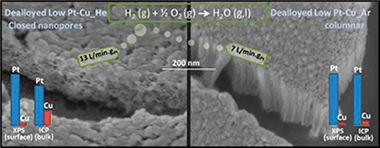
In this work, we prepared SiC-supported Pt-Cu thin films by magnetron sputtering for use as catalysts for the combustion of hydrogen under oxidizing conditions. We tested the catalysts as prepared and after chemical dealloying. A methodology is presented to fabricate catalytic thin films of a desired composition with tailored magnetron targets with lower Pt consumption.…