Photoluminescence quenching of dye molecules near a resonant silicon nanoparticle

Luminescent molecules attached to resonant colloidal particles are an important tool to study light-matter interaction. A traditional approach to enhance the photoluminescence intensity of the luminescent molecules in such conjugates is to incorporate spacer-coated plasmonic nanoantennas, where the spacer prevents intense non-radiative decay of the luminescent molecules. Here, we explore the capabilities of an alternative…

Enhancing Moisture and Water Resistance in Perovskite Solar Cells by Encapsulation with Ultrathin Plasma Polymers

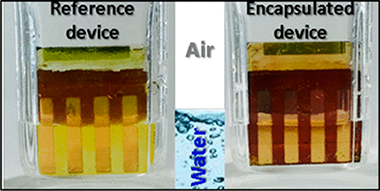
A compromise between high power conversion efficiency and long-term stability of hybrid organic inorganic metal halide perovskite solar cells is necessary for their outdoor photovoltaic application and commercialization. Herein, a method to improve the stability of perovskite solar cells under water and moisture exposure consisting of the encapsulation of the cell with an ultrathin plasma…

Synthesis of vaterite CaCO3 as submicron and nanosized particles using inorganic precursors and sucrose in aqueous medium

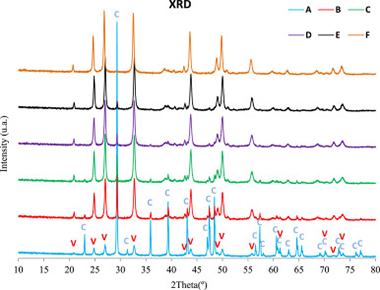
It is reported the synthesis of CaCO3 vaterite as stable nanoparticles and submicron-sized by a simple and relatively rapid procedure. XRD, SEM and FTIR techniques have been used to characterize the precipitated products. The synthesis is based on chemical precipitation of inorganic salt precursors, calcium nitrate tetra hydrate and sodium bicarbonate, and using the disaccharide…

Electrophoretic deposition of mixed copper oxide/GO as cathode and N-doped GO as anode for electrochemical energy storage

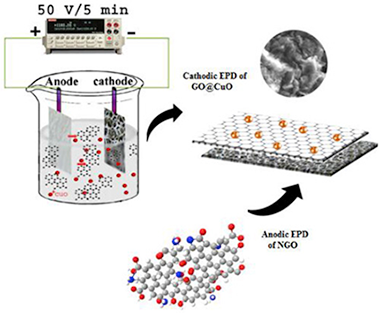
In this work, energy storage properties of mixed copper oxide wrapped by reduced graphene oxide and nitrogen-doped reduced graphene oxide were investigated. First, co-electrophoretic deposition technique was used to coat GO@CuO on nickel foam; followed by electrochemical phase transformation to rGO@CuxO. Electron spectroscopy analyses (XPS, REELS and UPS) confirm the phase transformation and electrochemical reduction.…

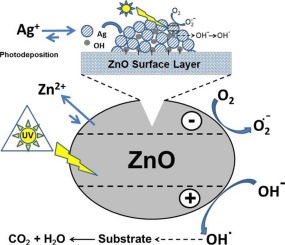
Silver-modified ZnO highly UV-photoactive

ZnO nanoparticles were successfully synthesized by a controlled precipitation procedure by mixing aqueous solutions of Zn(II) acetate and dissolved Na2CO3 at pH ca. 7.0 without template addition and ulterior calcination at 400 °C for 2 h. The Ag-ZnO catalysts (ranging from 0.5 to 10 Ag wt.-%) were obtained by photochemical deposition method at the surface of the prepared ZnO…

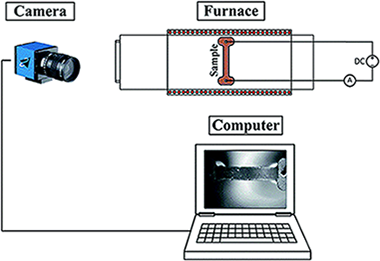
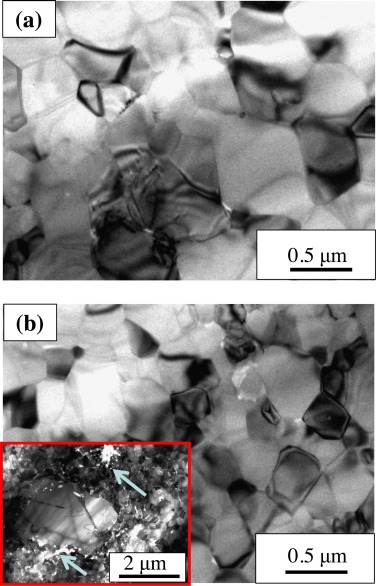
Is an alumina-whisker-reinforced alumina composite the most efficient choice for an oxidation-resistant high-temperature ceramic?

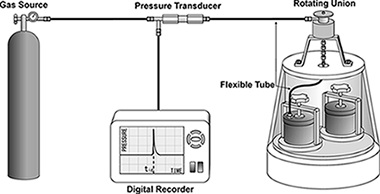
The search of a competitive ceramic material for structural applications demands several requisites: a simple microstructure with easy reproducibility, good intrinsic mechanical properties and most of all, an optimal oxidation resistance. This later point is a challenging point for most ultrahigh refractory materials.  In this work an alumina (Al2O3) whisker-reinforced Al2O3 composite prepared by spark…

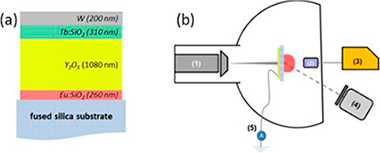
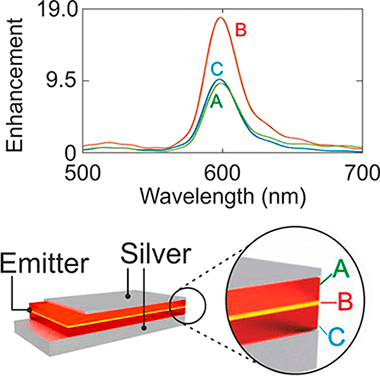
Absorption and Emission of Light in Optoelectronic Nanomaterials: The Role of the Local Optical Environment

Tailoring the interaction of electromagnetic radiation with matter is central to the development of optoelectronic devices. This becomes particularly relevant for a new generation of devices offering the possibility of solution processing with competitive efficiencies as well as new functionalities. These devices, containing novel materials such as inorganic colloidal quantum dots or hybrid organic-inorganic lead…