An approach to the heating dynamics of residues from greenhouse-crop plant biomass originated by tomatoes (Solanum lycopersicum, L.)

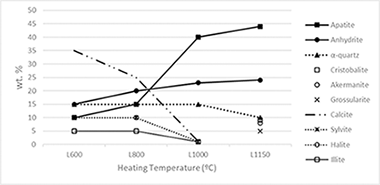
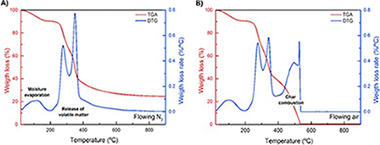
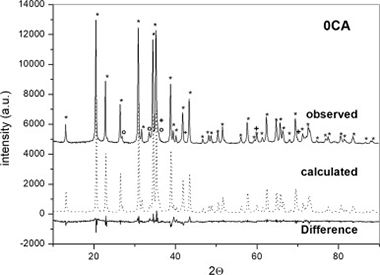
The most representative of greenhouse-crop plant biomass residues of tomatoes (Solanum lycopersicum L.) were selected for this study by using X-ray fluorescence spectrometry (XRF) and X-ray powder diffraction (XRD). The heating dynamics in air in the 600-1150 degrees C range of these residues for the production of renewable energy and the resultant ashes have been…

Sensing and biosensing with screen printed electrodes modified with nanostructured nickel oxide thin films prepared by magnetron sputtering at oblique angles

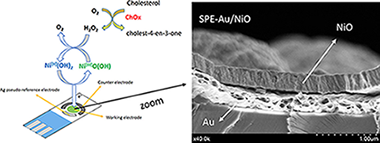
This work reports about the sensing and biosensing applications of a novel screen printed electrode (SPE) modified by nanostructured nickel oxide thin films obtained by reactive magnetron sputtering under an oblique angle configuration. Using these films as electrodes we demonstrate their ability to detect hydrogen peroxide under neutral pH conditions. Furthermore, as a proof-of-concept, NiO-modified…

Improving the activity of gold nanoparticles for the water-gas shift reaction using TiO2-Y2O3: an example of catalyst design

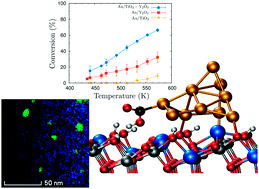
In the last ten years, there has been an acceleration in the pace at which new catalysts for the water-gas shift reaction are designed and synthesized. Pt-based catalysts remain the best solution when only activity is considered. However, cost, operation temperature, and deactivation phenomena are important variables when these catalysts are scaled in industry. Here,…

A direct in situ observation of water-enhanced proton conductivity of Eu-doped ZrO2: Effect on WGS reaction

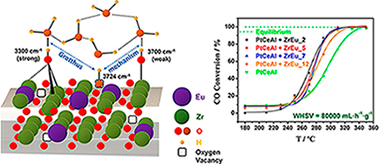
Eu-doped ZrO2 solid solutions have been synthesized in order to prepare proton conductors as water-enhancer additives for the WGS reaction. Elemental characterization has been carried out revealing homogeneous dopant distribution resulting in fluorite-type solid solutions for Eu2O3 contents up to similar to 9 mol.%. Representative samples of the Eu-doped ZrO2 series have been analysed by…

Performance improvement in olive stone’s combustion from a previous carbonization transformation

Under the framework of circular economy, agricultural wastes are an interesting carbon-based feedstock for thermal energy and power generation. Their use could extend the availability of biomass-based fuel and, at the same time, would reduce negative environmental effects. However, depending on the residues’ characteristics, their direct combustion in boilers presents some challenges which could be…

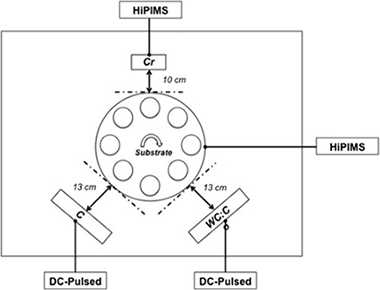
Nanostructural Analysis of Porous Oblique Angle Deposited (OAD) Multilayer Systems by Grazing-Incidence Small-Angle X-Ray Scattering

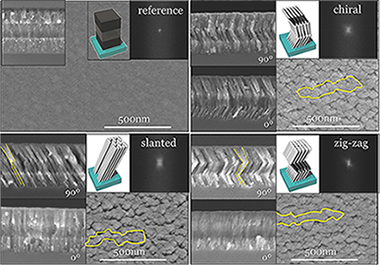
This work reports a thorough characterization analysis of various porous thin film multilayers by means of grazing-incidence small-angle X-ray scattering (GISAXS). Alternated TiO2/SiO2 nanocolumnar layers deposited at oblique angles are fabricated in slanted, chiral, and zig-zag configurations by rotating azimuthally the substrate from one layer to the next. Multilayer systems formed by the stacking of…

Vitrification and derived glass-ceramics from mining wastes containing vermiculite and lithium aluminium phosphate

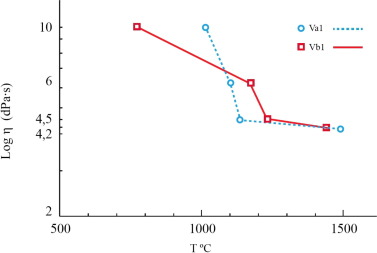
The waste vitrification of abandoned open sky vermiculite deposits has been considered by combining with a natural phosphate mineral residue. Several batches haven been designed from the composition system: Li2O-MgO-Al2O3-P2O5-SiO2 including some Fe2O3 and Fluoride. The resulting glasses are transparent and smooth green coloured, giving rise after TTT treatments to several opal, opaque glass-ceramics with…

Synthesis, characterization and combined kinetic analysis of thermal decomposition of hydrotalcite (Mg6Al2(OH)(16)CO3 center dot 4H(2)O)

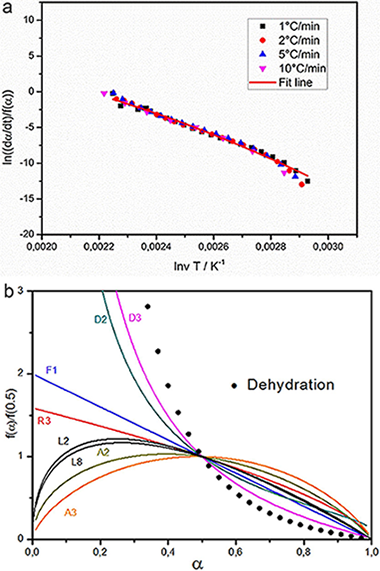
Here, a kinetic study of the thermal decomposition of synthesized hydrotalcite, Mg-6 Al-2 CO3(OH)(16)center dot H2O, has been carried out using thermogravimetric experiments in air atmosphere. It is shown that the thermal decomposition occurs in two well differentiated stages. The first one is a single-step dehydration process that comprises the release of four water molecules.…