Effect of milling mechanism on the CO2 capture performance of limestone in the Calcium Looping process

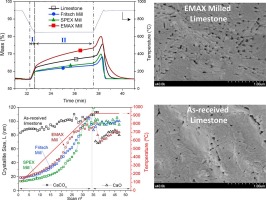
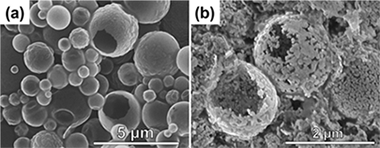
This work analyzes the relevant influence of milling on the CO2 capture performance of CaO derived from natural limestone. Diverse types of milling mechanisms produce contrasting effects on the microstructure of the CaO formed after calcination of the milled limestone samples, which affects crucially the kinetics of carbonation at conditions for CO2 capture. The capture…

On the determination of thermal degradation effects and detection techniques for thermoplastic composites obtained by automatic lamination

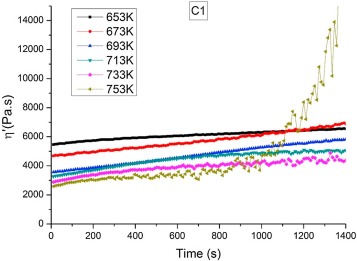
Automatic lay-up and in-situ consolidation with thermoplastic composite materials is a technology under research for its expected use in the profitable manufacturing of structural aeronautical parts. This study is devoted to analysing the possible effects of thermal degradation produced by this manufacturing technique.  Rheological measurements showed that there is negligible degradation in PEEK for the…

Synergy achieved in silver-TiO2 nanocomposites for the inhibition of biofouling on limestone

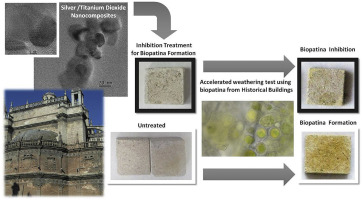
Biodeterioration of stone monuments is estimated to be as high as 20-30% of the total degradation suffered by Cultural Heritage constructions. With regard to this problem, bactericidal treatments are mainly based on cleaning. These processes, while effective in the short term, require frequent reapplications increasing potential damages to the monument. Silver nanoparticles offer many advantages…

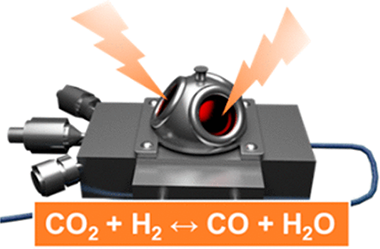
Unravelling the Role of Oxygen Vacancies in the Mechanism of the Reverse Water-Gas Shift Reaction by Operando DRIFTS and Ultraviolet-Visible Spectroscopy

The reaction mechanism of the reverse water gas shift (RWGS) reaction was investigated using two commercial gold-based catalysts supported on Al2O3 and TiO2. The surface species formed during the reaction and reaction mechanisms were elucidated by transient and steady-state operando DRIFTS studies. It was revealed that RWGS reaction over Au/Al2O3 proceeds through the formation of…

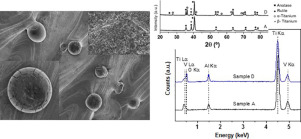
Surface modification of Ti-6Al-4V alloys manufactured by selective laser melting: Microstructural and tribo-mechanical characterization

Medical grade of both titanium (Ti) and Ti6A14V alloy are recognized as the metallic biomaterials with the better outcomes for clinical repair of bone tissue thanks to their suitable mechanical properties and corrosion resistance. However, those Ti advantages are not enough to avoid failure risks of bone implants; between 5 and 10% of Ti implants…

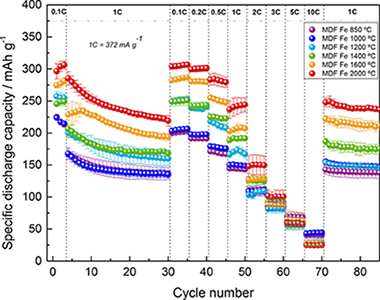
Iron-Catalyzed Graphitic Carbon Materials from Biomass Resources as Anodes for Lithium-Ion Batteries

Graphitized carbon materials from biomass resources were successfully synthesized with an iron catalyst, and their electrochemical performance as anode materials for lithium-ion batteries (LIBs) was investigated. Peak pyrolysis temperatures between 850 and 2000 degrees C were covered to study the effect of crystallinity and microstructural parameters on the anodic behavior, with a focus on the…

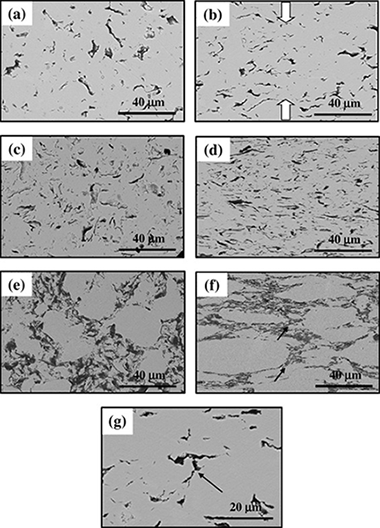
Electrical conduction mechanisms in graphene nanoplatelet/yttria tetragonal zirconia composites

Yttria tetragonal zirconia polycrystalline (3YTZP) ceramic composites with 5, 10 and 20 vol% graphene nano-platelets (GNPs) were prepared by spark plasma sintering (SPS) and their electrical conductivity as a function of temperature was characterized. The composites exhibit anisotropic microstructures so the electrical conductivity studies were carried out in two directions: perpendicular (sigma(perpendicular to)) and parallel…

Structural Reversibility of LaCo1-xCuxO3 Followed by In Situ X-ray Diffraction and Absorption Spectroscopy

Combinations of perovskite-type oxides with transition and precious metals exhibit a remarkable self-regenerable property that could be exploited for numerous practical applications. The objective of the present work was to study the reversibility of structural changes of perovskite-type oxides under cyclic reducing/oxidizing atmosphere by taking advantage of the reducibility of LaCoO3. LaCoO3 +/- and LaCo0.8Cu0.2O3…

Mechanochemical synthesis, structural, magnetic, optical and electrooptical properties of CuFeS2 nanoparticles

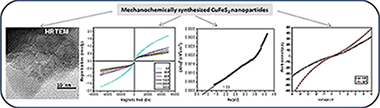
The rapid mechanochemical synthesis of nanocrystalline CuFeS2 particles prepared by high-energy milling for 60 min in a planetary mill from copper, iron and sulphur elements is reported. The CuFeS2 nanoparticles crystallize in tetragonal structure with mean crystallite size of about 38 ± 1 nm determined by XRD analysis. HRTEM study also revealed the presence of nanocrystals with the size of 5–30 nm…