





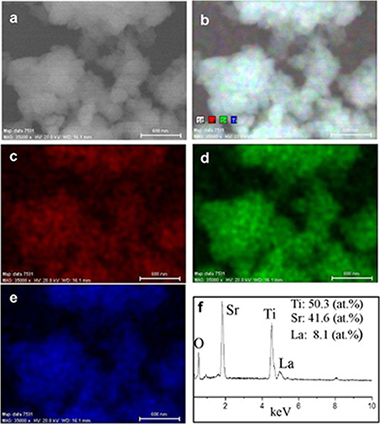
Mechanosynthesis of Sr1-xLaxTiO3 anodes for SOFCs: Structure and electrical conductivity
Sr1-xLaxTiO3 (SLT; 0 <= x <= 0.5) powder samples were synthesised at room temperature by a mechanochemical method from SrO, La2O3 and TiO2 mixtures in 90 min. The obtained SLT samples as potential anode materials in solid oxide fuel cells (SOFCs) were investigated. The microstructure, electrical conductivity and chemical compatibility with yttria-stabilised zirconia (YSZ) were…
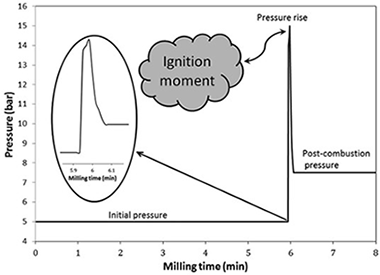
Nanostructured vanadium carbonitride prepared by combustion synthesis during mechanical milling
Vanadium carbonitride (VCN) nanoparticles were synthesized by a mechanically induced magnesiothermic combustion in a Mg/V2O5/C3H6N6 system. Initial materials ignited after a short milling time of 6 min. Various characterizations such as X-ray diffraction (XRD), X-ray photoelectron spectroscopy (XPS), energy-dispersive X-ray spectroscopy (EDX), high-resolution transmission electron microscopy (HRTEM) and elemental mapping confirmed that the product of…
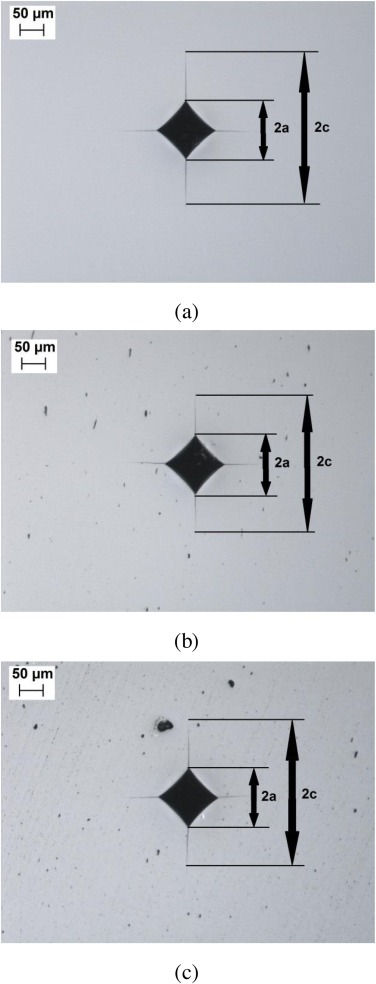
Graphene or carbon nanofiber-reinforced zirconia composites: Are they really worthwhile for structural applications?
The use of allotropic phases of carbon (i.e. nanotubes, graphene or carbon nanofibers) as second phases to design ceramic composites is a hot topic at present. Researchers try to provide a remarkable improvement of the parent ceramic assuming that some of the outstanding mechanical properties of these phases migrate to the resultant composite. This reasonable…
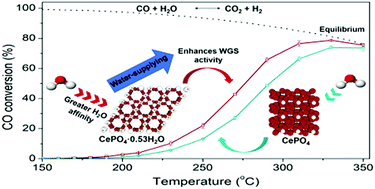
Pt/CePO4 catalysts for the WGS reaction: influence of the water-supplier role of the support on the catalytic performance
For Pt catalysts which have demonstrated great activity for the WGS reaction, the activation of water is described as the rate-limiting step. Such limitation could be overcome through the design of supports able to supply water. In this study, the hexagonal and monoclinic phases of CePO4 have been evaluated as supports for Pt WGS catalysts.…
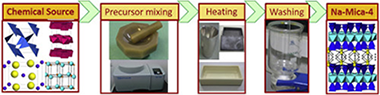
A comprehensive and in-depth analysis of the synthesis of advanced adsorbent materials
Na-Mica-4, a synthetic fluorophlogopite, is an attractive adsorbent. However, the synthesis at large scale demands an economically prized, feasible scalable and sustainable synthesis method, which requires a deep knowledge of the influence of each synthesis step. A set of Na-Mica-4 were synthesized by methods that had one synthesis parameter as variable. The purity, crystallinity and…
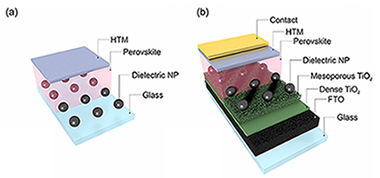
Absorption enhancement in methylammonium lead iodide perovskite solar cells with embedded arrays of dielectric particles
In the field of hybrid organic-inorganic perovskite based photovoltaics, there is a growing interest in the exploration of novel and smarter ways to improve the cells light harvesting efficiency at targeted wavelength ranges within the minimum volume possible, as well as in the development of colored and/or semitransparent devices that could pave the way both…
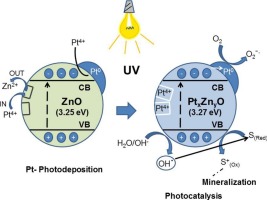
ZnO and Pt-ZnO photocatalysts: Characterization and photocatalytic activity assessing by means of three substrates
ZnO nanoparticles have been previously synthesized by a facile precipitation procedure by mixing aqueous solutions of Zn(II) acetate and dissolved Na2CO3 at pH ca. 7.0 without the addition of a template. The as-prepared ZnO material was anealed at 400 °C in air for 2 h. The Pt-ZnO catalysts (0.5 or 1.0 Pt wt.%) were obtained by photochemical deposition…
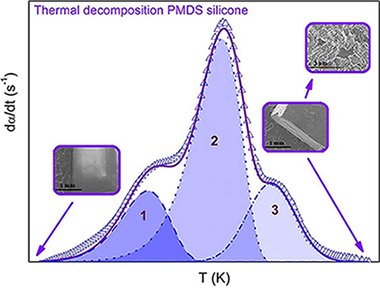
Combined kinetic analysis of multistep processes of thermal decomposition of polydimethylsiloxane silicone
In this work, we studied the thermal decomposition of a widely employed silicone elastomer, polydimethylsiloxane, in an inert atmosphere. This silicone elastomer has several applications due to its high thermal stability such as MEMS (microelectromechanical systems) precursors, microfluidic components, adhesives, lubricants, and precursors for non-porous ceramics. Therefore, a reliable description of the thermal decomposition kinetics…