Photo/Electrocatalytic Properties of Nanocrystalline ZnO and La–Doped ZnO: Combined DFT Fundamental Semiconducting Properties and Experimental Study

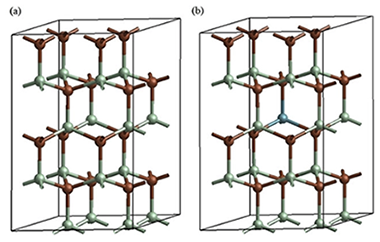
This work reports the synthesis of nanocrystalline ZnO and 5% La‐doped ZnO (La/ZnO) materials for photo/electrocatalytic degradation of Rhodamine B. The samples were characterized by X‐Ray diffraction, scanning and transmission electron microscopy, X‐Ray photoelectron spectroscopy and diffuse reflectance spectra. The effect of La doping on electronic structure was investigated using density functional theory calculations (DFT),…

Origin of Light-Induced Photophysical Effects in Organic Metal Halide Perovskites in the Presence of Oxygen

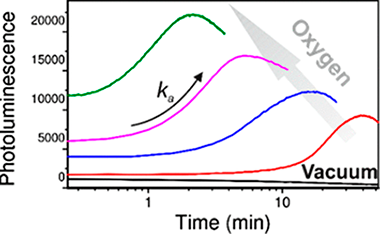
Herein we present a combined study of the evolution of both the photoluminescence (PL) and the surface chemical structure of organic metal halide perovskites as the environmental oxygen pressure rises from ultrahigh vacuum up to a few thousandths of an atmosphere. Analyzing the changes occurring at the semiconductor surface upon photoexcitation under a controlled oxygen…

Comparison of solvent extraction and extraction chromatography resin techniques for uranium isotopic characterization in high-level radioactive waste and barrier materials

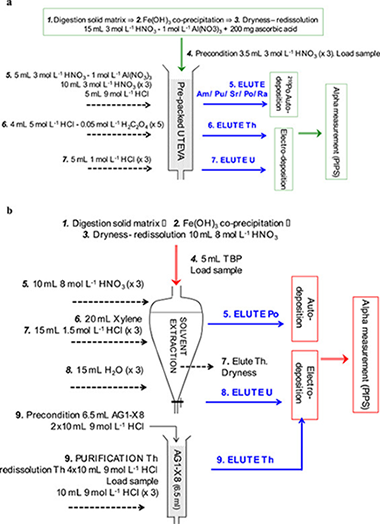
The development of Deep Geological Repositories (DGP) to the storage of high-level radioactive waste (HLRW) is mainly focused in systems of multiple barriers based on the use of clays, and particularly bentonites, as natural and engineered barriers in nuclear waste isolation due to their remarkable properties.  Due to the fact that uranium is the major…

Plant cuticle under global change: Biophysical implications

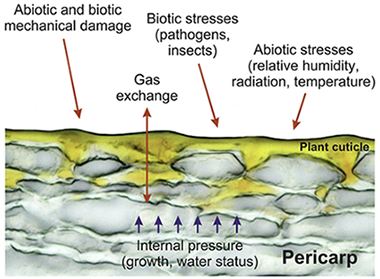
Climatic stressors due to global change induce important modifications to the chemical composition of plant cuticles and their biophysical properties. In particular, plant cuticles can become heavier, stiffer and more inert, improving plant protection. The climatic stressors that modify the chemical composition of plant tissues have been recently reviewed by Suseela and Tharayil (2018). In…

The Role of Metal Halide Perovskites in Next-Generation Lighting Devices

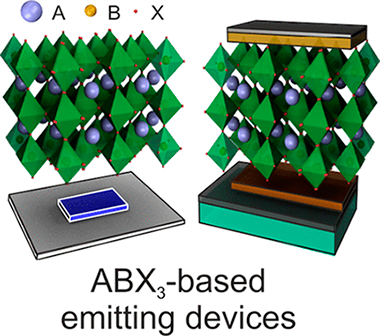
The development of smart illumination sources represents a central challenge for current technology. In this context, the quest for novel materials that enable efficient light generation is essential. Metal halide compounds with perovskite crystalline structure (ABX(3)) have gained tremendous interest in the last five years since they come as easy-to-prepare high performance semiconductors. Perovskite absorbers…

The effect of vitreous phase on mullite and mullite-based ceramic composites from kaolin wastes as by-products of mining, sericite clays and kaolinite

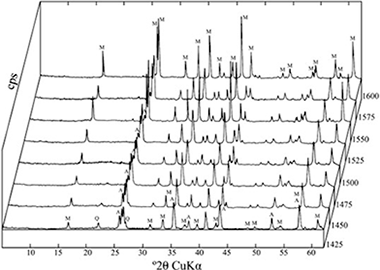
Mullite precursors were prepared using kaolin waste, sericite clay containing kaolinite and industrial kaolin with addition of alumina in a wet medium to synthesize mullite (72 wt% Al2O3 and 28 wt% SiO2). Uniaxial pressed bars of the powdered mullite precursors were fired in the range 1400-1600 degrees C with soaking times 30-120 min. The resultant…

Design of Ag/ and Pt/TiO2-SiO2 nanomaterials for the photocatalyti degradation of phenol under solar irradiation

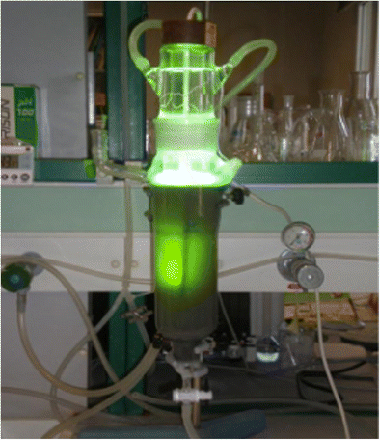
The design of hybrid mesoporous TiO2-SiO2(TS1) materials decorated with Ag and Pt nanoparticles was performed. The photocatalytic degradation of phenol under artificial solar irradiation was studied and the activity and selectivity of the intermediate products were verified. TiO2-SiO(2)was prepared by sol-gel method while Ag- and Pt-based photocatalysts (TS1-Ag and TS1-Pt) were prepared by photodeposition of…