La0.59Li0.24TiO3 ceramics obtained by spark plasma sintering: Electric behavior analysis

This work describes the electric study of Lithium lanthanum titanate (La0.59Li0.24TiO3) ceramics performed by Complex Impedance Spectroscopy. The nanoparticle powders have been synthesized through high energy ball milling and sintered via Spark Plasma Sintering technique. The experimental impedance data have been analyzed using the equivalent circuit model, the Extended Jonscher universal law and the derivative…

Biocompatibility assessment of up-and down-converting nanoparticles: implications of interferences with in vitro assays

The safety assessment of nanoparticles (NPs) is crucial during their design and development for biomedicine. One of the prerequisite steps during this evaluation is in vitro testing that employs cell-based assays not always validated and well-adapted for NPs. Interferences with in vitro assays may arise due to the nano-related optical, oxidative, fluorescent, surface and catalytic properties of NPs. Thus,…

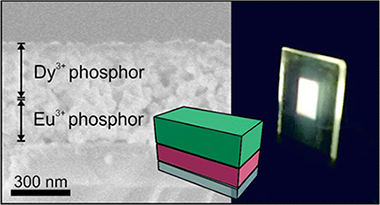
Highly Efficient Transparent Nanophosphor Films for Tunable White-Light-Emitting Layered Coatings

Bright luminescence in rare-earth (RE) nanocrystals, the so-called nanophosphors, is generally achieved by choosing a host that enables an effective excitation of the RE activator through charge or energy transfer. Although tungstate, molybdate, or vanadate compounds provide the aforementioned transfer, a comparative analysis of the efficiency of such emitters remains elusive. Herein, we perform a…

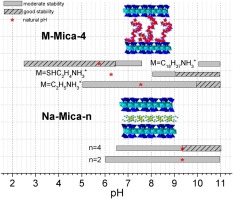
Influence of framework and interlayer on the colloidal stability of design swelling high-charged micas

Stability of colloidal clay minerals dispersion of fundamental in many industrial processes. Therefore, surface charge of the synthetic swelling high-charged mica family, Na-Mica-n (n = 2 or 4, n is the total layer charge) were investigated to study its colloidal dispersion stability as a function of the framework and interlayer space composition. Na-Mica-n (n = 2 or 4) micas…

Flexible nanophosphor films doped with Mie resonators for enhanced out-coupling of the emission

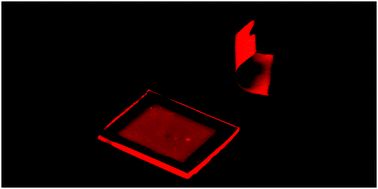
Herein, we present a general method to prepare self-standing flexible photoluminescent coatings of controlled opacity for integration into light-emitting diodes (LEDs) employing cost-effective solution-processing methods. From colloidal suspensions of nano-sized phosphors, we fabricate light-emitting transparent films that can be doped with spherical scatterers, which act as Mie resonators that trigger a controlled photoluminescence enhancement, evidenced…

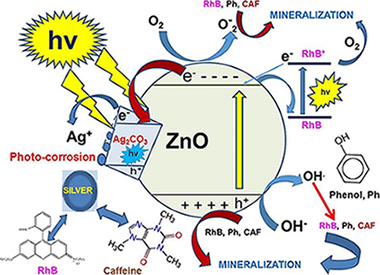
Synthesis and Characterization of ZnO-ZrO2 Nanocomposites for Photocatalytic Degradation and Mineralization of Phenol

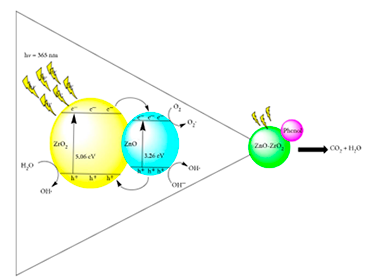
ZnO-ZrO2 nanocomposites using zinc (II) acetylacetonate and different ZnO contents (13, 25, 50, and 75% mol) were synthesized through sol-gel method. The synthesis process was strongly related to nanocomposite properties especially on their structural composition. The obtained ZnO-ZrO2 nanomaterials presented tetragonal crystalline structure for zirconia whereas hexagonal one was formed in ZnO. Raman spectroscopy and XRD patterns…

Enhancing Luminescence and X-ray Absorption Capacity of Eu3+:LaF3 Nanoparticles by Bi3+ Codoping

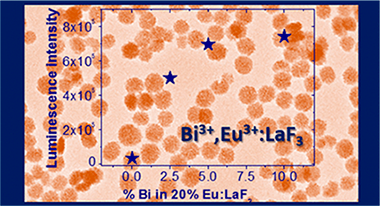
Bi3+ codoping has been proposed in this work with a twofold objective, namely, enhancing the luminescence emission of Eu3+:LaF3 nanoparticles (NPs) and increasing their X-ray attenuation capacity, with the purpose of obtaining a bimodal bioprobe for luminescence bioimaging and X-ray computed tomography. The synthesis method, reported here for the first time for LaF3 particles, allowed…

Influence of Al and Y content on the oxidation resistance of CrAlYN protective coatings for high temperature applications: New insights about the Y role

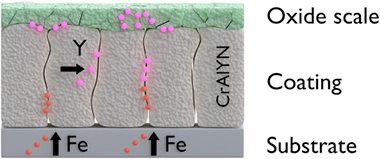
CrAlYN hard coatings with two different average Al contents: similar to 16 at.% and similar to 25 at.%, and Y concentration varying between 1.2 and 5.7 at.% were deposited by direct current reactive magnetron co-sputtering of mixed Cr-Al and Y targets on commercial M2 steel substrates. The samples were heated to 1000 degrees C in…