


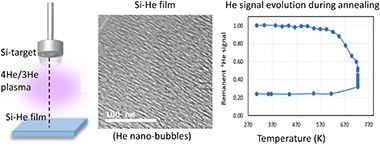
Microstructural characterization and thermal stability of He charged amorphous silicon films prepared by magnetron sputtering in helium

Sputtering of silicon in a Helium magnetron discharge has been reported as a bottom-up procedure to obtain amorphous Si films containing high amounts of gas-filled nanopores. Here we compare the microstructure and composition of Si-He nanocomposite films deposited by magnetron sputtering (MS) with 4He in DC or RF and 3He in RF operation modes. Electron…
The Role of Protective Surface Coatings on the Thermal Stability of Delithiated Ni-Rich Layered Oxide Cathode Materials

To achieve a broader public acceptance for electric vehicles based on lithium-ion battery (LIB) technology, long driving ranges, low cost, and high safety are needed. A promising pathway to address these key parameters lies in the further improvement of Ni-rich cathode materials for LIB cells. Despite the higher achieved capacities and thus energy densities, there…

Effect of Mo and W interlayers on microstructure and mechanical properties of Si3N4-nickel-base superalloy joints

Si3N4/nickel-base superalloy (Inconel-625) and Si3N4/Si3N4 joints with refractory metal (W and Mo) interlayers were vacuum brazed using a Ti-active braze Cu-ABA (92.75Cu-3Si-2Al-2.25Ti) at 1317 K for 30 min with the following interlayered arrangements: Si3N4/Mo/W/Inconel and Si3N4/Mo/W/Si3N4. The joints exhibited Ti segregation at the Si3N4/Cu-ABA interface, elemental interdiffusion across the joint interfaces, and sound metallurgical bonding.…

Bio-based lacquers from industrially processed tomato pomace for sustainable metal food packaging

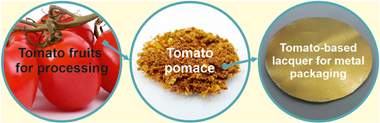
Bio-based lacquers prepared from an underutilized tomato processing residue such as pomace have been investigated as sustainable alternatives to bisphenol A (BPA)-based coatings for metal food packaging. The fabrication methodology consisted of a two-step process: spray-coating of a paste of the lipid fraction of tomato pomace with a mixture ethanol:H2O (3:1, v:v) on common metal…

Revalorización de los subproductos de la piel de patata en lacas multifuncionales sostenibles para envases metálicos de alimentos

El proyecto POP-UP tiene como objetivo proporcionar, en términos de bioeconomía circular, soluciones sostenibles, seguras y económicamente viables al uso masivo de resinas a base de petróleo de bisfenol A (BPA) en el envasado de alimentos a través de la fabricación de recubrimientos multifuncionales de alto rendimiento para sustratos metálicos de bajo costo a partir…

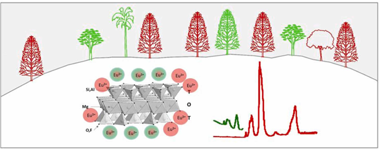
Exploring the local environment of the engineered nanoclay Mica-4 under hydrothermal conditions using Eu(3+)as a luminescent probe

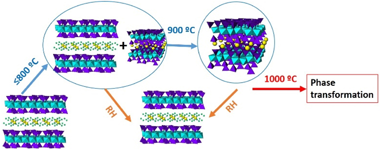
High charge mica Na4Al4Si4Mg6O20F4 , Mica-4, is a promising candidate as a filling material to immobilize high-level radioactive waste in deep geological repositories due to its extraordinary adsorption capacity. In contrast to traditional clay materials, the structural composition of this mica, with a high content of alu-minum in the tetrahedral sheet, enhances its chemical reactivity,…

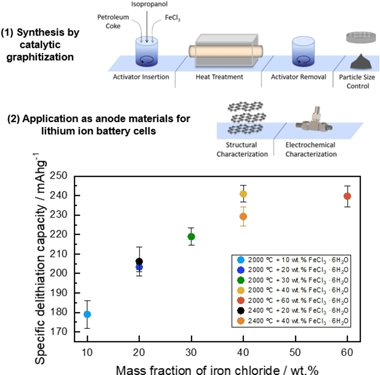
Insights into the Impact of Activators on the ‘Catalytic’ Graphitization to Design Anode Materials for Lithium Ion Batteries

In this work, we systematically investigate the ‘catalytic’ graphitization of a biomass precursor (coffee ground) using 10-60 wt.% of the activator iron (III) chloride hexahydrate in a temperature range of 1000 degrees C-2400 degrees C. Special focus is put on the correlation of synthesis conditions, e.g., heat treatment temperature and mass fraction of iron chloride,…

Biopolymer-Based Films Reinforced with FexOy-Nanoparticles

Nowadays, natural polymer-based films are considered potentially environmentally friendly alternatives to conventional plastic films, due to many advantageous properties, including their easy processability, high flexibility, non-toxicity, low cost, high availability, and environmental safety. However, they are limited in their application by a number of shortcomings, including their high water solubility and vapor permeability as well…

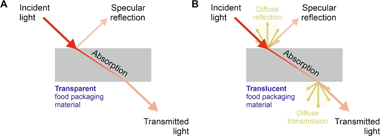
Transparency of polymeric food packaging materials

Transparency is a very important technical parameter to evaluate and validate certain food packaging materials. In the recent scientific literature, several methods (i.e. transmittance, opacity, haze, and absorbance) have been used and such variety hinders a direct comparison of results from different authors. In this Review, we describe and discuss the most widely employed methods…