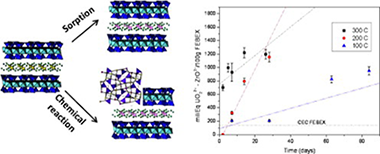
Impact of hydrothermal treatment of FEBEX and MX80 bentonites in water, HNO3 and Lu(NO3)(3) media: Implications for radioactive waste control

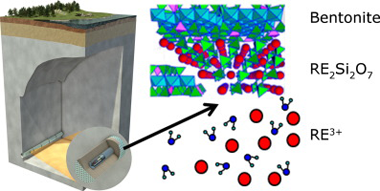
Engineered barriers of deep geological repositories (DGR) are commonly constructed with bentonite. FEBEX and MX80 bentonites have been selected by different countries as reference materials for the sealing of repositories; however, their chemical reactivity with high-level long-lived radioactive wastes (HLRW) under subcritical conditions had not been explored before. The hydrothermal stability in neutral and acid…

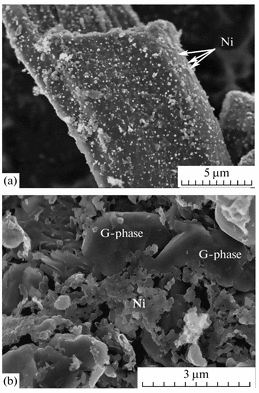
Specific features of the electrical properties in partially graphitized porous biocarbons of beech wood

The electrical and galvanomagnetic properties of partially graphitized highly porous bioC(Ni) biocarbon matrices produced by pyrolysis (carbonization) of beech wood at temperatures T (carb) = 850-1600A degrees C in the presence of a Ni-containing catalyst have been studied in comparison with their microstructural features. The temperature dependences of the resistivity, the magnetoresistance, and the Hall…

Viability of adding gypsum and calcite for remediation of metal-contaminated soil: laboratory and pilot plant scales

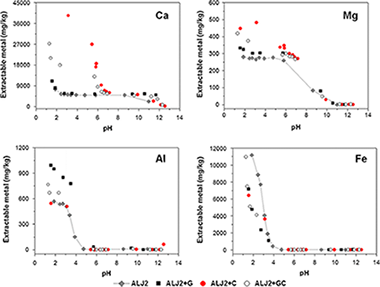
The effect of adding waste materials (gypsum and calcite) for the remediation of a soil contaminated by pyritic minerals was examined. Materials were characterised in terms of their acid neutralisation capacity (ANC), sorption capacity and structural components. Their effect on the contaminant leaching in soil + material mixtures over a wide range of pH was also evaluated.…

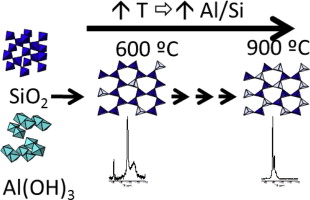
Fabrication of Optical Multi layer Devices from Porous Silicon Coatings with Closed Porosity by Magnetron Sputtering

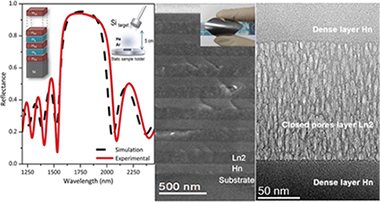
The fabrication of single-material photonic-multilayer devices is explored using a new methodology to produce porous silicon layers by magnetron sputtering. Our bottom-up methodology produces highly stable amorphous porous silicon films with a controlled refractive index using magnetron sputtering and incorporating a large amount of deposition gas inside the closed pores. The influence of the substrate…

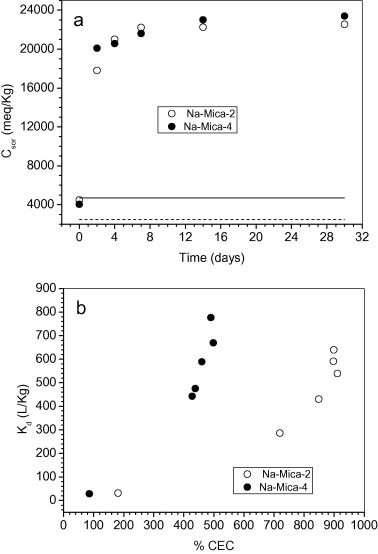
Self-Assembling of Tetradecylammonium Chain on Swelling High Charge Micas (Na-Mica-3 and Na-Mica-2): Effect of Alkylammonium Concentration and Mica Layer Charge

A family of tetradecylammonium micas is synthesized using synthetic swelling micas with high layer charge (NanSi8-nAln,Mg6F4O20 center dot XH2O, where n = 2 and 3) exchanged with tetradecylammonium cations. The molecular arrangement of the surfactant is,elucidated on the basis of XRD patterns and DTA. The ordering conformation of the surfactant molecules into the interlayer space…

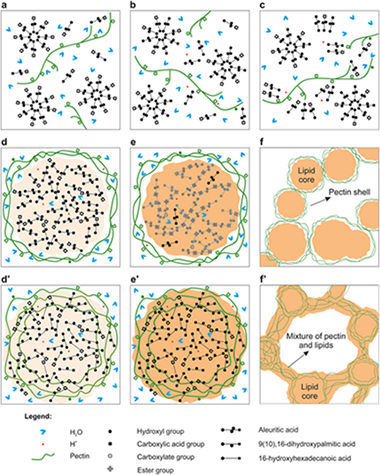
Pectin-Lipid Self-Assembly: Influence on the Formation of Polyhydroxy Fatty Acids Nanoparticles

Nanoparticles, named cutinsomes, have been prepared from aleuritic (9,10,16-trihidroxipalmitic) acid and tomato fruit cutin monomers (a mixture of mainly 9(10), 16-dihydroxypalmitic acid (85%, w/w) and 16-hydroxyhexadecanoic acid (7.5%, w/w)) with pectin in aqueous solution. The process of formation of the nanoparticles of aleuritic acid plus pectin has been monitored by UV-Vis spectrophotometry, while their chemical…

Microstructure, elastic and inelastic properties of partially graphitized biomorphic carbons

The microstructural characteristics and amplitude dependences of the Young’s modulus E and internal friction (logarithmic decrement delta) of biocarbon matrices prepared by beech wood carbonization at temperatures T (carb) = 850-1600A degrees C in the presence of a nickel-containing catalyst have been studied. Using X-ray diffraction and electron microscopy, it has been shown that the…