A Microstructure Insight of MTA Repair HP of Rapid Setting Capacity and Bioactive Response

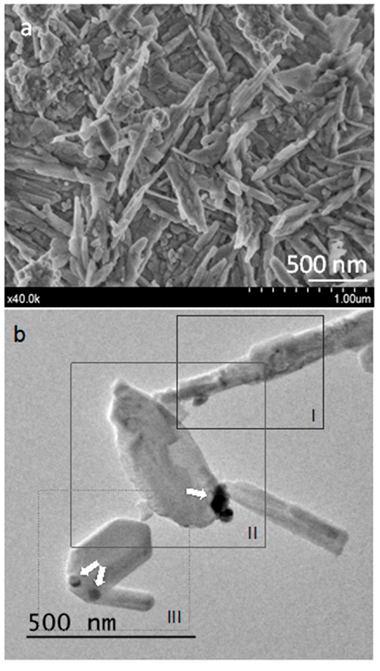
Mineral trioxide aggregate (MTA) is considered a bioactive endodontic material, which promotes natural mineralization at the material-tooth tissue interface. MTA Repair HP stands out because of the short setting time and the quick and effective bioactive response in vitro. The bioactivity, depens on material composition and microstructure. This work is devoted to analyze MTA Repair…

Positron annihilation analysis of nanopores and growth mechanism of oblique angle evaporated TiO2 and SiO2 thin films and multilayers

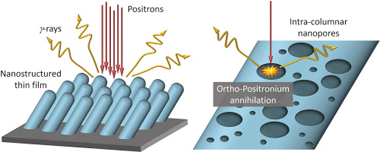
The nano-porosity embedded into the tilted and separated nanocolumns characteristic of the microstructure of evaporated thin films at oblique angles has been critically assessed by various variants of the positron annihilation spectroscopy. This technique represents a powerful tool for the analysis of porosity, defects and internal interfaces of materials, and has been applied to different…

Optical Responses of Localized and Extended Modes in a Mesoporous Layer on Plasmonic Array to Isopropanol Vapor

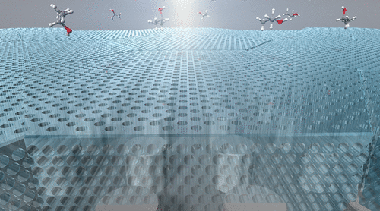
Mesoporous silica features open and accessible pores that can intake substances from the outside. The combination of mesoporous silica with plasmonic nanostructures represents an interesting platform for an optical sensor based on the dependence of plasmonic modes on the refractive index of the medium in which metallic nanoparticles are embedded. However, so far only a…

Binder-free supercapacitor electrodes: Optimization of monolithic graphitized carbons by reflux acid treatment

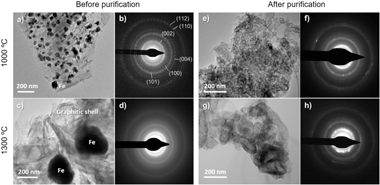
The rational design of electrodes mimicking the cellular structure of natural bio-resources has been a matter of increasing interest for applications in energy storage. Due to their anisotropic and hierarchical porosity, monolithic carbon materials from natural wood precursors are appealing as electrodes for supercapacitor applications due to their interconnected channels, relatively low cost and environmentally…

Optical interference effects on the Casimir-Lifshitz force in multilayer structures

The Casimir-Lifshitz force F(C-L) between planar objects when one of them is stratified at the nanoscale is herein investigated. Layering results in optical interference effects that give rise to a modification of the optical losses, which, as stated by the fluctuation-dissipation theorem, should affect the Casimir-Lifshitz interaction. On these grounds, we demonstrate that, by nanostructuring…

An insight on the design of mercapto functionalized swelling brittle micas

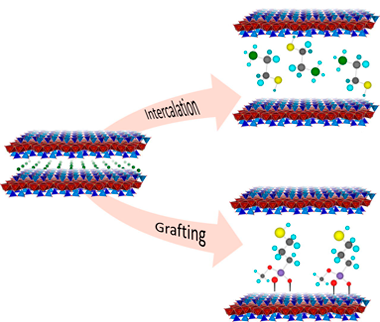
Surface modification of natural clay minerals with reagents containing metal chelating groups has great environmental value. The functionalization by adsorption or grafting guarantees a durable immobilization of the reactive organic groups, preventing their leaching when they are used in liquid media. The aim of this research was the designed mercapto functionalization of swelling brittle micas,…

Platinum nanoparticles stabilized by N-heterocyclic thiones. Synthesis and catalytic activity in mono- and di-hydroboration of alkynes

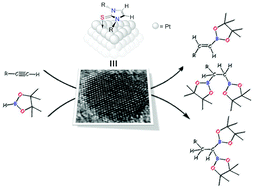
N-Heterocyclic Thiones (NHT) proved to be efficient ligands for the stabilization of small platinum nanoparticles (1.3-1.7 nm), synthesized by decomposition of [Pt(dba)(2)], under a H-2 atmosphere, in the presence of variable sub-stoichiometric amounts of the NHT. Full characterization by means of TEM, HR-TEM, NMR, ICP, TGA and XPS have been carried out, providing information about the nature of the metal nanoparticles and the interaction of the NHT ligands to the metal surface. Importantly, DFT calculations indicate that some NHT ligands interact with…

Optofluidic liquid sensing on electromicrofluidic devices

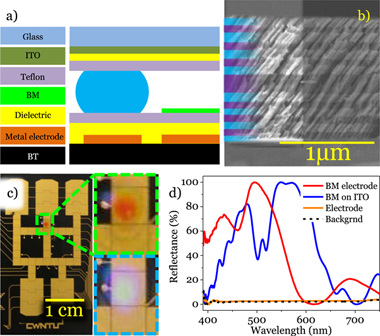
Electromicrofluidic (EMF) devices are used to handle and move tiny amounts of liquids by electrical actuation, including electrowetting-on-dielectric (EWOD) and dielectrophoresis (DEP). Monitoring the liquid characteristics in one of these devices requires suitable sensing transducers incorporated within the microfluidic structure. In the present work, we describe the incorporation of an optofluidic photonic transducer in an…

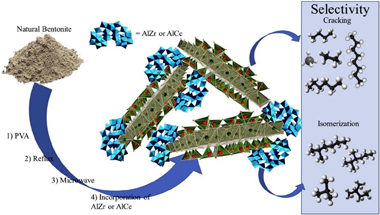
Potentialization of bentonite properties as support in acid catalysts

Enhancement of the main physicochemical properties of a natural bentonite was carried out by means of modifications using surfactant, reflux, microwave treatment and, subsequently, the incorporation of AlZr and AlCe species. The evolution of the main changes in each modification stage was evaluated by means of X-ray diffraction, N-2 sortometry, scanning microscopy (SEM), NH3-TPD, NH3-DRIFTS…