Sustainable, High-Barrier Polyaleuritate/Nanocellulose Biocomposites

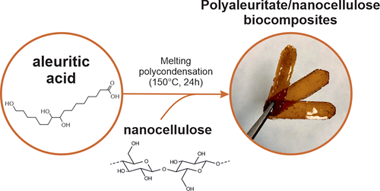
Free-standing and flexible biocomposite films formed by a polyaleuritate matrix and nanocellulose fillers (i.e., cellulose nanofibrils) have been fabricated by a sustainable process. For this, 9,10,16-trihydroxyhexadecanoic (aleuritic) acid from shellac and nanocellulose were blended at different ratios in water through a sonication process. Polymerization of the polyhydroxylated fatty acid into polyaleuritate was induced by a…

Evaluation of the Oxygen Mobility in CePO4-Supported Catalysts: Mechanistic Implications on the Water-Gas Shift Reaction

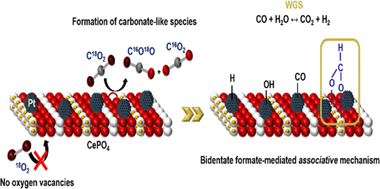
The hexagonal and monoclinic phases of CePO4 have been demonstrated to be excellent catalytic supports for Pt-based water-gas shift (WGS) catalysts. Consequently, the elucidation of the WGS reaction mechanism in these materials constitutes a fundamental aspect in order to explain their catalytic behavior. Because the observed WGS reaction path is closely related to the absence…

ICTAC Kinetics Committee recommendations for analysis of multi-step kinetics

The present recommendations have been developed by the Kinetics Committee of the International Confederation for Thermal Analysis and Calorimetry (ICTAC). The recommendations provide guidance on kinetic analysis of multi-step processes as measured by thermal analysis methods such as thermogravimetry (TGA) and differential scanning calorimetry (DSC). Ways of detecting the multi-step kinetics are discussed first. Then,…

Influence of Sr-doping on structural, optical and photocatalytic properties of synthesized Ca3(PO4)2

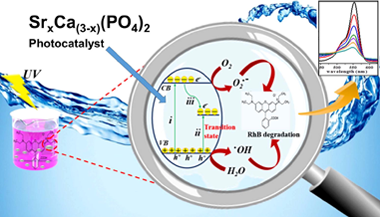
Well-crystallized Ca3(PO4)2 doped and un-doped nano-particles with the maximum strontium content (40 wt% Sr) followed by calcination at 800 °C for 3 h were synthesized via facile co-precipitation method. DTA/TGA, X-ray diffraction (XRD), energy dispersive scanning electron microscopy (SEM/EDX), UV–vis diffuse reflectance spectrum (UV–vis DRS), Raman spectroscopy and photoluminescence (PL) techniques were used for material characterization. The (XRD)…

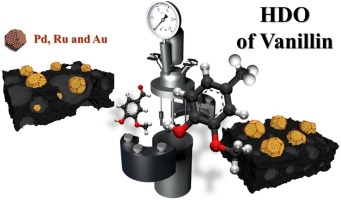
Hydrodeoxygenation of vanillin over noble metal catalyst supported on biochars: Part II: Catalytic behaviour

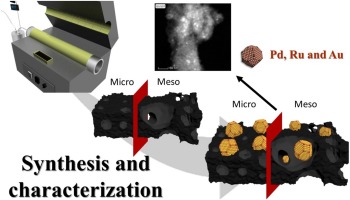
Vanillin hydrodeoxygenation was investigated using noble metal (Pd, Au, Ru) supported on active carbon prepared from waste derived biochars, which were produced via pyrolysis in CO2 atmosphere. Chemical activation with ZnCl2 and HNO3 was also used in the preparation of active carbon to enhance the specific surface area and demineralize material, respectively. Both fresh and…

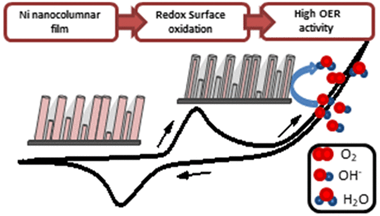
Chemistry and Electrocatalytic Activity of Nanostructured Nickel Electrodes for Water Electrolysis

Herein we have developed nanostructured nickel-based electrode films for anion exchange membrane water electrolysis (AEMWE). The electrodes were prepared by magnetron sputtering (MS) in an oblique angle configuration and under various conditions aimed at preparing metallic, oxide, or oxyhydroxide films. Their electrochemical analysis has been complemented with a thorough physicochemical characterization to determine the effect…

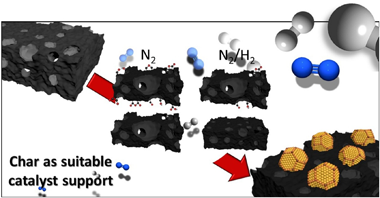
Reductant atmospheres during slow pyrolysis of cellulose: First approach to obtaining efficient char -based catalysts in one pot

Char based metallic (Pd-Au-Ru-Pt/C) catalysts have drawn increasing research interest due to their versatility in biomass related industrial reactions. Recent studies dealing with the synthesis of char-based catalysts in one single step (one-pot) use reductant atmospheres for biomass pyrolysis. In this work, the influence of the use of a reductant N2/H2 atmosphere on the physicochemical…

Cost-effective routes for catalytic biomass upgrading

Catalytic hydrodeoxygenation (HDO) is a fundamental and promising route for bio-oil upgrading to produce petroleum-like hydrocarbon fuels or chemical building blocks. One of the main challenges of this technology is the demand of high-pressure H-2, which poses high costs and safety concerns. Accordingly, developing cost-effective routes for biomass or bio-oil upgrading without the supply of…

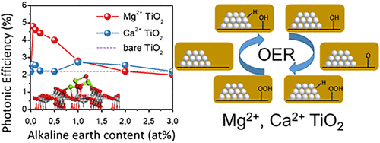
Surface Modification of Rutile TiO2 with Alkaline-Earth Oxide Nanoclusters for Enhanced Oxygen Evolution

The oxygen (O-2) evolution reaction (OER) is accepted as the bottleneck in the overall water splitting and has seen intense interest. In this work, we prepared rutile TiO2 modified with nanoclusters of alkaline-earth metal oxides for the OER. Photocatalytic OER was performed over rutile TiO2 surface-modified with alkaline-earth oxide nanoclusters, namely, CaO and MgO. The…