Enhanced Directional Light Extraction from Patterned Rare-Earth Phosphor Films

The combination of light‐emitting diodes (LEDs) and rare earth (RE) phosphors as color‐converting layers comprises the basis of solid‐state lighting. Indeed, most LED lamps include a photoluminescent coating made of phosphor material, i.e., crystalline matrix suitably doped with RE elements, to produce white light from a blue or ultraviolet LED chip. Transparent phosphor‐based films constitute…

Disentangling Electron–Phonon Coupling and Thermal Expansion Effects in the Band Gap Renormalization of Perovskite Nanocrystals

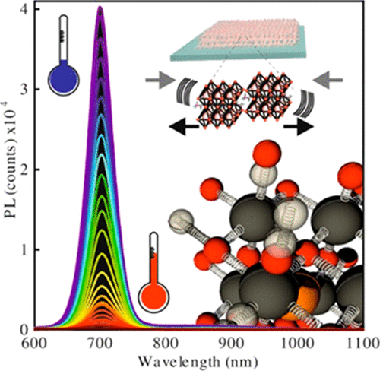
The complex electron–phonon interaction occurring in bulk lead halide perovskites gives rise to anomalous temperature dependences, like the widening of the electronic band gap as temperature increases. However, possible confinement effects on the electron–phonon coupling in the nanocrystalline version of these materials remain unexplored. Herein, we study the temperature (ranging from 80 K to ambient)…

Critical Influence of the Processing Route on the Mechanical Properties of Zirconia Composites with Graphene Nanoplatelets

Graphene-based nanostructures, used as potential reinforcement in ceramic composites, have a great tendency to agglomerate. This requires the use of homogenization techniques during the powder processing, posing the need to evaluate how these techniques affect the microstructure and the mechanical properties of the resulting composites. The influence of the processing route on the properties of…

Physicochemical surface analysis and germination at different irrigation conditions of DBD plasma‐treated wheat seeds

Plasma treatment is increasingly being explored as an effective presowing treatment improving seed germination. This study examines the synergetic effect of the irrigation condition and the physicochemical surface properties of wheat seeds subjected to atmospheric dielectric barrier discharge plasma activation on their water uptake and germination. Extensive surface analysis revealed a remarkably enhanced wettability of…

Anisotropic Resistivity Surfaces Produced in ITO Films by Laser-Induced Nanoscale Self-organization

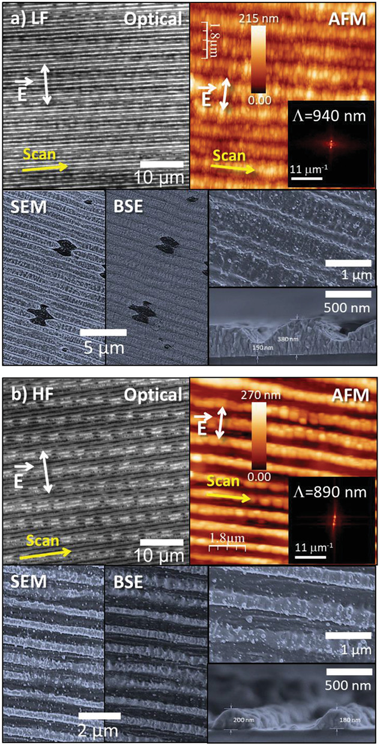
Highly anisotropic resistivity surfaces are produced in indium tin oxide (ITO) films by nanoscale self-organization upon irradiation with a fs-laser beam operating at 1030 nm. Anisotropy is caused by the formation of laser-induced periodic surface structures (LIPSS) extended over cm-sized regions. Two types of optimized structures are observed. At high fluence, nearly complete ablation at…

Sol-gel synthesis of ZnWO4-(ZnO) composite materials. Characterization and photocatalytic properties

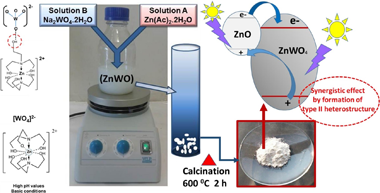
ZnWO4 based powder photocatalyst have been successfully prepared by calcining a co-precipitated precursor (ZnWO) obtained from aqueous Zn2+ and WO4 2− solutions at pH = 7, without surfactants addition. The as-formed sample was characterized by XRD, N2-absorption, SEM, TEM, DRS and XPS. Both techniques, XRD and XPS results showed that prepared sample corresponds to a…

Sponge-like processed D-periodic self-assembled atelocollagen supports bone formation in vivo

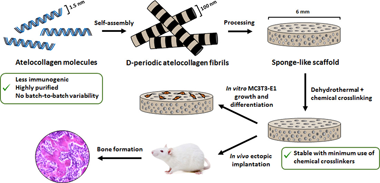
Fibrous biopolymeric collagen extracted from animal tissues has been widely used for fabricating matrices for bone tissue engineering (BTE). However, animal extracted collagens can trigger immune reactions when implanted in vivo and the presence of native crosslinks leads to batch-to-batch variability. Atelocollagen, a monomeric form of collagen, is free of telopeptides, which are mainly responsible…

Photocatalytic activity of ZnO nanoparticles and the role of the synthesis method on their physical and chemical properties

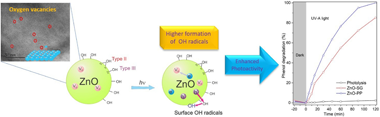
In the present study, we report on the effect of the synthesis method in the photoactivity of ZnO-NPs. The nanoparticles were prepared by precipitation and sol-gel procedures using zinc nitrate and zinc (II) acetylacetonate as ZnO precursors, respectively. The obtained samples were named as ZnO-PP (precipitation method) and ZnO-SG (sol-gel method). The powders were calcined…

Dysprosium and Holmium Vanadate Nanoprobes as High-Performance Contrast Agents for High-Field Magnetic Resonance and Computed Tomography Imaging

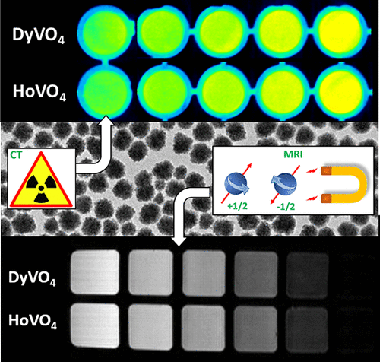
We describe a wet chemical method for the synthesis of uniform and well-dispersed dysprosium vanadate (DyVO4) and holmium vanadate (HoVO4) nanoparticles with an almost spherical shape and a mean size of ∼60 nm and their functionalization with poly(acrylic acid). The transverse magnetic relaxivity of both systems at 9.4 T is analyzed on the basis of…