Local Rearrangement of the Iodide Defect Structure Determines the Phase Segregation Effect in Mixed-Halide Perovskites

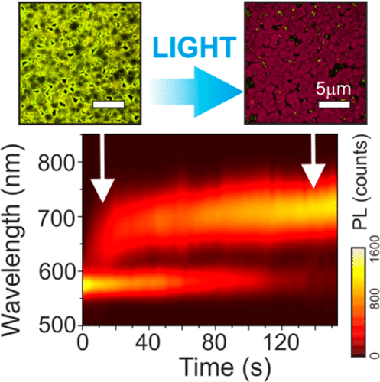
Mixed-halide perovskites represent a particularly relevant case within the family of lead-halide perovskites. Beyond their technological relevance for a variety of optoelectronic devices, photoinduced structural changes characteristic of this type of material lead to extreme photophysical changes that are currently the subject of intense debate. Herein we show that the conspicuous photoinduced phase segregation characteristic…

New biomorphic filters to face upcoming particulate emissions policies: A review of the FIL-BIO-DIESEL project

With a high number of diesel vehicles worldwide, particulate emission control is an urgent issue with a global impact, from the health of citizens to commercial future of this technology in some transport segments. Particulate filters are widely used in automotive engines to comply emissions regulations, but current technologies have room for improvement as they…

5-Hydroxymethyl-2-Furfural Oxidation Over Au/Ce(x)Zr(1-x)O(2)Catalysts

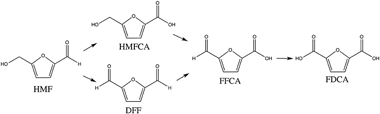
A series of gold catalysts supported on pure CeO2, ZrO2, and two different Ce-Zr mixed oxides have been prepared and tested in the 5-hydroxymethyl-2-furfural oxidation reaction. All catalysts show high catalytic activity (100% conversion) and important selectivity (27-41%) to the desired product i.e., 2,5-furandicarboxylic acid at low base concentration. Products selectivity changes with the support…

Supported Porous Nanostructures Developed by Plasma Processing of Metal Phthalocyanines and Porphyrins

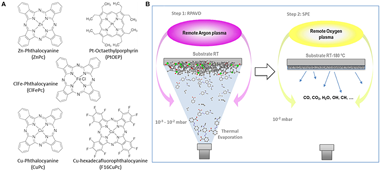
The large area scalable fabrication of supported porous metal and metal oxide nanomaterials is acknowledged as one of the greatest challenges for their eventual implementation in on-device applications. In this work, we will present a comprehensive revision and the latest results regarding the pioneering use of commercially available metal phthalocyanines and porphyrins as solid precursors…

Recent progress on the enhancement of photocatalytic properties of BiPO4 using π–conjugated materials

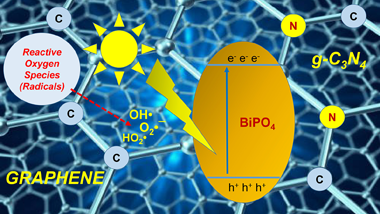
Semiconductor photocatalysis is regarded as most privileged solution for energy conversion and environmental application. Recently, photocatalysis methods using bismuth-based photocatalysts, such as BiPO4, have been extensively investigated owing to their superior efficacy regarding organic pollutant degradation and their further mineralization into CO2 and H2O. It is well known that BiPO4 monoclinic phase exhibited better photocatalytic…

Premelting of ice adsorbed on a rock surface

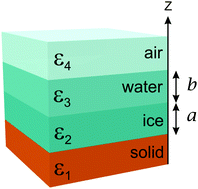
Considering ice-premelting on a quartz rock surface (i.e. silica) we calculate the Lifshitz excess pressures in a four layer system with rock-ice-water-air. Our calculations give excess pressures across (1) ice layer, (2) water layer, and (3) ice-water interface for different ice and water layer thicknesses. We analyse equilibrium conditions where the different excess pressures take…

Time-resolved operando DRIFTS-MS study of the moisture tolerance of small-pore SAPO-34 molecular sieves during CH4/CO2 separation

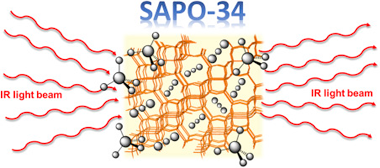
This study pretends to evaluate and understand the effect of moisture presence during CO2/CH4 separation on small-pore SAPO-34 molecular sieves. Two SAPO-34 samples with different physicochemical properties (composition, crystal size and texture) were prepared by hydrothermal synthesis using either one or a mixture of two templates. Transient operando DRIFTS-MS measurements revealed that the sample’s hydrophobic…

Microwave-assisted sol-gel synthesis of TiO2 in the presence of halogenhydric acids. Characterization and photocatalytic activity

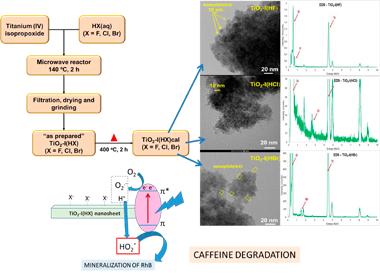
The synthesis of mesoporous TiO2 nanosheets is reported using Ti(IV) Isopropoxide as Ti(IV) precursor. A sol-gel process combined with microwave activation is used. Three different halogenhydric acids (HX), were used to peptise the sol: HF(ac), HCl (ac) and HBr (ac). The three obtained TiO2-I(HX) samples were characterized by XRD, XRF, N2-adsorption, SEM, TEM, DRS and…