Internal quantum efficiency and time signals from intensity-modulated photocurrent spectra of perovskite solar cells

Intensity Modulated Photocurrent Spectroscopy (IMPS) is a small-perturbation optoelectronic technique that measures the quantum efficiency of a photoelectrochemical device as a function of optical excitation frequency. Metal Halide Perovskites (MHPs) are mixed electronic-ionic semiconductors with an extraordinary complex optoelectronic behavior and a record efficiency surpassing 25%. In this paper, we propose a simplified procedure to…

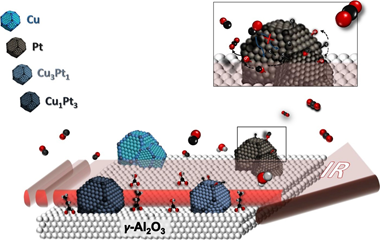
Upgrading the PtCu intermetallic compounds: The role of Pt and Cu in the alloy

This work is devoted to the study of the role of both metals in the intermetallic PtxCuy/ γ Al2O3 catalysts commonly employed in CO-PROX reaction. Therefore, monometallic Pt and Cu based catalysts and PtCu intermetallic compound with different molar ratios (Pt3Cu1 and Pt1Cu3) supported catalysts were carefully synthesized and deeply characterized. Room temperature CO adsorptions by FTIR spectroscopy were…

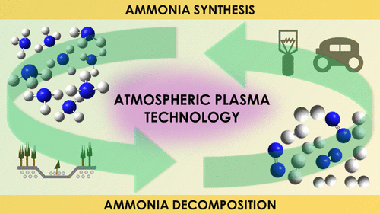
Unraveling Discharge and Surface Mechanisms in Plasma-Assisted Ammonia Reactions

Current studies on ammonia synthesis by means of atmospheric pressure plasmas respond to the urgent need of developing less environmentally aggressive processes than the conventional Haber-Bosch catalytic reaction. Herein, we systematically study the plasma synthesis of ammonia and the much less investigated reverse reaction (decomposition of ammonia into nitrogen and hydrogen). Besides analyzing the efficiency…

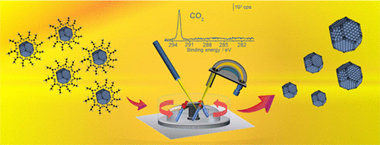
Free-Carbon Surface for PtCu Nanoparticles: An In Situ Near Ambient Pressure X-ray Photoelectron Spectroscopy Study

Usually, nanoparticle synthesis methodologies require the use of organic molecules (capping agent, solvent molecules, etc.), which results in carbon deposits on the nanoparticle surface. These residues modify the surface properties mainly affecting the catalytic behavior. In this work, unsupported poly(vinylpyrrolidone) (PVP)-stabilized PtCu (1:3 molar ratio) bimetallic alloy nanoparticles were synthetized and characterized. An alternative surface…

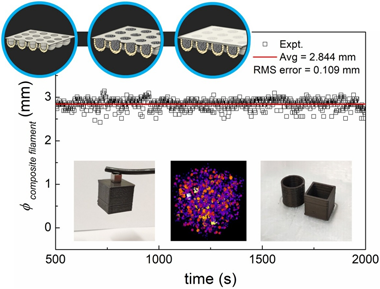
Novel procedure for laboratory scale production of composite functional filaments for additive manufacturing

Successful 3D printing by material extrusion of functional parts for new devices requires high quality filaments. Uniform homogeneity and good dispersion of particles embedded in filaments typically takes several cycles of extrusion or well-prepared feedstock by injection molding, industrial kneaders or twin-screw compounding. These methods need specific production devices that are not available in many…

Tailoring materials by high-energy ball milling: TiO2 mixtures for catalyst support application

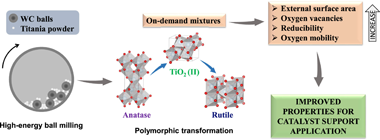
We carried out a rational design of catalyst supports by high-energy ball milling. Tailored mixtures of TiO2 crystalline phases were obtained using rotational speed and milling time as variable parameters. Polymorphic transformation from anatase to rutile through high-pressure TiO2 (II) as intermediate was confirmed by X-ray Diffraction (XRD), Raman Spectroscopy and Transmission Electron Microscopy (TEM).…

Elucidating esterification reaction during deposition of cutin monomers from classical molecular dynamics simulations

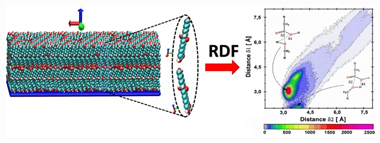
The structural behavior of some cutin monomers, when deposited on mica support, was extensively investigated by our research group. However, other events, such as esterification reaction (ER), are still a way to explore. In this paper, we explore possible ER that could occur when these monomers adsorb on support. Although classical molecular dynamics simulations are…

Bimetallic PdAu catalysts for formic acid dehydrogenation

A series of monometallic and bimetallic palladium gold catalyst were prepared and studied for the formic acid dehydrogenation reaction. Different Pd/Au compositions were employed (PdxAu100-x, where x = 25; 50 and 75) and their impact on alloy structure, particle size and dispersion was evaluated. Active phase composition and reaction parameters such as temperature, formic acid…

Mg2SiO4-MgAl2O4 directionally solidified eutectics: Hardness dependence modelled through an array of screw dislocations

Mg2SiO4-MgAl2O4 eutectic ceramics have been fabricated by means of the laser floating zone (LFZ) technique. The microstructure has revealed as an unusual one at lower growth rate, composed of broken lamellae of MgAl2O4 distributed randomly along one matrix, composed of Mg2SiO4. At higher growth rates, a cell structure with intra-cell lamella structure is dominant. Contrary…