Morphological and structural behavior of TiO2 nanoparticles in the presence of WO3: crystallization of the oxide composite system

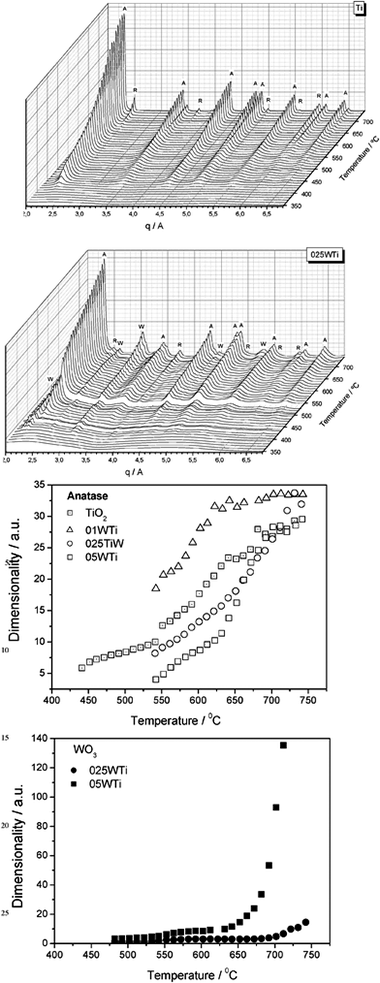
Composite TiO2-WO3 oxide materials were prepared by a single pot microemulsion method and studied during calcination treatments under dry air in order to analyze the influence of tungsten on the behavior of the dominant titania component. To this end, the surface and bulk morphological and structural evolution of the solid precursors was studied using X-ray…

Reticulated bioactive scaffolds with improved textural properties for bone tissue engineering: Nanostructured surfaces and porosity

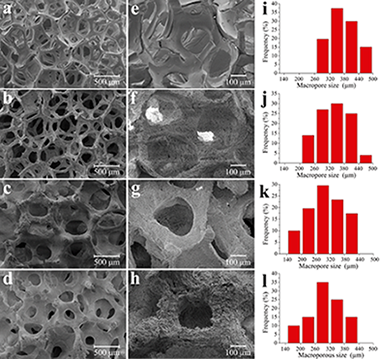
Organised nanoporous SBA-15 type silica precursor (SP) particulate material has been processed into three-dimensional macroporous, reticulated structures using a novel strategy consisting of blending increasing percentages of SP with a SiO2-CaO-P2O5 (80Si15Ca5P) mesoporous bioactive glass (MBG) sol. The procedure successfully produced consolidated and functionally competent open-cell scaffolds while preserving the nanoporous order of the SP.…

Impregnation of carbon black for the examination of colloids using TEM

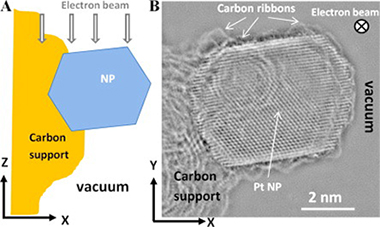
Nanoparticles are frequently synthesised as colloids, dispersed in solvents such as water, hexane or ethanol. For their characterisation by transmission electron microscopy (TEM), a drop of colloid is typically deposited on a carbon support and the solvent allowed to evaporate. However, this method of supporting the nanoparticles reduces the visibility of fine atomic details, particularly…

On the formation of the porous structure in nanostructured a-Si coatings deposited by dc magnetron sputtering at oblique angles

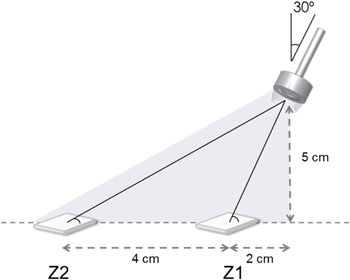
The formation of the porous structure in dc magnetron sputtered amorphous silicon thin films at low temperatures is studied when using helium and/or argon as the processing gas. In each case, a-Si thin films were simultaneously grown at two different locations in the reactor which led to the assembly of different porous structures. The set…

Chromium removal on chitosan-based sorbents – An EXAFS/XANES investigation of mechanism

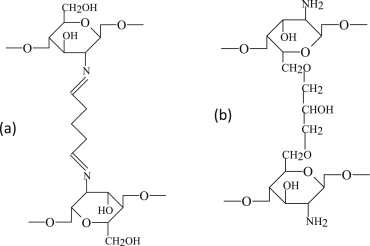
Chitosan is known to be a good sorbent for metal-containing ions as the presence of amino groups and hydroxyl functions act as effective binding sites. Its crosslinking, employing glutaraldehyde or epichlorohydrin, may change the sorption properties (sorption capacity or diffusion properties) of this biopolymer, since the available functional groups are different in each case. X-ray…

Bending Induced Self-Organized Switchable Gratings on Polymeric Substrates

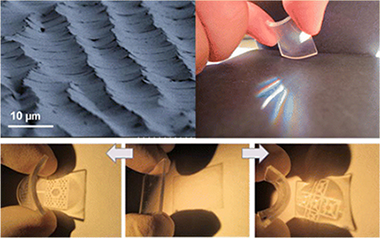
We present a straightforward procedure of self-surface patterning with potential applications as large area gratings, invisible labeling, optomechanical transducers, or smart windows. The methodology is based in the formation of parallel micrometric crack patterns when polydimethylsiloxane foils coated with tilted nanocolumnar SiO2 thin films are manually bent. The SiO2 thin films are grown by glancing…

Scission kinetic model for the prediction of polymer pyrolysis curves from chain structure

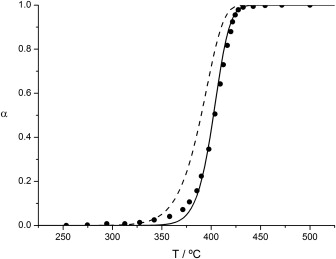
There is a significant interest in correlating polymer structure with thermal degradation behavior. Thus, polymer pyrolysis curves could be predicted from the chemical structure of the polymer. Recent proposals correlate the kinetic temperature function directly with the chemical structure of the polymer by means of the dissociation energy while assuming a semi-empirical first order model…

Simultaneous quantification of light elements in thin films deposited on Si substrates using proton EBS (Elastic Backscattering Spectroscopy)

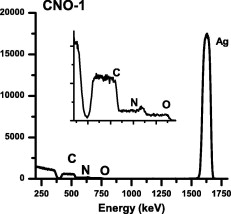
Quantification of light elements content in thin films is an important and difficult issue in many technological fields such as polymeric functional thin films, organic thin film devices, biomaterials, and doped semiconducting structures. Light elements are difficult to detect with techniques based on X-ray emission, such as energy dispersive analysis of X-rays (EDAX). Other techniques,…

Luminescent 3-hydroxyflavone nanocomposites with a tuneable refractive index for photonics and UV detection by plasma assisted vacuum deposition

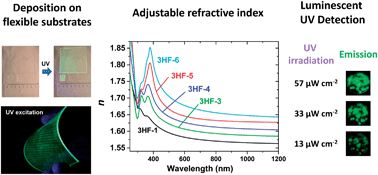
Luminescent organic-thin-films transparent in the visible region have been synthesized by a plasma assisted vacuum deposition method. The films have been developed for their implementation in photonic devices and for UV detection. They consist of a plasma polymeric matrix that incorporates 3-hydroxyflavone molecules characterized by absorption of UV radiation and emission of green light. The…

New Single-Phase, White-Light-Emitting Phosphors Based on delta-Gd2Si2O7 for Solid-State Lighting

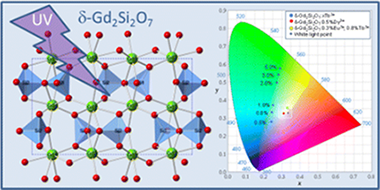
Two new white-light (WL)-emitting phosphors (δ-Gd2Si2O7:Dy and δ-Gd2Si2O7:Eu,Tb) have been synthesized by the sol–gel method. The Gd-Ln3+ (Ln3+= Dy3+, Tb3+, Eu3+) energy-transfer band has been used to excite both phosphors, which provides an enhancement of the Ln3+ emissions. First, WL was generated from δ-Gd2Si2O7:xDy thanks to the particular ratio of the blue and yellow emissions…