Characterization of porous graphitic monoliths from pyrolyzed wood

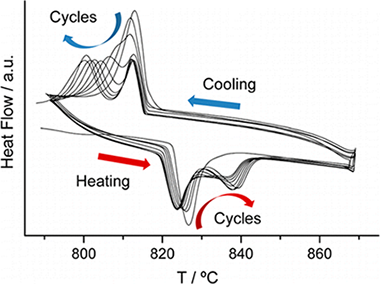
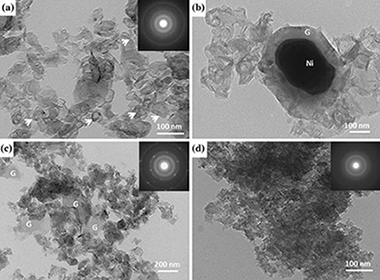
Porous graphitic carbons were obtained from wood precursors using Ni as a graphitization catalyst during pyrolysis. The structure of the resulting material retains that of the original wood precursors with highly aligned, hierarchical porosity. Thermal characterization was performed by means of thermogravimetry and differential scanning calorimetry, and the onset temperature for graphitization was determined to…

Tribological comparison of different C-based coatings in lubricated and unlubricated conditions

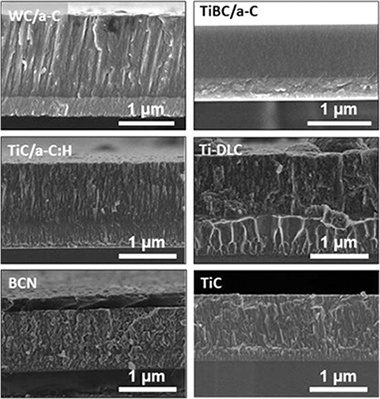
The use of carbon-based coatings (hydrogenated and non-hydrogenated DLC, doped and alloyed-DLC) is of wide interest due to its applications in mechanical components submitted to friction and wear including sliding parts in automotive engines. A tribological comparative analysis using a reciprocating (SRV) tester in lubricated and unlubricated conditions with a 4-stroke motor oil has been…

The Use of Fluorocarbons to Mitigate the Oxygen Dependence of Glucose Microbiosensors for Neuroscience Applications

First-generation amperometric glucose biosensors are the most commonly used method for glucose monitoring in neuroscience. Nevertheless, biosensors of this genre suffer from the so-called «oxygen deficit». This problem is particularly acute when the oxygen concentration is low, as is the case in brain extracellular fluid. In the present work we use different fluorocarbons, such as…

Active Site Considerations on the Photocatalytic H-2 Evolution Performance of Cu-Doped TiO2 Obtained by Different Doping Methods

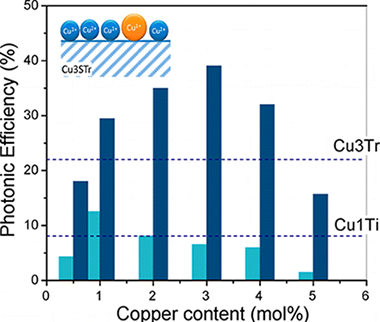
A photocatalytic H2 evolution reaction was performed over copper doped TiO2. The influence of sulfate pretreatment over fresh TiO2 support and the Cu doping method has been evaluated. Wide structural and surface characterization of catalysts was carried out in order to establish a correlation between the effect of sulfuric acid treatment and the further Cu-TiO2photocatalytic properties. Notably…

Mechanochemically synthesized nanocrystalline Sb2S3 particles

Nanocrystalline Sb2S3 particles have been synthesized from Sb and S powders by high-energy milling in a planetary mill using argon protective atmosphere. X-ray diffraction, particle size analysis, scanning electron microscopy, energy dispersive X-ray spectroscopy, transmission electron microscopy, electron diffraction, high resolution transmission electron microscopy, UV-VIS, and differential scanning calorimetry methods for characterization of the prepared particles…

Supported Co catalysts prepared as thin films by magnetron sputtering for sodium borohydride and ammonia borane hydrolysis

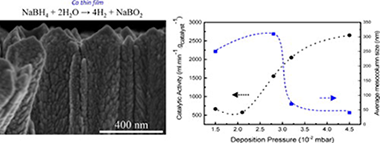
Supported Co catalysts were prepared for sodium borohydride and ammonia borane hydrolysis by magnetron sputtering for the first time under different conditions. Ni foam was selected as support. Deposition conditions (time, pressure, and power) were varied to improve catalytic activity. A decrease in deposition power from 200 to 50 W, leads to a decrease in…

The Mitigation Effect of Synthetic Polymers on Initiation Reactivity of CL-20: Physical Models and Chemical Pathways of Thermolysis

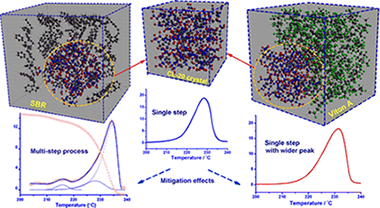
In this paper, the thermal decomposition physical models of different CL-20 polymorph crystals and their polymer bonded explosives (PBXs) bonded by polymeric matrices using polyisobutylene (PIB), acrylonitrile butadiene rubber (NBR), styrene butadiene rubber (SBR), Viton A, and Fluorel binders are obtained and used to predict the temperature profiles of constant rate decomposition. The physical models…