Perovskite Solar Cells Based on Nanocolumnar PlasmaDeposited ZnO Thin Films

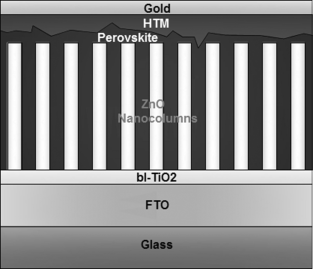
ZnO thin films having a nanocolumnar microstructure are grown by plasma-enhanced chemical vapor deposition at 423 K on pre-treated fluorine-doped tin oxide (FTO) substrates. The films consist of c-axis-oriented wurtzite ZnO nanocolumns with well-defined microstructure and crystallinity. By sensitizing CH3NH3PbI3 on these photoanodes a power conversion of 4.8 % is obtained for solid-state solar cells. Poly(triarylamine)…

Self-propagating combustion synthesis via an MSR process: An efficient and simple method to prepare (Ti, Zr, Hf)B2–Al2O3 powder nanocomposites

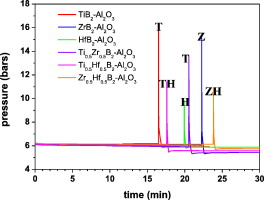
The synthesis of (Ti1 − xZrx)B2–Al2O3, (Ti1 − xHfx)B2–Al2O3 and (Zr1 − xHfx)B2–Al2O3 (x = 0, 0.5 and 1) powder nanocomposites via a mechanochemical method using TiO2, ZrO2, HfO2, HBO2 and Al as the raw materials was investigated. The formation of the nanocomposites proceeds via a mechanically-induced self-sustaining reaction (MSR) process that involves several simultaneous…

Production of hydrogen by water photo-splitting over commercial and synthesised Au/TiO2 catalysts

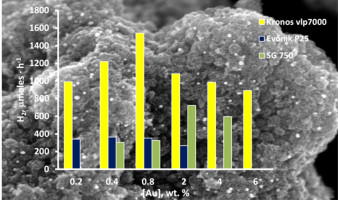
H2 production from methanol/water photo-splitting was compared using various commercial photocatalysts (Evonik P25 (P25), Hombikat UV-100 (HB) and Kronos vlp7000 (KR)) and others synthesised with a sol–gel-hydrothermal (HT) process and a sol–gel method followed by calcination (SG400 and SG750). All photocatalysts had been surface modified with Au at different concentrations, from 0.2 to 6.0 wt.%,…

Synthesis and luminescence of uniform europium-doped bismuth fluoride and bismuth oxyfluoride particles with different morphologies

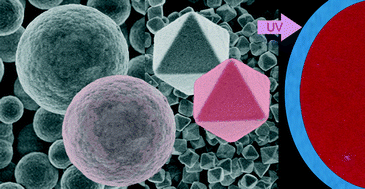
Facile synthesis routes have been developed for the preparation of uniform cubic bismuth fluoride and bismuth oxyfluoride particles. The synthesis methods are based on homogeneous precipitation reactions at 120 °C in solutions of bismuth nitrate and sodium tetrafluoroborate precursors in polyol-based solvents. Both the nature of the solvent and the heating modes (conventional or microwave-assisted…

Comparison of thermal behavior of natural and hot-washed sisal fibers based on their main components: Cellulose, xylan and lignin. TG-FTIR analysis of volatile products

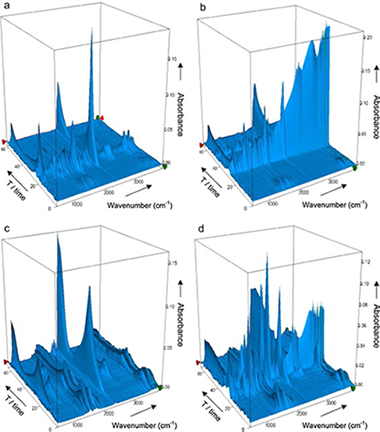
This paper presents in a comprehensive way the thermal behavior of natural and hot-washed sisal fibers, based on the fundamental components of lignocellulosic materials: cellulose, xylan and lignin. The research highlights the influence exerted on the thermal stability of sisal fibers by other constituents such as non-cellulosic polysaccharides (NCP) and mineral matter. Thermal changes were…

The effect of polymer matrices on the thermal hazard properties of RDX-based PBXs by using model-free and combined kinetic analysis

In this paper, the decomposition reaction models and thermal hazard properties of 1,3,5-trinitro-1,3,5-triazinane (RDX) and its PBXs bonded by Formex P1, Semtex 1A, C4, Viton A and Fluorel polymer matrices have been investigated based on isoconversional and combined kinetic analysis methods. The established kinetic triplets are used to predict the constant decomposition rate temperature profiles,…

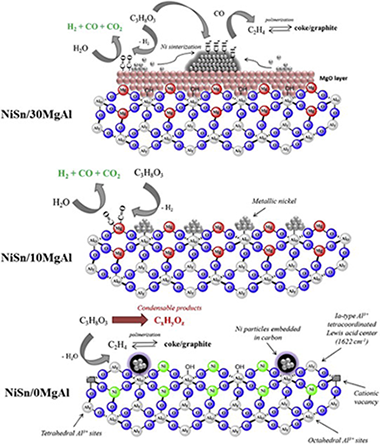
Influence of the acid–base properties over NiSn/MgO–Al2O3 catalysts in the hydrogen production from glycerol steam reforming

In this work we have investigated the hydrogen production from glycerol steam reforming. The effect of the acid-base properties was evaluated using four catalysts based in an alloy Ni-Sn as active phase supported over (Upsilon)-Al2O3 with different content in MgO, varying between 0 and 30 wt.% The incorporation of MgO results in the formation of…